Showing posts with label Coming of Age. Show all posts

Wednesday, April 29, 2026

"The Gatsby Gambit" by Claire Anderson Wheeler

I picked this up at the library on an absolute whim, and it ended up being exactly the book I needed to read last week.

The Gatsby Gambit is kind of an alternate universe retelling of The Great Gatsby by F. Scott Fitzgerald.  In this world, Jay Gatsby has a kid sister and is friends with Tom and Daisy Buchanan.  The kind of friends that are randomly staying at his mansion for a few weeks in the summer while their own mansion across the water is having some renovations done.  

Jay, the Buchanans, Nick Carraway, and Jordan Baker all come across is slightly nicer versions of themselves from Fitzgerald's book.  Daisy and Jordan have the ability to be kind if they want to.  Jay is a little less aloof and a little less unbelievable... and it feels comfortable to call him 'Jay' and not 'Gatsby.'  I'm not sure if that makes sense, but I can't figure out another way to say it.  I think of this Jay Gatsby as Jay, and I think of the original Jay Gatsby as Gatsby. Nick Carraway is very similar to his original self, though maybe a bit more patient.  And Tom Buchanan is... still a lout.  Still a womanizer.  Still a self-satisfied snob.  

As for Jay's little sister Greta Gatsby, she is a delight from beginning to end.  She's all finished with finishing schools at last and ready to step out into the adult world, only she discovers that having been screened and sheltered from the adult world maybe wasn't so entirely bad after all.  Because the adults in her world are not always up to good things.  Sometimes, the ones she loves most are behaving very badly indeed, and she had just been unaware.  And others might have the kinds of dark secrets in their past that come to light violently and permanently.

All in all, this is a stylish and smart murder mystery tangled up in a coming-of-age story, Roaring Twenties-style.  The historical details were fabulous, the characters were sharply believable, and the book never felt like it was capitalizing on the fame of a classic so much as exploring a "what if?" in a natural and fun way.  It explores issues of the day such as classism, ableism, and sexism without pouring too much of our modern mores into the mix, and also deftly scrutinizes cruelty, infidelity, family, and romance.

Particularly Good Bits:

Sometimes she felt--oh, it was such a tricky thing to put into words!--this suspicion that the world was not quite the world she read about.  That she was still being... protected from things.  Not by Jay exactly, not by anyone in particular, but by some invisible, insidious buffer (p. 30).

Ladies, certainly, were not supposed to question things.  Ladylike meant gracious, and gracious meant accepting (p. 85).

"She wanted everyone to think she was happy; she wanted to look happy.  That was something she knew how to do much better than actually being happy.  Poor old Daise has been told how to look and what to feel for so long, I think sometimes she hardly knows how to locate a feeling of her own" (p. 96).

"I never wanted to marry a romantic.  They're dangerous.  They fall out of love with you the minute you turn out to be human, and then they blame you for being a disappointment" (p. 15).

If This was a Movie, I Would Rate It: PG-16 for a lot of veiled discussion of adultery and sexual activity, some period-appropriate bad language here and there, murder, and one person's memory of something violent happening in the past.

Saturday, May 31, 2025

"Eldest" by Christopher Paolini

My reread of the Inheritance series stalled out for a while with this book, I'm afraid.  I think it could have been about 200 pages shorter, and it would have been a much stronger book.  Imagine if The Empire Strikes Back (1980) was three hours long, and a full hour of it was Luke and Yoda hanging out on Dagobah, and you get an idea of the pacing issues.

That aside, I do enjoy the fantasy world of Alegaesia.  And Eldest had lots and lots of time spent with Roran Stronghammer, who is my favorite character in the series.  I very much enjoyed all of his sections, especially since they moved forward at a relentless pace.  I do get that part of Eragon's character growth was learning to be patient and to stop wanting to be going and doing at all times... but I think we could have experienced that arc just as well with a lot fewer pages.

Particularly Good Bits:

If any honor existed in war, he concluded, it was in fighting to protect others from harm (p. 2).

"History provides us with numerous examples of people who were convinced that they were doing the right thing and committed terrible crimes because of it.  Keep in mind, Eragon that no one thinks of himself as a villain, and few make decisions they think are wrong.  A person may dislike his choice, but he will stand by it because, even in the worst circumstances, he believes that it was the best option available to him at the time.  On its own, being a decent person is no guarantee that you will act well" (p. 351).

"To have a child is the greatest honor and responsibility that can be bestowed upon any living being" (p. 362).

If This was a Movie, I Would Rate It: PG-13 for fantasy violence.  Nothing gory, but not suitable for small children.  I think it may have had one or two old-fashioned cuss words, too.  No smut.

Thursday, March 13, 2025

"The Bronze Bow" by Elizabeth George Speare

I know I read this at least once as a teen.  I remembered basically none of it.  In fact, I actually misremembered things about it -- I thought it took place during the boyhood of King David, but that's completely wrong.  It takes place during the life of Jesus Christ!  I was way off.

I did remember it being really good, and that memory was totally accurate, though.  Whew.

Daniel is an angry young Jewish man whose parents were killed by Roman soldiers when he was a boy.  Now he's part of a renegade band of rebels who ostensibly fight the Romans, but mostly just steal stuff.  He befriends a nice brother and sister from a good family, and through them, he encounters Jesus more than once, and also gets a real job, is able to start caring for his younger sister, and gradually realizes that armed rebellion against the Roman Empire is not going to fix his problems.

I almost feel like this is Ben-Hur for teens, because it has a lot of the same themes of letting go of anger and hatred, learning to forgive, and finding peace in the midst of trouble. 

Particularly Good Bits:

"Can't you see, Daniel, it is hate that is the enemy?  Not men.  Hate does not die with killing.  It only springs up a hundredfold.  The only thing stronger than hate is love" (p. 224).

If This was a Movie, I Would Rate It: PG-13 for violence, including descriptions of crucifixion.


This was my 36th book read for my fourth Classics Club list.

Friday, February 14, 2025

"Eragon" by Christopher Paolini

All three of my teens got into the Inheritance Cycle last year, and they really want to read Murtagh, but I said I had to read it first (because hey, I'm the one who bought that new release hardcover copy, after all!), but then I realized I need to reread the series.  Because I finished reading the original series in 2011 when Inheritance was released, and that is a looooooooooooong time ago.  I mean, my youngest kid wasn't even born yet when that book came out, and now she's a teenager.

So, for my #25fo25 challenge of 25 specific books I want to read this year, I picked these four books and Murtagh so I would be sure to read them in a timely fashion. 

My favorite character in this series is Roran Stronghammer.  He's barely in this book.  I did not remember that at all, so yeah... that was kind of a bummer.  I do love Brom too, though.  He's got such acerbic sass and mad skills -- how would I not love Brom?

Anyway, as original stories go, Eragon is an enjoyable one.  A Chosen One who is unaware of their chosen status until Weird Things Start Happening, who first reject and then embrace their specialness -- it's a timeless story.  Which is why we have been using it as a storytelling framework for thousands of years.  

My one quibble with this book is how quickly they make soup.  Repeatedly, characters will throw some foodstuffs in a pot, wait until the water boils, announce, "Soup is ready!" and then eat it.  Um.  Um.  I guess that's soup, but it's not going to be good soup.  Even pasta has to boil for more than 5 minutes to be done.  And you're tossing chunks of meat and root vegetables in that pot and assuming they're done as soon as they have come to a boil?  I worry for Eragon's gut health.

Anyway, I'm looking forward to rereading the rest of the series :-D

Particularly Good Bits:

"Keep in mind that many people have died for their beliefs; it's actually quite common.  The real courage is in living and suffering for what you believe" (p. 197).

"Find peace in where and what you are" (p. 429).

If This was a Movie, I Would Rate It: PG-13 for violence.  Nothing gory, but not stuff for little kids, either.  One or two mild cuss words.  No smut.

Friday, February 16, 2024

"Kling Klang Gloria" by Jenni Sauer

I think this may be Sauer's best book yet.  Certainly, it is her most complex book yet.  Kling Klang Gloria is a follow-up to Rook di Goo, meaning it is book two of the War on Taras series.  It reads fine as a stand-alone, but you are going to enjoy the last section more if you have already read Rook di Goo.  And, since that last section is my favorite part of the book, overall, I definitely do recommend you read the first book first.

And now you're like, um, Hamlette?  Jenni Sauer has like five other Evraft books out too?  Which you have also reviewed?  How is this book two?

I'm so glad you asked!  This is book two because it is the second book in the War on Taras series, which takes place in the Evraft Galaxy.  The other books take place there too, and they sometimes involve characters who were in these books.  And that's about as much explaining as I can do.  I suggest visiting Sauer's website or connecting with her on social media to learn more.  Or just read the books and figure it out!  That's what I did ;-)

Anyway, Kling Klang Gloria starts out as a Sleeping Beauty retelling of sorts, then morphs into a King Thrushbeard retelling.  Princess Zariya wakes up from a cryogenic sleep and discovers her planet, Taras, has been overrun by their enemies.  The palace where she grew up has been leveled and the capitol city razed.  What's left of the Tarisian population is scavenging for survival and avoiding the occupying troops as much as they can.

Zariya is welcomed back by the only remaining royal guard, Thrush, who has faithfully waited all these years for her to awaken.  Together, they set off across the planet, looking for safety and purpose, basically.  Slowly, Zariya learns what happened to her planet and her people, and she slowly picks up clues as to Thrush's past, too.  Woven throughout the book are flashbacks to how and why Zariya was frozen and what her life was like beforehand.

Zariya was viewed as a spoiled and nonsensical girl all her life, treated as if she did not have a mind or will of her own and should just be a pretty puppet.  The only person who ever understood her was a boy named Arian, her only friend, but the two drifted apart as they grew up, leaving Zariya bereft and confused more than once as Arian stepped farther and farther away from her.  Zariya loves to fix things with her hands and has a genius for mechanical things, but struggles to understand social expectations and emotional cues, which makes me assume she is meant to be somewhere on the autism spectrum.  Maybe?  

Thrush starts out didactic and gruff, but mellows as he starts to trust Zariya and protect her because he wants to, not because it's his duty.  The two grow close and begin taking hesitant steps toward a romantic relationship, but this is more a coming-of-age story than a love story.  Their romance is sweet and very slow-burn, and I liked it a lot.

Particularly Good Bits:

Funny, that living scared her more than dying did.  But she had gone to so much trouble to survive, that was exactly what she intended to do (p. 18).

People were minefields of emotions and social constructs Ziya had never learned to read no matter how hard she tried (p. 267).

They weren't perfect.  Neither of them.  But maybe they could be imperfect together (p. 395).

If This was a Movie, I Would Rate It: PG-13 for some intense situations, violence, fake marriage as a cover story that involves Zariya and Thrush sharing a bed (innocuously) multiple times, and some mentions of menstruation and tampons that might not be something younger readers would appreciate/understand.  There's no cussing, no smut, and no gore, but there are brief mentions of someone having been tortured and several instances of hand-to-hand combat and other acts of violence.


This is my 6th book read from my TBR shelves for the 2024 Mount TBR Reading Challenge.

Tuesday, January 23, 2024

"Up from Dust: Martha's Story" by Heather Kaufman

I know we are only a couple weeks into the year.  But I suspect this is going to be my #1 favorite new read for 2024.

I already love Kaufman's contemporary fiction, The Story People and Loving Isaac.  When I learned she was writing some historical fiction set in Biblical times, I got very excited because, as you know, historical fiction is one of my favorite things to read.  And, when I found out her book would be focused on Martha from the Bible, sister to Mary and Lazarus, well... I started to count down the days until there would be advance copies available from the publisher, in hopes I could sign up to get one.  And I did!  So, this book releases TODAY, but I have already finished reading it, hugging it, crying over it, rejoicing over it.  Get yourself a copy so you can do the same!

So, I have a bit of a personal connection to Martha from the Bible, which goes way back to college.  I attended Bethany Lutheran College, and their motto is One Thing Needful, which comes from the Biblical account of Jesus visiting siblings Mary, Martha, and Lazarus at their home, and Martha being super stressed out by trying to get a meal on the table while Mary sits by Jesus and listens to him teach.  Martha asks Jesus why he won't tell her sister to help out, and Jesus says that Mary has chosen the most important, most needed thing, which is learning from him.  And, of course, the point of all that isn't that we should never serve others, or that meals are unimportant, but that we should not try to dissuade others from listening to and learning about Jesus.  Nor should we let day-to-day stresses keep us away from Jesus.

And y'all, I have heard soooooo many sermons and homilies on this Bible story.  I think they hit it in chapel once a month.  I attended chapel every day for four years.  I heard that story a LOT.  Which is good, because it's one I needed to hear a lot -- I very often get bogged down in day-to-day stresses and chores and being busy busy busy busy busy.  I need to make sure that does not get between me and learning about and from my Savior.  

Since I have such a personal connection to that account in the Bible, I have been hesitant about reading any fiction about those particular people.  Because a lot of people do NOT get the correct lesson from that account, and that always bugs me.  Too many people see it as a condemnation of acts of service, or as a way of saying "doing things" is lesser than "learning things."  It gets abused a LOT, folks.  Watch out for that.

Anyway.  I KNEW that Heather Kaufman was going to avoid those theological pitfalls.  I KNEW she was going to handle these real, historical people with respect and honor and kindness.  All of them.  And I was totally right.  She did!

Kaufman gives us a fictional Martha who is bowed almost double under the weight of guilt and sorrow and worry and fear.  The whole first half of the book is about a young Martha, in her mid-teens, trying to raise her younger sister because they have lost their mother.  Young Martha falls in love, but her life is very difficult -- her father is remote and sometimes emotionally abusive, her little sister Mary is wild and wayward, and her brother Lazarus is trying to grow to manhood before he's really ready.  Martha's young life is basically one huge mess, and yet, falling in love grounds her in a calm she has never known.

Which totally doesn't last.  This is not an easy book to read, emotionally.  It did bring tears to my eyes, more than once.  But you know how some people are like, "This book destroyed me!  You should read it!"  Well, this book did not destroy me.  It built me up.  That is the best kind of fiction.  (You should read it!)

The second half of the book is about Martha as an adult.  Her life is still chaos.  She's closed herself off from those around her, she's focused on working and doing and getting things done as much as possible, and she's... pretty much a picture of a lot of people I see every day.  Just focus on tasks so you don't have to think or feel.

Then Jesus Christ steps into this closed-up, broken, heartbroken mess that is Martha's life.  Into the wayward, searching, desperate mess that is Mary's life.  Into the confused, earnest, hopeful mess that is Lazarus's life.  And, as they come to believe that, yes, this Jesus is the Messiah that they and all Jewish people have been waiting for since a few days after the world began... their lives are transformed.  They are not fixed.  But when they stop trusting themselves for solutions, when they center their hearts on God and trust him to care for their every need, and when they stop trying to "be enough" in and of themselves, their lives truly are transformed.

I especially loved the depiction of a difficult and combative sisterly relationship being healed.  I know some sisters who have not been friends for many years, and this gives me hope that they can also one day discover that they do love each other.

This book weaves fictional lives for Martha, Mary, and Lazarus, incorporating the real events that the Bible tells us about them.  It's a masterful piece of fiction with so much truth and hope inside, that I know it's a book I will reread many times in years to come.

Particularly Good Bits:

"Worry is like a ravenous beast, child.  The more you feed him, the more he wants and the harder he'll go after it.  Take it from an old woman who knows... do not give your worry one more scrap of food" (p. 99).

I would choose to turn my eyes from what I lacked and look instead to what Yahweh in His wisdom had chosen to give me.  I would not waste this day weeping (p. 172).

"When bitterness chokes the life out of a man, he comes to love his hurt more than Adonai.  And when knowledge becomes its own reward, a man comes to love his mind more than Adonai" (p. 219).

I opened my eyes and stared at the Christ.  I didn't understand this path.  In truth, I did not want this path.  But it was the path that Yahweh had given me, and perhaps that was enough (p. 271).

"Some need no excuse for their hatred other than self-interest" (p. 280).

If This was a Movie, I Would Rate It: PG-10 for non-detailed references to menarche, kissing, and childbirth.  A woman dies in childbirth, which could be distressing to younger readers.  No bad language, smut, or gore, but some violence occurs off-page and we see the results.


This has been my second book read from my TBR shelves for the 2024 Mount TBR Reading Challenge and my first for the #CozyWinterChristianFictionChallenge.

Full disclosure: I received an advance copy of Up from Dust from the publisher.  I read the whole book, and my thoughts and opinions expressed here are my true ones.

Saturday, January 6, 2024

"The Mistletoe Countess" by Pepper Basham

Do you ever thoroughly enjoy a book, except for one small aspect of it?  Or, do you ever want to recommend a book to lots and lots of people, but feel like you have to attach a caveat to that recommendation?

This is that kind of book, for me.

I loved the characters.  I mean, full-on loved them.  And you know that usually means I will love a book.  My goodness, Gracelynn was infectiously loveable -- never quite so abounding in endless optimism as to be a "manic pixie dream girl," and never quite so flawed that I lost patience with her.  She was simply a very believable eighteen-year-old woman of 1913, with lots of energy and enthusiasm and imagination.  In fact, she reminded me of a more-outgoing version of Catherine Morland from Northanger Abbey, as I suspect she is meant to.

And then there's Frederick, Grace's new husband.  Mysterious.  Handsome.  Reticent.  Hesitant.  Hopeful.  Despairing.  Jaded.  Yearning.  In other words, just the sort of fictional hero I tend to fall for.  Add in that he was very kind and helpful, and also very respectful of his new wife, and yet never too-good-to-be-true.

And I loved the romance.  Grace and Frederick enter into an arranged marriage of convenience, under very inauspicious circumstances -- a marriage that Grace instigates, by the way.  I usually don't like the whole marriage-of-convenience trope, as it almost always feels forced and contrived.  It made sense here.  As did the fact that it was an arranged marriage (of sorts).  But the best part was Basham's treatment of marital intimacy.  She portrayed it perfectly -- as a joyful joining of two people's hearts, minds, and bodies.  

We are not subjected to bedroom scenes, but we fully appreciate that both wife and husband enjoy each other thoroughly, and that their intimate moments serve to enhance their appreciation of each other in other aspects of their lives as well.  This is not portrayed in a smutty or titillating way at all -- I never once felt like I should skim ahead or skip whole paragraphs (or pages).  And that is absolutely phenomenal.  I have never, ever read a book that treated marital intimacy in such a wholesome, healthy, practical, and uplifting way.  So commendable.

The mystery was interesting, the side characters were all well-rounded, and the setting was great.  Most of the historical details were just right.  (I was really annoyed at the very end, though, when Grace and Frederick gave someone a copy of Ulysses by James Joyce -- this book takes place in 1913, and Ulysses was not published until 1921.  A twelve-second internet search turns up that info, and both author and editor[s] should absolutely have caught that.  Badly done.)

However.

The writing just occasionally... hitched.  There were word choices scattered randomly about that made no sense, or that alllllllmost made sense.  Like saying someone should use a spyglass to look at a clue -- clearly, they mean magnifying glass. 'Spyglass' is not simply a synonym for 'magnifying glass,' folks.  It's a small, hand-held, collapsible telescope.  Think pirates, not Sherlock Holmes.  The other glitches were similar -- as if someone wanted to make the writing more interesting and tried substituting "unusual" words for the correct words, only those unusual words didn't actually fit.  

I am just going to have to say that the storytelling and characterization and plotting and dialog are all excellent here, but this book needed a better editor.  If glitchy word choices don't bug you (and they probably really don't bug like 90% of readers!), then you might very well love this book with no reservations!

Particularly Good Bits:

Romance and marriage proved such daunting prospects in reality, but hidden within the pages of her beloved books, their appeal sparkled with magic and mystery (p. 10).

A deep surge of protection rose within him.  He hadn't been able to shield his own innocent heart, but he could attempt to protect hers (p. 96).

The world took on a ruddy glow through her eyes, and his life of loneliness came alive with colors and beauty and hope (p. 101).

"Grandfather would say, 'Kindness is your most valiant weapon.  People may fight against many things, but against kindness, they fall unprepared'" (p. 103).

Was marriage truly supposed to be this delightful?  Clandestine kisses in the study?  Stormy nights of passion?  Enchanting discussions about anything from fiction to architecture?  She hadn't read a single book that painted a picture of marriage remotely close to this (p. 286).

"You are soul mates by choice and will.  How closely you wrap your souls around one another is of your own choosing" (p. 194).


If This was a Movie, I Would Rate It: PG-16.  Like I said, the love portrayed here never felt titillating or dirty, but I still would not let a young teen read this.  There is quite a bit of on-page kissing and such.  Their minds don't need to stray these directions just yet.  There is no bad language, but there is some violence and several scenes of characters in peril, even deadly danger.  

Wednesday, December 20, 2023

"Big Red" by Jim Kjelgaard

You know what I love about Jim Kjelgaard's books?  The dogs in them don't die at the end.  That shouldn't be a revolutionary concept, and yet, it sure seems to be.  So many dog books broke my heart when I was a kid, and then I discovered Kjelgaard, and he became my hero.  I read every book of his that my library had on their shelves.  I asked for them for Christmas.  I bought them at yard sales.  I still buy them at used book stores.  I actually haven't looked up how many books he wrote, I just keep finding another every few years.

Big Red is his most famous book, and it's quite the delight.  A poor Canadian mountain boy (EDIT: or possibly, Pennsylvanian???) who loves dogs gets to take care of his rich neighbor's prize Irish Setter, and he grows up a lot in the process.  There's lots of stuff about how to train a dog, how to survive in the woods, and how to win a dog show, which is all very wonderful.  But the part I remember best from when I was a kid, and the part I couldn't wait to get to when I was reading this aloud to my own kids this fall, was the part where a wolverine comes down the chimney.  

I am not making this up.  A wolverine comes down the chimney and tries to kill the boy and the dog.  It's so terrifying and horrible and thrilling.  And, of course, the boy is basically unarmed and has to survive with his wits and almost no weapons of any sort.  Because that is the kind of book I loved when I was a teenage girl!

If This was a Movie, I Would Rate It: PG-10 because man, that wolverine is scary!  Also, there's a smattering of mild cuss words.  Also, there's a big, mean bear.  

Tuesday, June 13, 2023

"The Adventures of Huckleberry Finn" (Manga Classics) by Mark Twain (original story), Crystal S. Chan (story adaptation), and Kuma Chan (art)

Another winsome Manga Classics edition!  While I have never cared as much for Huck's book as for Tom Sawyer's, I really enjoyed reading this manga.  The pacing was wonderful, the characterization was thoughtful, and the artwork was charming.  

They included much of the original language of Twain's novel, so be aware there are words and racial slurs used here that may offend some people -- but the manga team make a point of explaining that the reason they included them is the same reason Twain originally used them: to show the cruel thoughtlessness of racism.  Huck spends a great time grappling with the fact that he's been taught all his life it's wrong to help a slave escape... but he eventually decides he's just going to have to give up trying to be good if it means stopping Jim from escaping slavery.  He doesn't realize it, but he's learning to follow his God-given conscience instead of society's dictates, and they bring that through so eloquently here!

If This was a Movie, I Would Rate It: PG-13 for a lot of racial slurs, some mild cursing, and some violence.

This has been my #32nd book read from my TBR shelves for #TheUnreadShelfProject2023.

Friday, April 14, 2023

"Moonfleet" by J. Meade Falkner

Well, that was... interesting.  The cover makes it look like it might involve tall ships more than it does.  Or pirates, maybe.  There's stuff with ships, but not loads, and there are no pirates, just smugglers.  Sigh.  Also, I watched the 1955 movie version starring Stewart Granger last year, which turns out to be very, very, very loosely based on this.  More like vaguely inspired by the book, really.

The book is about a British orphan in his mid-teens who has a crush on a local girl, accidentally gets involved with smugglers, gets thrown out of his aunt's home and lives at the local pub, ends up in prison in the Netherlands, and then has a kind of miraculous escape just at the end.  With various adventures in between.  I think it's supposed to be kind of like Kidnapped by Robert Louis Stevenson, but instead of having a focused plot and a narrative that gambols merrily along, this one felt more like hopping from one stepping stone to the next and hoping you don't lose your balance.  It wasn't bad, and parts of it were really fun, but I just didn't love it.  (I didn't love the movie version either, though I wouldn't mind watching it again sometime just for Stewart Granger.)

If This was a Movie, I Would Rate It: PG for violence, smuggling, robbery, danger to a teen and to others, and several perilous and suspenseful sequences.


This is my 11th book read and reviewed for my fourth Classics Club list, my 20th book read from my TBR shelves for #TheUnreadShelfProject2023, and my first book read for the Classic Children's Literature Party.

Saturday, March 18, 2023

"Beauty" by Robin McKinley

Well, now I know why people love this retelling of Beauty and the Beast so much!  It is wonderful!  An absolute treat!  I really loved it, and I'd like to have my homeschool co-op lit class read it next year.

I love that Beauty isn't outwardly beautiful to begin with, but already inwardly beautiful.  She's so sweet and helpful and nice and hardworking -- everything I love in a fictional character.  I love how well she gets along with her family.  Her sisters aren't horrible in this version!  In fact, although her family falls from wealth to hard times, they really have a very happy home life overall.  That is absolutely refreshing and made me so happy.  Plus, Beast was really a very nice guy, if a bit brusque and prone to having raging bouts of temper thanks to his curse -- but he always took care to get away from Beauty if one of those was coming on, and they really weren't his fault, I didn't think.

This was probably the coziest version of Beauty and the Beast I have ever read, or at least rivalling the one I wrote myself, which was also super cozy a lot of the time.  And I loved the "beauty is in the eye of the beholder" perspective that was woven into it.

Particularly Good Bits:

"You will find no mirrors here," he said, "for I cannot bear them: nor any quiet water in ponds.  And since I am the only one who sees you, why are you not then beautiful?" (p. 162).

If This was a Movie, I Would Rate It: G.  It's clean and wholesome.

This is the 14th book read from my TBR shelves for #TheUnreadShelfProject2023.

Monday, March 13, 2023

"Swamp Water" by Vereen Bell

My goodness, what a change of pace this book was!  It's a coming-of-age story set in and around the Okefenokee Swamp in Georgia.  It's also a musing on the way people treat each other.  And a fairly deep look at stubbornness and how that character trait can be used for good or for bad.  

Nearly-grown Ben Ragan chases his dog Trouble into the swamp even though his father has forbidden Ben to ever go in there.  Ben encounters a lot of scary things in the swamp, his journey turning kind of mythical for quite a while.  He's eventually captured by Tom Keefer, a fugitive who's wanted for killing his sister's husband (which he definitely did) and stealing a lot of hogs (which he also definitely did).  And yet, Tom Keefer is a more morally upright man than most of the people Ben has known outside the swamp.

Ben and Tom start trapping furs in the swamp together, which earns Ben enough of a living that he can move out of his father's cabin and start courting first one young woman, then another.  A jealous woman spills a secret that puts not only the fur-trapping enterprise in jeopardy, but Tom Keefer's life too.  That leads to a really thrilling manhunt at the end.

I've seen the 1941 movie version of Swamp Water two or three times -- it stars Dana Andrews as Ben and Walter Brennan as Tom, but it diverges from the simplicity of the book's plot, as I recall.  I need to see the movie again because it's probably been ten years since I last watched it, and I don't remember it well enough to compare the two.  I just know I really like the movie, and I really like the book.

If This was a Movie, I Would Rate It: PG-13 for some very mild innuendo, a plot line that involves a man trying to entice a married woman away from her husband, and quite a bit of danger and peril to people and dog, including a near-drowning inflicted on one man by an angry mob.  Might have been some mild cussing too, but I can't recall now, as I read this book about a week ago.


This is my 10th book read for my fourth Classics Club list and my 12th book read from my TBR shelves for #TheUnreadShelfProject2023.

Saturday, January 28, 2023

"Come Forth as Gold" by Erica Dansereau

This book destroyed me.

Have you noticed the trend these days to say, "This book destroyed me!" like that's a happy and fun reaction to a book?  I don't understand that.  If a book puts me through an emotional wringer, if it has a good and satisfying ending, I may eventually be okay with all the stuff it did to me earlier, but I tend not to be like, "This book was so great!  It totally destroyed me!  I loved every minute!  You should read it!"  I find that a very weird reaction, honestly... and a very weird way to recommend a book. "Here, read this, it'll rip your heart into shreds."  Um, what?  (Also, amusingly, I've read a few books that other people had the "This book destroyed me!  I loved it!" reaction to, and they were just... books where people fell in and out of love a couple times?  They did not destroy me.  Hmm.)

Anyway, this book really did hurt to read.  Especially the first third.  Now, going into it, I could tell that if a book is going to have "But he knoweth the way that I take: when he hath tried me, I shall come forth as gold" (Job. 23:10) as its motto thingie at the front, it's not going to be a light and joyful read.  But oof, I was not expecting so much hard, sad, depressing stuff to pile on top of other other hard, sad, depressing stuff for so long, in such an unrelenting way.  

In fact, I had to put the book down several times and read something else for the rest of the day.  Oddly, that was usually a hardboiled short story by Dashiell Hammett from a collection called Nightmare Town, and those felt positively cheery by comparison.  

Now, everything does get better eventually.  Slowly.  Hesitantly.  But it does.  I still wouldn't call this a book that I enjoyed, but I did appreciate it.  And I did finish it.  I think if you like intense, heavier books, you'd probably like it a lot.

It starts when thirteen-year-old Claude experiences two major losses back-to-back -- a death in the family, plus his lifelong best friend moving away.  The two losses are related, too, which makes it even worse.  Everything is grey and hopeless and horrible in his life for a long, long time.  As he grows up into a young adult, things gradually improve, and he even finds love and gets married by the end.  But the bleakness takes a long time to fade.

Also, there's a horse on the cover, but there's only a horse in the story for a couple chapters, and it gets very little page time.  It's symbolic, that's all.  That made me kinda sad.

Dansereau has a lot to say about grief and comfort, and I think the real point is supposed to be how the comfort we get from God is longer-lasting than anything we can try to get without Him.  But the Christian message was often oblique or subtext.  Yes, Claude goes and talks to a minister for a while.  A family friend gives him a Bible to read.  His dad tells him to "look to the cross" for comfort.  But the family doesn't attend church, Claude doesn't find the love and forgiveness of Christ as a source of comfort.  There's a conversation at the end about hope being the light in the darkness, but how and why we can hope in Christ is never really discussed, and I was left feeling unsatisfied by the faith-based elements of the book.

Now, if you enjoy books about people going through very hard, very difficult times, you would probably like this book.  Or if you have experienced deep grief like this and want to commiserate with someone fictional, maybe?

Particularly Good Bits: 

The map of grief.  It took a person on routes that sometimes made no sense at all (p. 191).

If This was a Movie, I Would Rate It: PG-16 for occasional cussing and scatalogical words, some violence, and an unwed pregnancy resulting from a rape which is not shown on the page or described in detail.

This is my fifth book read from my TBR shelves for #TheUnreadShelfProject2023.

Saturday, November 26, 2022

"Carry On, Mr. Bowditch" by Jean Lee Latham

I remember reading this book when I was in my early teens and thinking it was absolutely fascinating.  I read it about the same time as Captains Courageous by Rudyard Kipling, and the two of them made me a fan of tall ships.

The funny thing is, when I was reading this aloud to my kids this fall, I remembered almost none of it.  I thought it took place mostly aboard ship, but it was actually mostly about how Nathaniel Bowditch grew up self-educated and the struggles he went through to learn and understand things.  Not struggles because he had a learning disability, but because he was incredibly smart but not rich enough to afford a good education.  So, he taught himself Latin and higher mathematics and navigating and all sorts of complex things.

I didn't realize this as a kid, but Nathaniel Bowditch was a real person, and this is basically a biography written like a novel.  That made it more interesting to me this time through, though I do think the whole book was not nearly so exciting as I remembered.  I definitely appreciated the themes of never giving up and not letting others discourage you, but my kids had trouble staying engaged with the book.  Partly because all the side characters kept dying off in the most abrupt ways possible.  Once we learned this was based on a real person's life, that became a little more understandable, I guess.

Overall, this is one of the rare occasions where I remember loving something as a kid or teen, but discover I now only like it okay.  I'm glad I reread it, but I doubt I'll reread it again.

If This was a Movie, I Would Rate It: G.  Nothing untoward here.

Friday, October 28, 2022

"Prince of Thieves" by Alexandre Dumas

Alexandre Dumas wrote books about Robin Hood?  Say what now? 

Yes, it is true!  In fact, he wrote more than one.  Prince of Thieves is the first, and it's an origin story for Robin Hood.  It's rather different from the usual Robin Hood origin stories you get from authors like Howard Pyle.  Robin Hood here is the son of a nobleman, yes, but he's taken as an infant and given to a forester to raise because his father is dead and there's someone out to get his inheritance, and so on.  Robin grows up happily in the forest (I mean, who wouldn't?) and is in his mid-teens when he starts to have adventures, meets Maid Marian and Little John and Friar Tuck, and so on.

Most of the plot revolves around some friends of his who are trying to get married, but the girl's dad forbids the match and tries to have her intended killed, and there's all manner of skulduggery and mayhem, along with some hijinks.  It's a totally different story from any Robin Hood I've read before, and I had a lot of fun imagining Dumas just chuckling with glee as he came up with it.  It definitely stars the cheerful kind of Robin Hood that I like best.  But it's almost more of an ensemble piece, really.  I assume the sequel, Robin Hood the Outlaw, probably deals more with getting Robin's rightful inheritance back?  We shall see!  It's sitting on my TBR shelves.

Prince of Thieves was first published after Dumas's death.  It has nothing whatever to do with the Kevin Costner movie with the same title, sorry.  The version I read was translated into English by Alfred Allinson, and it has deliberately archaic language, which I'm assuming Dumas also affected, full of prithee and mayest thou and so on.

If This was a Movie, I Would Rate It: PG.  It has some violence and even killing, but it's totally not gory or scary or even intense.  Still, people do die, sometimes in somewhat distressing ways if you have a vivid imagination, so I wouldn't give it to a kid younger than at least 10.


This is my second book read and reviewed for my fourth Classics Club list and my 49th for #TheUnreadShelfProject2022!

Sunday, August 7, 2022

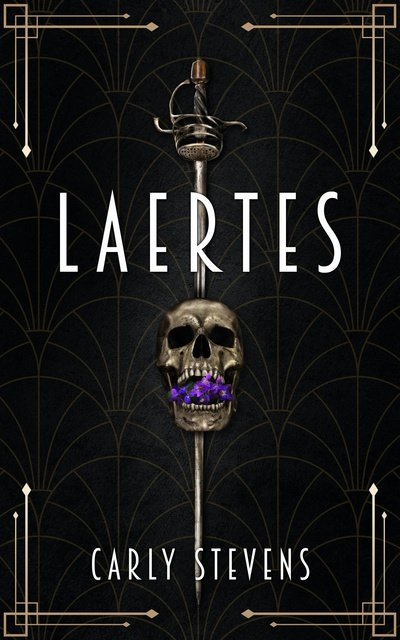
"Laertes" by Carly Stevens

This book.  Oh, this book!  Where do I even start?

Laertes retells Hamlet from the point of view of an often-overlooked character from the play, Ophelia's brother and Polonius's son, Laertes.  He's only onstage for the beginning and the end of the play, and many people kind of forget about him, except as that guy who has the sword fight with Hamlet at the end.  But I have long felt that Laertes is a key character in the play, especially the way he serves as a foil for Hamlet.  He and Hamlet both lose their fathers to murder, but while Hamlet shies away from revenge and its implications for as long as he can, Laertes embraces it pretty much instantly.  They're like a photo and its negative, one cerebral and fond of reasoning and thinking, and the other a hot-blooded man of action.

And yet, most productions of Hamlet that I've seen have treated Laertes as almost an afterthought, seeming to handing the role to some random dude who looks okay with a sword and can remember his lines.  Only twice have I seen Laertes played to my satisfaction, once by Liev Schreiber in the 2000 film and once by Benjamin Reed onstage in 2018.  And I have seen twenty different productions of the play, which makes that a pretty poor record for presenting this pivotal character in a way that really makes full use of his potential.

All of which means that I got really, really excited when I learned that someone was writing a Hamlet retelling that focused on Laertes.  In fact, I signed up to be a beta reader for this book earlier this year because I wanted to help and encourage Carly Stevens bring it to life in any way I could.  And, I admit, I wanted to beta-read it to see if it was going to live up to my expectations.

It did.

And the finished book is even better.

I was super excited when my copy arrived on release day, since pre-ordered books have a habit of not showing up at my house as soon as I would like them to.  But this one did!  And I immediately began reading it... but slowly.  I savored this book like a square of fine dark chocolate or a really excellent coffee -- enjoying it a nibble or a sip at a time, with plenty of opportunity to enjoy the rich flavor and nuances.

Laertes is set in the 1920s, with a "Dark Academia" aesthetic.  Laertes Belleforest is a Danish expat student in Paris, rooming with two friends in a little apartment above an apothecary shop and enjoying the intellectual and artistic stimulation of the City of Lights.  But when King Hamlet dies suddenly back home in Denmark, Laertes must return home in the middle of the semester to attend the funeral because he and his family are members of the Danish court.  By the time he gets there, the king's brother Claudius has married the widowed Queen Gertrude and gotten himself chosen king, rather than Prince Hamlet. 

Laertes and his sister Ophelia grew up with Hamlet.  While Laertes and Hamlet are more frenemies than friends, they still have the kind of instinctive fondness for each other that people have for someone they've known all their lives.  It's a fondness based on familiarity rather than actual friendship, but that's enough to get Laertes concerned about Hamlet when the young prince starts behaving as if he's mad.  Especially since said prince has been courting Laertes's sister Ophelia for a while now.

If you know Hamlet, you know how this will go.  Madness and murder entangle everyone before the story ends, and almost none of the principal characters survive to the end.  One of the things I liked best about this retelling is that it gave Laertes friends.  He's very alone in Hamlet, and while Hamlet gets to die in the arms of his friend Horatio at the end of the play, Laertes dies alone and friendless.  But in this retelling, Laertes has two dear friends, Henri and Julien, to support and comfort him, and one of them is even there to hold him in his final moments, letting Laertes mirror Hamlet more exactly in death here than he does in the play.

As always, it's the characters that make me love a story, and Laertes himself is such a real-feeling bundle of contradictions, worries, fears, and desires that I can't help wanting to hug him and make everything okay.  And Hamlet here is a complicated, aloof, needy, bold, self-assured, uncertain chap, not quite as likable as I would have written him, but certainly a valid representation of Shakespeare's character.  Ophelia is a wonderful mix of intelligence, fragility, and hope, and I might have loved her more here than I generally do in the play, to be honest.  The original characters of Henri, Julien, and Josephine were all nicely fleshed out, though Josephine less so than the boys.  I might feel that way because I don't like Josephine very well, though, mostly because she makes some very destructive decisions.

Particularly Good Bits:

It was a greeting card type of care--warm from afar, sending me best wishes (p. 11).

She reminded me of Hamlet then, a mind so active that boredom settled like a butterfly any time there was little stimulation (p. 64). 

Her sugared words caught me, but only because I was ready to be caught (p. 120).

The poison of deep grief is as potent as anything bottled (p. 176).

If This was a Movie, I Would Rate It: PG-16 for intermittent dropping of F bombs just for shock effect by one character, and for an on-page love scene that isn't super detailed, but still gave me the urge to skim ahead until it was over.  It's pretty easy to see coming and just skip on through.

Friday, July 22, 2022

"Ophelia" by Lisa Klein

I read this book about ten years ago, and I really enjoyed it then, so I was excited when it got made into a movie a few years later.  I very much like the movie as well, so I'm glad I had a chance to reread the book.  It's just as good as I remembered!  Such an intriguing take on Hamlet, not only because it's told through Ophelia's eyes instead, but because Lisa Klein weaves aspects of a couple other Shakespeare plays into it too.

In Ophelia, we get to see the title character growing up alongside her brother and interacting with Prince Hamlet more and more as they grow older.  Klein gives them a sweet and tender love story, then shows us how Hamlet's desire for vengeance grows into a kind of madness that eventually wrecks everyone around him, including his secret wife, Ophelia.

Yes, we get a secret marriage between Hamlet and Ophelia in this book, which I find completely fitting.  Everything Klein writes works well with Shakespeare's play as we know it, but with the camera pointed a different direction, rather like the play Rosencrantz and Guildenstern are Dead by Tom Stoppard.  But in a much less wacky and silly way.  Even the way that Klein twists the ending of her book works with the original play while pulling in elements of other tragedies.

If you like viewing classic stories from a different angle, if you're a Hamlet or Shakespeare fan, or if you just like stories of strong, yet sweet and loving women, I definitely recommend this book.

(From my Instagram account)

Particularly Good Bits:

I could not make sense of this Janus-faced husband who spoke false and true at once (p. 152).

If This was a Movie, I Would Rate It: PG-16 for a non-steamy and obliquely described love scene, an attempted sexual assault, crude humor, suggestive dialog, and discussions of things like menarche and childbirth.

Tuesday, July 5, 2022

"Seventh City" by Emily Hayse

Seventh City
 is a magical realism story based in a fictional world similar to the Pacific Northwest/Alaska back in Old West days.  It's about a native tribe and some Invaders, basically fantasy versions of Inuits and white people.  The story centers around Maki, a young teen girl whose older brother Tsanu gets captured by the Invaders.  Tsanu is her only caretaker, since their parents are gone, and Maki wants to rescue him.  Tsanu agrees to lead the Invader captain to a fabled seventh city of fabulous wealth far to the north, and Maki disguises herself as a boy and takes a job caring for the expedition's horses so she can go along.  

Although Maki starts out focused on freeing her brother and possibly punishing some Invaders in the process, she gets to know some of the expedition's members and gradually makes friends with them.  By the time the story reaches its epic climax, Maki no longer views most of them as her enemies.

It took me over a week to read this book because... it was too tightly wound for my taste, to be honest.  Bad thing after bad thing happens, in quick succession, with too little respite for the characters or the readers.  

I think readers need the tension to ratchet up like a set of stairs, with a little breather here and there to give them a rest.  Those are often the scenes where I get more emotionally invested in the characters, because I don't need to spend all my emotional energy fearing for the characters' lives.  And this book just... had very, very little downtime.  Which made it hard for me to read.  In fact, I did something I have only done maybe twice before in the last twenty years:  I looked at the end.  I checked to see who was going to survive, because I was very, very close to not finishing the book, and I wanted to see if finishing it would be worth it or not.  There came a point where I set it aside a couple of days when I was about 75% done because I was not enjoying the book much.

Aside from that, this was a really well-written book in many other ways.  The characters were engaging and the world building was excellent.  I especially loved Maki's wolf-dog Iki -- he reminded me of my wolf/Malamute crossbreed Westley that we had when I was a teen.  He was my dog, the way Iki is Maki's, and yeah, I really liked their relationship.

I handed this off to my kids when I finished it, and my 12-year-old inhaled it in one day, so clearly, the pacing didn't bother her at all.  YMMV!

Particularly Good Bits:

"I like a good hero-story.  I daresay more men would be men if they took them to heart" (p. 77).

If This was a Movie, I Would Rate It: PG-10 for violence, some of which got a little bloody, and for all that tension and peril.

This has been the 33rd book I've read from my TBR shelves for #TheUnreadShelfProject2022.

Thursday, June 23, 2022

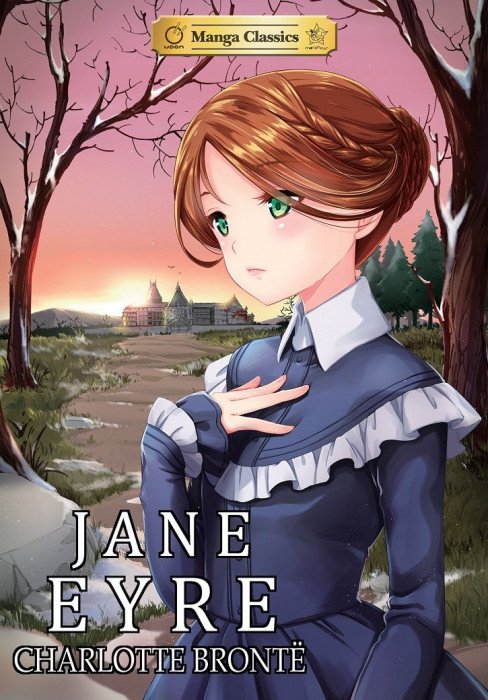
"Jane Eyre" (Manga Classics) by Charlotte Bronte (original story), Crystal S. Chan (story adaptation), and SunNeko Lee (art)

These Manga Classics were so perfect for me in the first days of recovering from my broken arm!  They held my attention that was sometimes really drifty thanks to pain meds, and I could read them in little chunks as my awakeness permitted.

Since Jane Eyre by Charlotte Bronte is my favorite novel, I was prepared to be picky about this adaptation.  But I was also prepared to be charmed.  Happily, I was mostly charmed!  They really captured the essence of the characters so well -- Jane is valiant but yearning, Rochester is mercurial but kind, and St. John Rivers is cheerless and misguided.  

Best of all, they did not glide over the twin turning points that Bronte hinges her story on -- that Rochester repents of his former ways and attitudes and asks God to help him do better, and that Jane stops relying on her own strength and intelligence and asks God to guide her.  It's those two moments that combine to make the happy ending possible, but filmmakers almost never get that right, which means that this manga is superior to most filmed versions of Jane Eyre, imho.

(Mine from my Instagram)

If This was a Movie, I Would Rate It: PG for mild depictions of a madwoman, mentions that Mr. Rochester had mistresses and lovers before he met Jane, and speculation that Adele may be his daughter.  My youngest is 10, and I'm letting her read this, but I don't know if I would give it to younger kids.

This has been my 30th book read from my TBR shelves for #TheUnreadShelfProject2022

Wednesday, April 27, 2022

"Kidnapped" by Robert Louis Stevenson

I love this book.  I loved it as a teen, I loved it in my twenties, and I love it now.  And, my goodness, is it ever fun to read aloud!

When David Balfour's father dies, he sets out to find his uncle, whom he has never met.  His uncle Ebenezer turns out to be a horrible miser, unkind and unfriendly, even hateful.  He has David kidnapped and shipped off to a slave colony in the Carolinas, but the ship never leaves Scottish waters.  A Highland gentleman, Alan Breck Stewart, befriends and rescues David, and the two run around Scotland having adventures and trying to make their way back to the lowlands.  Alan Breck then helps David Balfour acquire his rightful inheritance, but they have to part ways, which always makes me sad.  Still, it's such a jolly adventure.  And I do love Alan Breck.  My goodness, he's such a splendid character.  So fierce and loyal!  Not that I don't love David Balfour too, because I do, but my heart really belongs to Alan Breck in this book.

In fact, I discovered that there's this little phrase I'm fond of saying that I totally got from this book as a teen, and then forgot over the years where I had gotten it.  When Alan Breck kind of remembers something, but doesn't want to swear to it, or if he doesn't want people to know he knows something for sure, he'll say "it sticks in my mind that..."  I say that fairly often!  And now I know where I got it from!

Now that I've finished reading this aloud to my kids, we're going to have to watch the classic Disney movie version.  It's not on Disney+ because of course not, but I do have it on DVD, so yay!

If This was a Movie, I Would Rate It: PG for gunplay, swordplay, shipwreck, and other bits of violence.


This has been my 39th book read and reviewed for my third Classics Club list.