Showing posts with label My Year with Jane Austen. Show all posts

Monday, December 31, 2012

"Lady Susan, The Watsons, and Sanditon" by Jane Austen

I decided to round out my year of reading Jane Austen by reading her unfinished works too.  My mom gave me this collection for my birthday, and I managed to polish it off over the last couple of weeks.

I liked "Lady Susan" the least of these three -- it is finished, while the other two aren't, but I didn't like any of the characters, especially not Lady Susan herself, who is particularly disagreeable.  I enjoy the epistolary format as a whole, so that didn't bother me.  It concerns the selfish, wanton Lady Susan who spends the whole book trying to marry her daughter off to a rich, foolish man that her daughter despises. 

I liked "The Watsons" the best, for it had characters I genuinely cared about and wanted to get to know better.  It seemed to be following a plot line similar to Pride and Prejudice, with an unwealthy family's daughters catching the eye of men of more money and position.  We do at least know how that one would have turned out, thanks to Jane Austen telling her sister Cassandra her plans for the novel.

"Sanditon" reminded me more of Emma, with a whole host of hypochandriacal characters similar to Mr. Woodhouse.  It's not long enough for its heroine to really gain shape, and was the least satisfying read, since there's no record of how Jane Austen intended it to end.  Here's something funny:  for years, I thought the title was "Sandition" -- it wasn't until I started reading this book that I noticed it only has one 'i.'  Silly me. 

(Originally posted on Hamlette's Soliloquy on Dec.30, 2012.)

Friday, December 21, 2012

"Jane and the Wandering Eye" by Stephanie Barron

This is the third Jane Austen Mystery, and I think I liked it a teensy bit better than the previous book, Jane and the Man of the Cloth. It had more of Lord Harold Trowbridge, the Gentleman Rogue who keeps joining the fictional Miss Austen in her adventures, and I'm becoming very fond of him.  Here, his nephew is accused of murder, and Jane and Lord Harold sort out the tangle of deceit and intrigue that obscures the truth.  I don't have much else to say about it, other than that I look forward to reading the next book in the series.

(Originally posted on Hamlette's Soliloquy on Dec. 21, 2012.)

Sunday, December 16, 2012

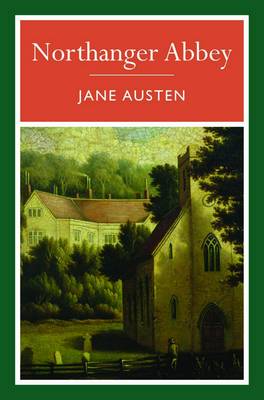
"Northanger Abbey" by Jane Austen

How is it that I'd never read this before?  Okay, it's because I really knew absolutely nothing about it before this year, whereas I knew the general gist of Austen's other major works, thanks to movies or articles I'd read or whatever.  But Northanger Abbey slipped through the cracks.  In my great quest to read all of Austen's novels in one year (which I have now completed, yay me!), I saved this for last because it's always nice to read something new by a beloved author.  And also, I was a little worried I wouldn't care much for it, since if people don't talk about it much, it must not be all that great, right?

Wrong.

Okay, it's obviously not as magnificent as Pride and Prejudice, as thought-provoking as Sense and Sensibility, etc.  Instead, it is fun.  The whole novel revolves around one long joke about how the heroine, Miss Catherine Morland, can't possibly be the heroine of a novel.  Nothing exciting happens to her, she's not beautiful, her parents and family are all alive and healthy, she's not unhappy, no one kidnaps her, no royalty fall in love with her, she never meets up with a ghost... you get the idea.  What she does do is lead a sweet, ordinary life, fall in love with a nice man, get involved in a misunderstanding or two, and wind up happy. 

I laughed aloud over and over during this book, and I'm inclined to reread it already.  I love books that make me laugh aloud; they almost invariably become favorites of mine.  On that merit alone, Northanger Abbey would join Pride and Prejudice and Persuasion as my most favoritest Austen novels.  But this book also has very believable characters, the sorts that you could meet up with in real life.  No archetypes, no mysterious and wealthy strangers, no near-fatal illnesses.  Just people being people :-)  I found that especially endearing.  In fact, I believe Henry Tilney has supplanted Mr. Knightley as my second-favorite Austen hero.

In case you're not up on your Austen, this is the one where Catherine Morland visits Bath with some family friends and falls in love with Henry Tilney, a young minister with a lively sense of humor.

Particularly Good Bits:

"Friendship is certainly the finest balm for the pangs of disappointed love."

"...for I will not adopt the ungenerous and impolitic custom so common with novel-writers, of degrading by their contemptuous censure the very performances, to the number of which they are themselves adding -- joining with their greatest enemies in bestowing the harshest epithets on such works, and scarcely ever permitting them to be read by their own heroine, who, if she accidentally take up a novel, is sure to turn over its insipid pages with disgust.  Alas!  If the heroine of one novel be not patronized by the heroine of another, from whom can she expect protection and regard?"

"The anxiety, which in this state of their attachment must be the portion of Henry and Catherine, and of all who loved either, as to its final event, can hardly extend, I fear, to the bosom of my readers, who will see in the tell-tale compression of the pages before them, that we are all hastening together to perfect felicity."

(Originally posted on Hamlette's Soliloquy on Nov. 24, 2012.)

"Mansfield Park" by Jane Austen

The first time I read Mansfield Park, I didn't like it much at all.  This time around, I liked it a good bit better, though it's still my least-favorite Jane Austen novel so far.  (I haven't read Northanger Abbey yet -- that's up next!)  This time, it helped that I'd just read a long discussion of this book, a conversation between A. S. Byatt and Ignes Sodre in the book Imagining Characters:  Six Conversations About Women Writers.  It helped me get a bit of perspective on the interplay between Fanny and the other characters, pointing out that while Fanny is extremely passive (which irritated me so much the first time through), she's also very observant, and much better at discerning a person's qualities and character than anyone else in the book.  I kept an eye out for instances of that when I read it this time, and found it much more interesting.

While I'm still frustrated with Fanny's overwhelming reticence, and have little sympathy with her "habits of ready submission," (p. 298) I've come to appreciate what I think Jane Austen was trying to say with this book.  It's a kind of morality play, really, full of archetypes more than realistic characters.  This book, to me, is a warning against excess -- each character pursues or possesses one character quality or flaw to such a degree that it unbalances them and makes them unable to be happy.  Henry Crawford is too proud of his own abilities to interest women, too attached to his own flirtatiousness.  Fanny Price has such low self-esteem that she believes herself to be unworthy of anyone's notice, affection, or interest except that of her elder brother, William.  Edmund Bertram is too fond of the idea of romantic love to listen to reason when applied to the object of his affections, Mary Crawford.  Mrs. Norris is so fond of being in charge that she not only runs her own life in the strictest manner possible, she alienates everyone around her by trying to run their lives too.  And so on, and so forth, et cetera, et cetera, et cetera.  The warning here, that if you lack what Edmund calls "the most valuable knowledge we could any of us acquire -- the knowledge of ourselves and our duty," (p384) you're going to wind up unhappy or annoying or both.

If you're not up on your Austen, this is the one where poor Fanny Price goes to live with her rich cousins, the Bertrams, and while growing up with them, falls in love with her cousin Edmund, possibly the most oblivious man ever written.

(Note:  It wasn't until about halfway through this reading that I realized that Filch's cat Mrs. Norris in the Harry Potter books is named after the Mrs. Norris in this book.  Also, both times I read this, I could clearly imagine Agnes Moorehead playing Mrs. Norris.  She would have been perfect -- too bad she never played the character.)

(Originally posted on Hamlette's Soliloquy on Nov. 2, 2012.)

"Jane Austen Made Me Do It" edited by Laurel Ann Nattress

A couple months ago, I started reading a blog called AustenProse, written by Laurel Ann Nattress.  As you might imagine from the title, a lot of the posts have to do with Jane Austen, and they're intelligent and informative, not to mention enjoyable, which is why I "followed" it after reading about three posts.  Last month, Ms. Nattress held a series of giveaways for this book, which she edited.  I was quite excited, as I'd already read a review of this book that made me want to read it, but I hadn't managed to get it from the library yet.  So I entered a couple of the giveaway drawings, and I won one!  How could this story end even more perfectly?  My copy (autographed, I might add, by Ms. Nattress) arrived just in time for me take it on our vacation.

I'm so glad it did, because these short stories provided a welcome break from the other two books I had along, a series of literary analyses of famous novels written by women and a history of the U.S. Marshals.  A little Austenian fiction was a treat between doses of the other two books.

Like every anthology of this sort, some of the stories pleased me more than others.  There are purely romantic stories, humorous stories, adventurous stories.  There are additional scenes for Austen's own books.  There are several ghost stories, two epistolary tales, and one dream.  Most of the stories take place either in the present or in Austen's own time, but one takes place in the 1960s.  You can go here for a complete list of the stories and a synopsis of each.  I'll just highlight a few I especially like.

"The Chase" by Carrie Bebris.  Hands-down my favorite story!  It chronicles an actual adventure of Jane Austen's brother, Frank, while he's captaining the H.M.S. Petterel and engaging Napoleon's naval forces.  It made me want to dust off my Patrick O'Brian books and Horatio Hornblower movies.

"When Only a Darcy Will Do" by Beth Patillo.  A university student tries to earn a bit of money leading her own tours of London's Jane Austen sites.  She encounters a man dressed in period clothes and calling himself Mr. Darcy, and her life will never be the same.  If all romance novels were like this story, I would read them.

"What Would Austen Do?" by Jane Rubino and Caitlen Rubino-Bradway.  A bored fifteen-year-old boy mistakenly signs up to learn how to dance Jane Austen-era dances.  He ends up meeting a girl, reading Austen's novels, and learning how to cope better with high school.  The notes at the end say the authors are considering expanding this into a novel, and I hope they do, because I want to read it.

"Nothing Less Than Fairy-land" by Monica Fairview.  Emma and George Knightley return from their honeymoon and begin moving his things into Hartfield, but Mr. Woodhouse makes it as difficult as you might imagine.  Emma comes up with a suitable and logical solution.  I probably liked this especially well because I finished reading Emma so recently, and because it gives a happy ending to a character I've always felt sorry for.

"Mr. Bennet Meets His Match" by Amanda Grange.  Mr. Bennet reminisces about his youth and why marrying Miss Jane Gardiner seemed like a good idea at the time.  Because I spent a great chunk of Pride and Prejudice wondering why on earth he married her, I found this story the most satisfying of all the new-scene stories.

Just like when I read A Study in Sherlock earlier this year, I'm inspired to seek out the works of several of these new-to-me authors and see how I like their other stories.  And because Stephanie Barron has a story included here ("Jane and the Gentleman Rogue"), I'm eager to read another of her Jane Austen Mysteries too.

(Originally posted on Hamlette's Soliloquy on Oct. 3, 2012.)

"Jane and the Man of the Cloth" by Stephanie Barron

At first, I was afraid I would be disappointed by this book.  For the first few chapters, it felt like the plot was too obvious -- clearly, the brusque, roguish Mr. Sidmouth was the smuggler everyone was talking about.  Then the plot seemed like it was going to follow a bit of Pride and Prejudice, with Captain Fielding playing Wickham to Mr. Sidmouth's Darcy.

But then, about 5 or 6 chapters in, all of that was clearly not the point at all anymore, and I got sucked in.  A Byronic hero, a bit of swash and buckle, and a plot so tangled I never did figure it out before I was supposed to -- I loved it!  Much more so than its predecessor, Jane and the Unpleasantness at Scargrave Manor. That was fun, but this is delightful.

This fictional Jane Austen is presented as a resourceful, bold, and spirited woman of twenty-nine.  I should like to be friends with her, very much.  There are many footnotes that bring in things from the real Jane Austen's letters or the society she lived in, which makes this book sound dull (footnotes being the thing of college research papers, after all), but it's anything but dull.  Even if the main character wasn't supposed to be Jane Austen, I would still have enjoyed this book.

EDIT:  I forgot to add my favorite parts!  Here they be:

Particularly Good Bits

And so I cross the room to peer out at the unknown, stretching before me like all the days I have yet to live; and can discern nothing beyond my own wavering reflection in the window's glass.

The day broke quite stormy, as though all the seacoast mourned the Captain's passing; and the inmates if Wings cottage lay abed, hugging their dreams close against the rawness of the day.

Full many a midnight thought I have entertained with alacrity, only to reject it over my breakfast chocolate as excessively disordered.

(Originally posted on Hamlette's Soliloquy on Sep. 12, 2012.)

"Emma" by Jane Austen

Let me begin by admitting that Emma is not my favorite Austen book.  I think it makes me laugh just as much as Pride and Prejudice, if not more.  And Mr. Knightley is my third-favorite Austen hero, after Persuasion's Captain Wentworth and P&P's Mr. Darcy.  But I don't like Emma Woodhouse very well.  And since I have to want to be friends with most of a the characters in a book (or movie, or TV show), this is the main reason I don't like Emma all that well.

Why don't I like Emma Woodhouse?  Partly because she is vain and arrogant, as she herself admits toward the end:  "With insufferable vanity had she believed herself in the secret of every body's feelings; with unpardonable arrogance proposed to arrange everybody's destiny."

But I think mostly I can't like her very well because she is so meddlesome.  If only Emma had left well enough alone, Harriet would have married Robert Martin when he proposed by letter.  And then, of course, the rest of the book wouldn't exist, but still.  She's also quite bossy, and I dislike bossy people.  Probably because I'm kind of bossy myself, or I can be, but it's something I try to overcome in myself, so I guess I expect other people to struggle against their own bossiness too.  Mr. Knightley, for example, is also bossy, but he becomes less so by the end of the book.


And yet, the 1996 film version of Emma is my favorite of all Austen movies.  Why?  Emma (Gwyneth Paltrow) is still meddlesome and bossy.  Mr. Knightley (Jeremy Northam) is still gentlemanly and thoughtful. Harriet (Toni Collette) is still naive and sweet.  Mr. Elton (Alan Cumming) is still officious and grating.  And Frank Churchill (Ewan MacGregor) is still duplicitous and teasing. 

But each one of those characters are somehow a bit more likable in the movie than in the book.  Emma has an uncertainty about her that keeps her for being quite so demanding.  Harriet has a look of intelligence that balances out her docile obedience to everything Emma says.  Mr. Elton... okay, he's not more likeable, he's still an ingratiating fortune-hunter.  Neither is Mr. Knightley, but only because he can't possibly be more likable, hee.  But Frank Churchill comes off as mischievous more than simply cheerful and heedless, which makes me like him better (despite Ewan MacGregor's terrible wig.  I swear it is actually pink cotton candy!)  I think the only character I like better in the book than the movie is Miss Bates (Sophie Thompson), who is more intelligent and less pathetic in the book.

So anyway, I like Emma better than Mansfield Park, but mostly because of Mr. Knightley and the movie version.

If you're not up on your Austen, this is the one where Miss Emma Woodhouse plays matchmaker for her friend Harriet Smith, with disastrous results.

(Originally posted on Hamlette's Soliloquy on Sep. 4, 2012.)

Saturday, November 24, 2012

"Jane and the Unpleasantness at Scargrave Manor" by Stephanie Barron

It seems that my blog has had three themes of late:  The Avengers, mysteries, and Jane Austen.  Perhaps I am stuck in a three-rutted road.  At any rate, I have just finished reading, this very evening, a book that combines two of those themes.  Not, I fear, Jane Austen and The Avengers, which, however diverting, would be an unlikely pairing.  No, this book combines Jane Austen and murder mysteries.  It is, in fact, a mystery starring a fictionalized version of Jane Austen herself.

I know what you're thinking:  Absurd!  Travesty!  Sacrilege!

But it's not.  It is, to be precise, great fun.

Stephanie Barron sets up her story by saying that a family friend was excavating an old building and found a trunk of letters and journals that turned out to have belonged to Jane Austen herself.  (This is very like the way that Laurie R. King sets up her Mary Russell/Sherlock Holmes books, only in them, Russell has sent a trunk full of manuscripts and oddments to King.)  This book, then, is pieced together from journal entries and letters to Austen's family members.  It does involve historical parts of Austen's life, and also a treasure trove of details about life in Austen's time.

The story begins with Jane Austen visiting her friend Isobel, the new Countess of Scargrave, who married Frederick, Lord Scargrave, a scant three weeks previous.  Jane welcomes the opportunity to visit them upon their return from a honeymoon abroad, as she has only recently accepted and then rejected the hand of Mr. Harris Bigg-Wither (honestly his real name, silly as it may seem).  But Lord Scargrave falls ill and dies following a fancy ball thrown in Isobel's honor, and Isobel is suspected of his murder.  Convinced of her friend's innocence, Jane throws all her intelligence and knowledge of humankind into discerning the truth.

The beautiful thing is, Barron has caught the cadence of Austen's writing, her phrasing and word choices, the flavor of her dialog.  At times, one can almost believe this to be based on something Austen herself wrote.  There are some similarities in situation, character, or specific lines of writing that reflect Austen's novels, which to follow this imaginary timeline, would have been published a few years later.  

The author also included a number of footnotes that clarify things such as how the British justice system worked, medical practices of the day, and which characters were actual people in Jane Austen's real life.  These are especially useful for readers like myself, who enjoy Austen's work to no end, but aren't keen on researching life during the British Regency.  

I do have to say that I was occasionally frustrated by the fictional Austen's tendency to rehash a character's motives after already contemplating them earlier on, and a few of the character names (a butler named Cobblestone?) stretched disbelief a bit, but overall, I enjoyed this book.  I definitely want to read more of them -- Barron has written nearly a dozen now.  Find out more on her website, where she has some intriguing thoughts on Austen, mysteries, and the art of writing.

Here is my favorite passage, which made me laugh aloud when I first read it:
"Nay, Isobel," I protested, "do not cause yourself the trouble to search further.  I believe Lieutenant Hearst will amply serve my purpose.  He has good looks and charm without the slightest suggestion of better feeling, and he possesses not a penny he may call his own.  he shall do very well for a portionless clergyman's daughter.  We may expect him to ruin me and then depart for a noble death before Buonaparte's cannon, at which point I shall throw myself in the millpond and be renowned in wine and song.  Has Scargrave a millpond, Isobel?"
See?  Great fun :-)  For those who love both Jane Austen and a good mystery, this is a treat not to be missed.

(Originally posted on Hamlette's Soliloquy on Aug. 2, 2012.)

"The Jane Austen Book Club" by Karen Joy Fowler


I liked this book okay.  I didn't love it.  I didn't dislike it.  While I was reading it, it kept my attention very nicely, and I finished it in just a few days.  Basically, it's precisely what I'd consider a "beach book" -- something to read when you don't want to be distracted from real life too much.

The book club in the title is formed by five women and one man.  Jocelyn breeds dogs, is a bit of a control freak, and starts the club with an ulterior motive:  her best friend Sylvia's marriage is ending, and the other members suspect the club is supposed to distract Sylvia from her problems.  Sylvia's daughter Allegra is also going through a difficult breakup -- her girlfriend is, among other things, a liar -- and has just moved back home to be with her mom now that her dad is gone.  Prudie is a reasonably happily married woman who teaches high school French.  Bernadette is the quirkiest of the bunch -- she loves to talk, has given up looking in the mirror, and is the surest of just who she really is.  And Grigg is the lone male, a sort of lost puppy needing adoption.

The most interesting thing about this book, as far as I'm concerned, is that it's narrated by the group as a whole, which comments on each character in turn.  I can't remember seeing that done before, and it was original and attention-getting.  Each chapter focuses on a different character, tells part of their back story, tells part of what's going on currently in their lives, and then the group gathers to discuss a Jane Austen book.

There are some good insights into Austen's novels sprinkled throughout the book, and those might make this an easy way to get to know Austen's works if you've never read them and are trying to figure out which one you might like to start with.

(Originally posted on Hamlette's Soliloquy on Jul. 27, 2012.)

"Sense and Sensibility" by Jane Austen


This book is considerably different than I'd remembered.  The basic plot was how I recalled, but I didn't remember anything about the middle section where Marianne got sick.  I also thought this book moved a little too slowly when I read it back in high school -- and I was the sort of high school girl who read Austen of her own free will, not because it was required reading.  Then, I got frustrated by Elinor and thought she should speak her mind more and not let others overbear her so much.

Imagine my surprise a few years later, when I took this quiz and came out Elinor Dashwood!  I took it again just now and got the same result, so I guess it's not a fluke.  And this time through, I understood Elinor much better.  She's quiet and thinks things through, but she's not really all that reticent.  She speaks her mind when she judges it is appropriate, and to the people she deems it correct to say such things too.  I especially liked her sympathetic befriending of Colonel Brandon.

In case you're not up on your Austen, this is the one where sisters Elinor and Marianne Dashwood fall in love with Edward Ferrars and John Willoughby.  Edward is described as everything correct and wonderful, but he and Elinor are both so proper that their regard for each other is barely evident.  Marianne, on the other hand, indulges her every emotion and tells everyone exactly what she thinks, and she and Willoughby allow their affections to run away with them.  Then Willoughby leaves, the next thing they know he's marrying another woman, and Marianne winds up in the depths of despair.  Elinor's Edward also turns out to have been previously engaged to another in secret.  And then there's Colonel Brandon, a retiring widower who falls in love with Marianne even though she thinks he's very boring.

You might say it's complicated :-)  My only quibble with it this time is that I wish Edward Ferrars got to be fleshed out more, as he's absent for most of the book, and we have little time to see just why Elinor should love him despite having lots of reasons why she should give up her attachment.  Oh well, not everyone can be Mr. Darcy!

(Originally posted on Hamlette's Soliloquy on Jul. 21, 2012.)

Monday, October 29, 2012

"Persuasion" by Jane Austen

The first time I read Persuasion, I liked it better than the other three Austen books I'd read at that time.  That was more than a decade ago, and this is the first time I've reread it.  The question I now face is:  why did I like it better than Pride and Prejudice, Sense and Sensibility, and Emma?  It could be because I first read Persuasion while I was on my big Horatio Hornblower kick, and this book is full of naval officers.  It could be because this was the first Austen book I read after going to college, and I was just more ready for this level of writing.  It could even be because it's considerably shorter than the other three I'd read.

I think, in the end, that the reason I liked it best is that I identify more with this book's heroine, Anne Elliot, more than any of the others'.  I'm not as witty or bold as Elizabeth Bennett.  I'm not as unfailingly honorable as Elinor Dashwood (though I do see a lot of myself in her as well).  I'm not as inquisitive or self-fascinated (I hope) as Emma Woodhouse.  Like Anne Elliot, in my opinion, I am quiet, reserved, and loyal.  And that's probably why I still like this book a great deal, though now I think I might like Pride and Prejudice equally as well.

In case you're not up on your Austen, this is the one where Anne Elliott meets up with the man she was once engaged to, Captain Frederick Wentworth.  Eight years previous, she had been persuaded to break off their engagement, and had regretted that ever since.  Neither of them had ever fallen in love again, and this book charts the rekindling of their romance as they slowly ascertain each others' feelings and whether things could ever again be as they once were.

I do wish that this book lasted a little longer, as the very end seems a bit rushed.  The discussion between Capt. Wentworth and Anne is described, not written out as dialog, and I've always wondered if Jane Austen meant to flesh that part out more, but then was unable to.  Persuasion was published posthumously, so you never know.

(Originally posted on Hamlette's Soliloquy on Jul. 1, 2012.)

"Pride and Prejudice" by Jane Austen

Last summer, I bought a journal with Jane Austen quotes sprinkled throughout it.  It put me in such a mood to re-read Austen's novels that I went and bought a box set of all her completed novels.  In paperback, but they're trade paperbacks, not pocket ones, so good enough.  And then I never managed to start reading them.  But when I read P.D. James' Death Comes to Pemberley this year, I knew The Time Had Come to start my journey through Austenland.

I began with Pride and Prejudice.  Seemed logical, since I wanted to compare it to James' mystery.  I'd only read it once before, I think while I was in college and in love with the movie You've Got Mail, which references it.  I wasn't a big fan, and for years my favorite Austen novel had been Persuasion.  When I was in college, I watched the British version of P&P starring Colin Firth, and I did like the Keira Knightley/Matthew Macfadyen version pretty well, as I mentioned here and here a few years ago.  But I didn't particularly love the story.

What was wrong with me?

In case you're not up on your Austen, this is the one where Elizabeth Bennet spends most of the book disliking Mr. Darcy because she finds him proud and cold.  Mr. Darcy spends most of the book trying to convince himself he shouldn't love Lizzy because her family is unsuitable.

What can I say about this book that hasn't already been said a hundred times, and said better than I ever can?  Not much.  I'm amazed by Austen's ability to make ordinary people so compelling.  I so admire her grasp of how details and small events build up to bring about important changes in hearts, minds, and lives.  And I'm intrigued by her ability to allow a book's events unfold slowly and yet keep me enthralled.

Also, I'm totally in love with Mr. Darcy now.  Just FYI.

(Originally posted on Hamlette's Soliloquy on Jun 14, 2012.)