Showing posts with label Katherine Reay. Show all posts

Tuesday, November 29, 2022

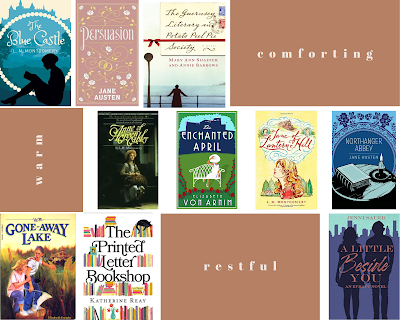
Top Ten Tuesday: Getting Cozy

This week's Top Ten Tuesday prompt from That Artsy Reader Girl is "Cozy Reads."  I love cozy books, so it wasn't hard to come up with ten favorites... it was hard narrowing the list down to ten!  But here they are, with a few cozy attributes for each and the titles linked to my full reviews.


1. The Blue Castle by L. M. Montgomery -- cottage, winter, fireside reading, cats, book lovers, nature lovers, small town, slow-burn romance

2. Persuasion by Jane Austen -- seaside, friendship, family ties, homebody, bookish discussions, second-chance romance

3. The Guernsey Literary and Potato Peel Pie Society by Mary Ann Shaffer and Annie Barrows -- bookworms, letter-writing, island life, community, found family, gentle romance

4. Anne of Green Gables by L. M. Montgomery -- farmhouse, found family, nature lovers, friendship, girlhood, small town, flowers

5. The Enchanted April by Elizabeth von Arnim -- Italian villa, flowers and nature, self-discovery, friendship, sunshine, fresh air, vacation


6. Jane of Lantern Hill by L. M. Montgomery -- cottage, baking, cooking, reading, writing, family reunion, fathers and daughters, friendship, small town

7. Northanger Abbey by Jane Austen -- seaside, book lovers, dancing, drawing, carriage rides, young love, old houses

8. Gone-Away Lake by Elizabeth Enright -- abandoned houses, sunshine, cousins, friendship, secrets, small town

9. The Printed Letter Bookshop by Katherine Reay -- bookshop, small town, friendship, family ties, books everywhere

10. A Little Beside You by Jenni Sauer -- waffles, baking, friendship, found family, sisters, knitting, gentle romance


How about you?  What are your favorite cozy reads?

Friday, May 20, 2022

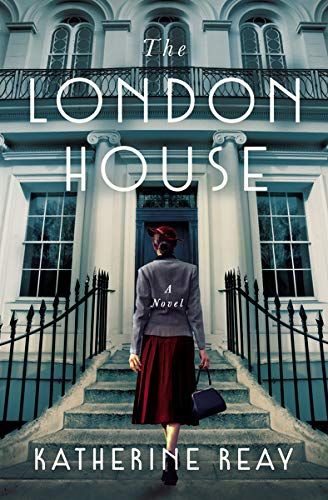
"The London House" by Katherine Reay

This was a difficult book, in some ways.  It contains two unhappy stories intertwined with each other, and I worried for a long time that at least one of them would not be resolved happily.  But I trusted Reay to at least deliver a satisfying ending, even if it was not exactly "happy," and I did not trust in vain.

In the present day, Caroline Payne is contacted by an old college friend, Mat Hammond, who has written an article about her grandmother and great-aunt and their family history during World War II.  Caroline is hurt and angered by the article, and convinced it's not entirely accurate.  Her relationship with her parents is distant, bordering on estranged, but her brother convinces her to go to their home in London and learn more from her mother there.

Caroline convinces Mat to postpone publishing the article until she can learn the truth, and off she goes to learn the real story about her grandmother and her twin sister, who may or may not have run away with a Nazi during the early days of WWII.  

Through diaries and letters, Caroline learns a startling truth about her family history -- a truth that even her grandmother and grandfather didn't really understand.  Along the way, she helps her family heal and begin to grow closer again.  Also, she and Mat tentatively consider resuming the relationship they'd let dissolve back during college.

By the end, everyone is in a much healthier and happier place, but boy, was most of this book rough!  

I'm sorry to see that Katherine Reay has continued to move away from writing explicitly Christian fiction, though.  You can't even call The London House faith-based fiction -- it's simply clean and wholesome, and that's all.  Which is not bad, but not as awesome as I think it could have been.  She talks about absolute truth existing, outside of people's perceptions and decisions and whims, but she never leads the discussion to where that absolute truth comes from.  The closest she gets is quoting C. S. Lewis a bit.  What a missed opportunity.

Particularly Good Bits:

I realized Jason and I shared something in common--we needed people in our lives with vibrancy and color, perhaps because we had somehow and somewhere lost our own (p. 44).

"When something bad happens," she continued, "it's easy to blame someone else, and in some cases maybe it is their fault, but that doesn't matter.  Not in the end.  What does matter is how long we hold on to that hurt or that anger.  We can magnify the pain, making it worse and worse until it devours us, or we can forgive it and get on with life" (p. 137).

I wondered how much my dad had missed, how much I had missed, by focusing on what was absent rather than what was in front of us (p. 152).

I need to forgive Mother and Father for not being who I needed them to be.  That sounds self-absorbed and patronizing as well, but I don't mean it that way.  I simply mean they strive to be the best parents they can--I see that now--and simply because it's not what I wanted does not mean their efforts aren't right and true (p. 236).

It is wrong to believe my perception is the only reality, and a true one at that.  There are absolute truths in this world, Margo, and I am slowly learning I do not determine them (p. 236).

If This was a Movie, I Would Rate It: PG-13 for wartime violence and discussion of an unmarried couple spending the night together (not shown, only discussed).

This has been my 20th book read off my TBR shelves for #TheUnreadShelfProject2022.

Saturday, August 22, 2020

"Jane Eyre" by Charlotte Bronte (again)

Have you ever thrown caution to the wind and decided to read a massive book in a very short space of time?  Like, say, a 627-page book in three days?

If so, you're not alone.

One Sunday, I decided that I could not pass up the opportunity to discuss my favorite novel with one of my favorite living authors, Katherine Reay.  She and a couple other authors direct the "What the Dickens" reading group on Facebook, and Jane Eyre was their latest book to discuss.  And the discussion was slated for Wednesday.

So, Sunday evening after supper, I started rereading Jane Eyre.  Tuesday night around 10pm, I finished it.  It took me 51 hours, but I did it.  And then I got to discuss it last night, and that was nifty.  But know what was niftier than the discussion?

The experience of inhaling my favorite book, that's what.  I am, by nature, a savorer.  I want to read things slowly, draw out the experience.  I can make a decent-sized book series last for years.  I can make a TV series last for decades.  I enjoy anticipation, I enjoy savoring... but I've realized (mostly thanks to The Blue Castle) that devouring a book as quickly as possible can also be a joy.  A different kind, but just because it's different doesn't mean it's bad.

By the end of this reread, I felt like I had words shooting out of my fingers and toes and the ends of my hair.  I had gorged myself on words, and it felt pretty glorious. 

I'm going to try to remember this.  That reading a book really fast does not mean I will necessarily enjoy it less, it just means I will enjoy it in a different way.

And yeah, I love this book.  Sorry that this doesn't say much about what Jane Eyre is actually about.  You can read my review from a few years ago for more on that, I guess.

One random thing I noticed this time that I'm not sure I ever have before -- Jane actually likens the third story of Thornfield to "a corridor in some Bluebeard's castle" (p. 145) the first time she visits it.  How did I never notice that bit of foreshadowing before?

Also, it brought home to me again that it isn't until Rochester "began to experience remorse, repentance; the wish for reconcilement to my Maker" and "began sometimes to pray: very brief prayers they were, but very sincere" (p. 619) that the "miracle" occurred that carried his voice to Jane's ear over all the land that separated them.  Like a benediction that says yes, he is forgiven, and now he and Jane can go on with their lives.

Particularly Good Bits:


"...it is weak and silly to say you cannot bear what it is your fate to be required to bear" (p. 72).

"Life appears to me too short to be spent in nursing animosity or registering wrongs" (p. 75).

"Human beings never enjoy complete happiness in this world.  I was not born for a different destiny to the rest of my species: to imagine such a lot befalling me is a fairy tale -- a day-dream" (p. 357).

"Yes; I feel now that I was right when I adhered to principle and law, and scorned and crushed the insane promptings of a frenzied moment.  God directed me to a correct choice: I thank His providence for the guidance!" (p. 499).


If This was a Movie, I Would Rate It: PG for scary situations, cruel treatment of a child, and discussions of Rochester's possible fathering of an illegitimate child.

Tuesday, July 21, 2020

"Of Literature and Lattes" by Katherine Reay

I was a little worried when I started this book because I've been seeing some reviews from people who did not like it as much as Katherine Reay's last book, The Printed Letter Bookshop.  In fact, some of them liked it considerably less.  You know what I learned from this?  I learned I need to quit reading reviews before I read books by authors I already love.

Of Literature and Lattes takes place in Winsome, the same fictional Illinois town as Printed Letter.  And the main characters from that previous book do show up in this one, but only one of them is a major part of the story.

Alyssa Harrison's life falls completely apart one day, when the FBI shut down her employer and launch an investigation into its practices.  Broke and friendless, she moves home to Winsome, hoping to stay with her dad while she tries to figure out what to do next.  But he insists she needs to stay with her mom, Janet, who works at the Printed Letter Bookshop.

To say Alyssa and Janet rub each other the wrong way is a gross understatement.  Their mother-daughter relationship is in shambles, and neither of them is sure it can ever be salvaged.

Meanwhile, Jeremy Mitchell moves to Winsome to be close to the little daughter who's growing up without him.  He buys the local coffee shop, renovates it, and then can't figure out why his business starts failing the very first day it's reopened.  

Jeremy and Alyssa both learn to appreciate the difference between change for the sake of change, and changing and growing into something better.  They also experience the grace of being given second, third, even fourth chances by the people around them, including those they've hurt the most.  I am not sure if I loved this book more than The Printed Letter Bookshop, but I can safely say that it ties with it for my favorite Reay work.  

(Mine from my Instagram.  Mug is from Crabapple Books & More.)

Particularly Good Bits:  

...dwelling on the unknown, the past, and all the questions she couldn't answer would get her nowhere.  But it was hard too because -- as Lexi said -- she was often too deep in her own head (p. 101).

If This was a Movie, I Would Rate It: PG-13 for discussion of an unwed pregnancy and some potentially distressing discussions of Alzheimer's and other diseases.  No bad language, no smut, no violence.

This is my 27th book read off my TBR shelves for #TheUnreadShelfProject2020.

Thursday, October 24, 2019

The Taylor Swift Book Tag

I am not actually a fan of Taylor Swift.  I'm not exactly anti-Taylor either, I just... enjoy a few of her songs if they pop up on the radio, but have never listened to a full album or really bothered to learn the lyrics to any of her stuff.

Be that as it may, I saw this super-cute tag on Coffee, Classics, and Craziness a while back and felt like answering it myself, so here goes!  Book titles linked to my reviews where applicable.


1. “We Are Never Ever Getting Back Together”: a book/series you thought you’d love but ended up disliking

I quit reading Kathy Reichs' books because they got too repetitive.  But I own all twelve seasons of Bones, the TV show based on them.  Go figure.  (TBH, it's all David Boreanaz' fault.)

2. “Red”: a book with a red cover

I have a wonderful old copy of Robinson Crusoe by Daniel Defoe that is bright red and I love it.

(All book photos in this post are mine from Instagram)

3. “The Best Day”: a book that makes you feel nostalgic

I can't read The Beekeeper's Apprentice by Laurie R. King without remembering both the Wisconsin library where I first found it and also a bunch of Veggie Tales silly songs that my first toddler loved -- I would let him watch ten minutes of silly songs on YouTube every day, and I'd read while he watched.  It was often my only chance to read at that time, and so... I clung to it, rereading favorite books in tiny chunks with Bob and Larry in the background.

4. “Love Story”: a book with forbidden love

Speak Easy, Speak Love has several love stories, and most of them are not forbidden.  But the love between John, who is Italian, and Maggie, who is black, is absolutely not acceptable in the 1920s.  And they're two of my favorite characters, and watching them struggle against their own fears and the prejudices of their society is just... so good.  Love that book.  (How could I not?  It's a Much Ado About Nothing retelling!)


5. “I Knew You Were Trouble”: a bad character you can’t help but love

A lot of people seem very appalled that I love Mr. Rochester from Jane Eyre, but how can I NOT love that damaged, flawed, sad, lonely man?  And he's not totally bad -- he does reform and repent and change and grow.


6. “Innocent”: a book/series someone ruined for you

I'm not sure I've got anything for this.  I don't know that anyone else has ever ruined a book for me.  What kind of a person would do that?

Oh, some person in my life has literally wrecked my physical copies of books, that's true.  But that didn't ruin the story for me, just that particular copy.

7. “Everything Has Changed”: a character who goes through extensive character development

Um, all good characters?  Okay, to pick one I haven't talked about yet, Edmund Dantes in The Count of Monte Cristo by Alexandre Dumas.  He goes from a simple, uneducated sailor to a man of great learning and exquisite taste; from being consumed with the desire for revenge to an understanding of how ruinous vengeance can be.

8. “You Belong With Me”: your most-anticipated book release

Of Literature and Lattes, Katherine Reay's upcoming follow-up to The Printed Letter Bookshop.


9. “Forever and Always”: your favorite book couple

Valency Stirling and Barney Snaith from The Blue Castle by Lucy Maud Montgomery.  Both of them are intelligent, quirky, introverted, quiet, secretive, wonderful people, and I love them fiercely.


10. “Come Back . . . Be Here”: the book you would be least likely to lend out

My autographed copy of Fahrenheit 451 by Ray Bradbury.  Ain't happening.


11. “Teardrops On My Guitar”: a book that made you cry

Many books make me cry.  Most recently, I was finishing reading Caddie Woodlawn aloud to my kids, and I cried over the part where their dog comes back.

12. “Shake It Off”: a book you love that other people hate

Hmm.  Maybe The Great Gatsby by F. Scott Fitzgerald?  I know a lot of people aren't into that one.

13. “Stay Stay Stay”: a book you wished could go on forever

Well, I was so reluctant to leave the world of The Guernsey Literary and Potato Peel Pie Society the first time I read it, I just flipped back to the beginning and started it all over again.

14. “All Too Well”: a series you wished could go on forever

The Sherlock Holmes canon.  It could be four times as long and I'd be ecstatic. That's why I read so many pastiches.  I NEED more!


15. “Ronan”: a book with a tragic character death/death of an innocent

Anne's House of Dreams by L. M. Montgomery.  If you've read it, you know what I'm talking about.  if you haven't... I'm not spoiling it for you here.

16. “Out of the Woods”: a book that had you worried about the characters up to the very end

Even though I've read it a dozen or more times, I still worry about Ponyboy and everyone else in The Outsiders by S. E. Hinton the whole book through.


17. “Getaway Car”: a book with a tempestuous romance

Pride and Prejudice by Jane Austen certainly qualifies for that, I think.  

18. “Clean”: a book that taught you something profound

A Gift from the Sea by Anne Morrow Lindbergh taught me many things about woman's innate need to create, the importance of alone time, and so on.

19. “Long Live”: a book that transports you every time

The Hound of the Baskervilles by A. Conan Doyle never fails to whisk me away to windswept moors.


That's all, folks!  If you had fun with this, feel free to snag it for your own use.  Not tagging anyone today.

Tuesday, May 21, 2019

"The Printed Letter Bookshop" by Katherine Reay

Oh.  My.  Goodness.

I have a new favorite Katherine Reay book, y'all.  No question about it.  I mean, I've liked all her other books, even loved a couple of them, but none of them were as special as The Printed Letter Bookshop.  Not one.

Where to begin?  With the characters, of course.

Madeline's aunt has died and left her a bookstore, a house, an old station wagon, and the chance for a new life.  Madeline is a high-powered lawyer at a prestigious Chicago firm.  She works a million hours a week, hasn't had time to find a new boyfriend after the last one broke up with her, and is convinced she's doing exactly what she should be doing.

Janet works at the bookstore.  She's divorced.  She hasn't been allowed to hold her first grandbaby yet because everyone blames her for the divorce.  She's angry and bitter and kind, which seem like a weird mixture, but that makes her human.  I didn't like Janet much at first because she was so crabby, but by the end, she bloomed into an understandable, healing, hopeful woman.  Hers is possibly the biggest character arc of the three, actually.

Claire also works at the bookstore.  It helps her fill her days when her two teens are at school and her husband is at work.  It keeps her connected to people, and it fulfills her.  She's great at managerial stuff at the shop, but she tends to just keep managing instead of mothering when she goes home.  She feels estranged from her 17-yr-old daughter in particular, but she and her husband aren't close anymore either.  

Three very different women with three very different sets of struggles who gradually learn and grow and mature, with some help and guidance from Madeline's deceased Aunt Maddie.  But not in a weird, creepy way!  I promise.  She left them each a list of books to read, and as they do, they go on journeys of self-discovery and healing.  

The whole book is permeated with the love of stories.  The power of stories.  The way the right story at the right time can lift us, empower us, even change us.  That might actually be my favorite part of this book!  The way it celebrates the power and importance of storytelling.

No, I'm totally kidding.  My favorite part is the characters.  It always is.  Especially Madeline, as she learns to embrace who she is, not who she thinks people want her to be.  The only character I didn't connect with very well was Chris, the groundskeeper friend of Aunt Maddie's who serves as Madeline's love interest.  I liked him, but I never felt drawn to him the way I wanted to be.  That's okay, though, as he's not really a huge part of the book.

Unlike Reay's last few books, The Printed Letter Bookshop does contain some Christian content.  Her last few have been more like clean mainstream books, and I liked them, but I really couldn't call them Christian fiction.  This one, though, has discussions of Bible passages, a strong theme of forgiveness given and received, and even one character with a brother who is a Catholic priest.  So I'm going to label this one Christian fiction, though I'm disappointed that it doesn't actually mention Jesus once, nor do any of the characters appear to be regular churchgoers.  They're nominally believers who do read parts of the Bible, but that's better than nothing, I guess.


(Mine from Instagram)

Particularly Good Bits:

There's something comfortable and secure about people who color within the lines (p. 13).

That's what books do, Maddie used to say; they are a conversation, and introduce us to ourselves and to others (p. 127).

If This was a Movie, I Would Rate It:  PG-13 for discussions of an extra-marital affair, teens drinking and misbehaving, and a little mild smooching.

Sunday, January 7, 2018

My Ten Favorite Books of 2017

As is my wont, I've compiled a list of the ten books I liked best of all the ones I read this year.  You can read my previous years' lists here: 20162015, and 2014.  (I do a similar thing with movies, and my 2017 list for those is here on my other blog.)

I read and reviewed 56 books this year, plus I know I read a couple more that I never got around to reviewing.  I've split this list into two parts, as usual -- those I've read before and those that were new to me.  

These are in alphabetical order because I don't feel like getting them into a favoritey sort of order.  Titles are linked to my reviews.  Here we go!

New to Me

As You Wish by Cary Elwes with Joe Layden -- I got to see The Princess Bride (1987) on the big screen thanks to TCM and Fathom Events this fall, so it felt like the perfect time to finally read Elwes' memoir about the filming.  I want to own a copy.


The Austen Escape by Katherine Reay -- I liked it, then I was frustrated by it, then I liked it again, and by the end, I loved it.  Currently vying with A Portrait of Emily Price for the distinction of being my favorite Katherine Reay book.

Every Frenchman Has One by Olivia de Havilland -- hilarious, heart-warming, and adorable.


The Screwtape Letters by C. S. Lewis -- even better than I expected.


A Sidekick's Tale by Elisabeth Grace Foley -- one of the funniest fiction books I read all year!


The Story People by Heather Kaufman -- sweet and charming.  I've already pre-ordered Kaufman's next book, Loving Isaac.

The Usurper's Throne by Charity Bishop -- engrossing and thrilling.  I can't wait for the next book.

Re-reads


The Big Sleep by Raymond Chandler -- my favorite author, what more can I say?


The Fellowship of the Ring by J. R. R. Tolkien -- Enchanting as always -- this was my seventh time reading it.  (Though we're only about halfway through it for the read-along, I started it back in August for my niece's lit class, so I'm done reading it already.)

The Great Gatsby by F. Scott Fitzgerald -- I like this on better every time I read it.


How about you?  What wonderful books did you discover or re-read in 2017?

Tuesday, December 19, 2017

The Joy of Christmas Book Tag

Saw this on Finding Wonderland and couldn't resist the Christmasyness of it :-)

(from Pinterest)

1: Anticipation: The Christmas excitement is real; what book release(s) are you most anticipating?

Island of the Mad by Laurie R. King
If I Live by Terri Blackstock
Whatever Katherine Reay writes next

2: Christmas Songs & Carols: What book or author can you not help but sing its praises?


Everyone needs to know how much I enjoy Katherine Reay's books!  I keep giving them to people as gifts.


3: Gingerbread Houses: What book or series has wonderful world-building?


I think The Lord of the Rings by J. R. R. Tolkien is pretty much the gold standard when it comes to world-building, don't you?


4: A Christmas Carol: Favorite classic (or one that you want to read)

Jane Eyre by Charlotte Bronte is my favorite classic <3 

(from Pinterest)

5: Christmas Sweets: What book would you love to receive for Christmas?

Okay, there's this collection of F. Scott Fitzgerald's "personal essays" called My Lost City that I would LOVE to read, much less own... but it costs more than $100, so yeah, that's pretty much not going to happen.  But you DID ask.

6: Candles in the Window: What book gives you that warm, fuzzy feeling?

Anne of Green Gables by L M Montgomery definitely does.

(from Pinterest)

7: Christmas Trees & Decorations: What are some of your favorite book covers?


(I'll stop now.  Five was a good number to share, right?)

8: Christmas Joy: What are some of your favorite things about Christmas and/or some of your favorite Christmas memories?

  • Christmas songs
  • eggnog 
  • multicolored lights 
  • going on "Christmas walks" with my husband and kids (we walk around the neighborhood looking at all the decorations) 
  • fudge
  • singing "Silent Night" by candlelight
  • allllll the Christmas church services

These are a few of my favorite things!


Not tagging anybody with this cuz I wasn't tagged myself.  If you want to do it too, then do it!

Wednesday, December 13, 2017

"The Austen Escape" by Katherine Reay

In which I quit two other books I'm reading, right in the middle of them, because I just couldn't hold off on reading this until I'd finished them.  It sat there on, taunting me, promising all the delicious, thoughtful, engrossing fun that Reay books deliver to me.  I caved.  I read.

I mean, I WILL finish those other books.  But I had to pause them.  This was too tempting.

Was it worth it?  You betcha.  Reay's books delight me, and this was no exception.  Even though I kept wanting to shake various characters and tell them to be nicer, or more sensible, or less sensible, as the case may be.  You see, the main character, this engineer/physicist/inventor named Mary -- she has a completely horrible friend named Isabel.  Like, just the awfullest friend.  I basically could not stand Isabel through most of the book, though I did pity her.  And Mary frustrated me because she was kind of this weird mix of oblivious and pragmatic and secretive, and um... I liked her, but I didn't always sympathize with her.  

However, I reeeeeeeeeally liked Nathan.  He was all kinds of awesome -- sometimes edging into too-good-to-be-true territory and then suddenly getting all realistic and not-so-perfect-after-all.

This is not my most sensible book review ever.  Okay, so Mary works with Nathan, but won't let him know she likes him.  Her childhood friend Isabel (I use the term 'friend' really loosely here, because Isabel rarely behaves like a friend to Mary) takes Mary to... basically Austenland.  If you seen that movie or read that book, then yeah, it was kind of like that.  A big, ancient house in England where everyone dresses up like they're in Regency England and adopts names of characters from Jane Austen's books, and they all have some escapist fun.

And then Isabel's mind kind of gives away, or she has a sort of mental breakdown, or something -- it's never really labeled -- and she starts to believe she IS Emma Woodhouse.  In a much less far-fetched way than I'm making it sound.  It makes sense in the book, okay?  And Mary has to help her friend kind of work through some stuff, while Mary also works through a bunch of emotional and work-related stuff... I'm saying "stuff" too often, aren't I?

Sorry.  I could vague that up a little for you, if you'd like?  Anyway, it was a thoroughly enjoyable book :-)  Though not as overly Christian as some of Reay's others -- I'm not actually going to label it "Christian fiction."

Particularly Good Bits:

"Music is math, and once you understand that... How can anyone not be in awe?  It's the audible expression behind the laws of the universe.  it feels like the only thing, apart from God, that lives outside time.  Once released, it lives on and it can make you laugh and cry, rip you apart and heal you, all within a few discrete notes strung together.  And while it follows rules, expression is limitless" (p. 195).

If This was a Movie, I Would Rate It:  PG for a few mentions of things like cleavage and some mild kissing.  No sex scenes (or make-out sessions), no bad language, no violence.

Tuesday, May 9, 2017

Top Ten Tuesday: More, Please

Today's topic from The Broke and the Bookish involves things we want to see more of in books.  It's been a while since I tackled one of these lists, but this is such a fun and different topic, I had to find time to do it.


Here are my top ten things I want more of in books!  I thought it would be hard to come up with ten, but once I started thinking this through, I actually had trouble narrowing it down to ten options.  Hee!

1.  Cowboys.  But, real cowboys, not just dudes dressed up in jeans and boots that say, "Howdy, Pardner" a lot.  Basically, I want more historical fiction set in the wild west.  I realize there is plenty out there, but we can always use more.


(Maybe I would say "generally" instead of "always.")

2.  Non-graphic mysteries.  I love mysteries.  Favorite genre, right there.  But... do so many modern mysteries have to be stomach-churning with the descriptions of gore and brutality and weirdness and general ick factor?  One of the things I've been loving about the books I'm reading for the INSPY awards is that they're really great mysteries, but so far, none of them have crossed into the Ishy Zone.

3.  Strong female characters who aren't bossy and/or brassy.  I'm a woman.  I have two daughters.  I realize the importance of having strong female characters, ones who don't sit around waiting for a man to rescue them or capture them or notice them, and so on.  However, too often writers (and moviemakers) use character traits like bossiness or brazenness to convey "strong."  No, that's annoying.  If it would be annoying in a guy, it's also annoying in a girl.


(Strong, opinionated, gutsy, but not bossy or over-bold.)

4.  Romances based on characters getting to know each other, not insta-love feelings.  I'm not saying love at first sight can't happen.  Buuuuuuuuuuuuuuuuut I think that lust at first sight is way more common, and people mistake that physical attraction for love.  Anything that springs up quickly can die away quickly too without something more substantial than feelings to build on.  You see someone and they're attractive and you kind of crush on them a little and you flirt and you think about them a lot -- that's great.  That's fun.  But don't call it love.

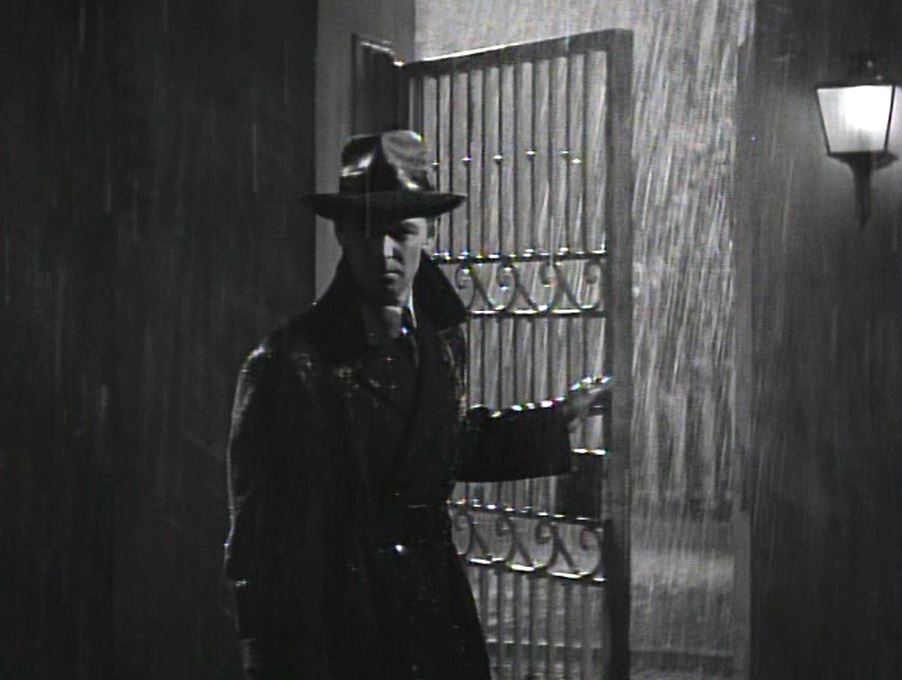
5.  Hard-boiled detectives.  Just because I love them.  I can always find room in my heart for another.


Alan Ladd in The Blue Dahlia (1946)

6.  Characters who love to read.  Katherine Reay does this really well -- writing characters who read books, and using their book choices to help define them.  I want more of this.

7.  Fairy tale retellings.  Not getting tired of these yet.

(Source)

8.  Intelligent children who obey their parents.  I'm really tired of stories about kids who are so smart, they just have to disobey all their superiors in order to save the day or whatever.

9.  Intelligent parents.  While we're at it, let's do away with the "stupid parents who are incapable of simple reasoning and should not be allowed to drive or hold jobs" thing that shows up in kids books.  Especially kids mysteries.  Making the parents dumber does not make the kids look smarter.  It makes the author look lazy.


10.  Nice stories about nice people doing nice things.  And something goes a bit wrong now and then, but everything turns out well in the end.  Does anyone write books like this anymore?  They should.  I will read them.


(I will also love those books, and hug them, and be their new best friend.)

That's all I've got for today, bookish friends!  Are any of these things you'd like to see more of?  Did you do a TTT this week?  Please share and discuss!

Saturday, November 26, 2016

"A Portrait of Emily Price" by Katherine Reay

While I've enjoyed Reay's first three books a great deal, especially Dear Mr. Knightley, this book... I loved.

In fact, I loved it so much, I'm having trouble coming up with words to review it.  Maybe it's just that this hit more sweet spots for me -- it has a mixed-culture family, characters proving themselves, and a very helpful heroine.  Her helping doesn't always truly help, but she tries.  And tries.

Emily Price restores damaged art.  Not fine art, usually, not museum artwork, but stuff people have in their house that gets damaged by fires or floods and so on.  While in Atlanta on an assignment, she meets Ben, an Italian chef visiting family there as well.  He spends two weeks wooing her, they get married, they go back to Italy to live with his family, and that's where it gets really good.  The bulk of the book is Emily trying to figure out how to fit in with Ben's family, how to help his various family members with their problems (whether they want her help or not), and most of all, coming to terms with who she is.

I feel like Reay's first four books were well-written, but they lacked an emotional something.  Vulnerability?  Depth?  Punch?  I don't know -- like I said, having trouble with words.  But whatever it is, this book has it and then some.  I didn't get tears in my eyes while reading this book, I had to put the book down several times because I was crying too much to read.  It has taken me basically a week to process the book after finishing it before I could write even this review, and this is not as coherent as I would like.  This book touched me -- not just because I did identify with Emily's need to help, but because Ben's whole family was so, well, real.  I am buying my own copy of this book, it's that special to me.

(Also, I love her analysis of The Taming of the Shrew, which plays a part in this, because it's pretty close to my own.  See page 222 -- I'm not typing the whole thing out, sorry.)

Particularly Good Bits:

If I let myself go, forgot the boundaries, forgot the rules I myself fashioned and imposed, what could happen? (p. 91).

Planning a surprise for no reason other than to bring another person delight was, in fact, romantic (p. 110).

If This was a Movie, I Would Rate It:  PG-13 for discussions of unwed pregnancy.

Thursday, February 25, 2016

"Dear Mr. Knightley" by Katherine Reay

My goodness, I like each Katherine Reay book I read better than the last.  I liked The Bronte Plot quite a lot.  I liked Lizzy & Jane even better.  But I like Dear Mr. Knightley the best of all.

I think part of this has to do with the heroines' chosen professions.  Lucy buys and sells books and antiques, and while I do buy a lot of books, I don't sell them, and I'm not into antiques.  Lizzy is a chef, and while I love to cook, I don't do it for a living.  But Samantha Moore in Dear Mr. Knightley is a writer, and I'm a writer.  Although she does the journalism thing and I do the fiction thing, I related to that aspect of her character a lot.

However, I also liked this book better because it's inspired by Daddy-Long-Legs, and I enjoyed seeing how Reay updated the idea.  Also, it's somewhat more serious -- Sam is a former foster child struggling to adjust to adult life away from the safety of the group home she lived in through her older teen years and college.  Although a nameless benefactor gives her the money to go to grad school and a nice apartment, she does not have an easy time.  She's socially awkward, has a hard time coping with the rigors of grad school, and finds it hard to distinguish between people who are genuinely nice and kind versus those who are pretending to be nice because they want something.  

This is a more interior, personal book than Reay's two other novels, more about a person's struggles within themselves and less about their interpersonal problems, if that makes sense.  Not saying I don't like books about interpersonal problems, cuz I do, but I liked this even better.

A couple of my blogging friends have said they think it was unrealistic that a guarded person like Sam would have written such intimate thoughts to an unknown person, but I think Reay did a good job setting that up from the beginning with Sam writing passages like, "Honesty is easier when you have no face and no real name.  And honesty, for me, is very easy on paper" (p. 5).  Later, Sam writes, "And now I trust our one-sided, soul-purging relationship.  I depend on it" (p. 130).  Like any epistolary novel, you have to suspend some disbelief because most of us don't write letters that detail full conversations, but my credulity was never stretched beyond comfort.


Favorite Lines:

He showed me the real Kyle, and I crushed him.  Is this the adult I've become? (p. 26).

I've heard all sorts of things about a kiss (melting, fireworks, music), but no one ever told me it's a conversation:  asking, accepting, deciding, inviting, giving... Questions posed and answered (p. 93).

"Talking through stuff before I get it into the manuscript depletes the tension and magic.  I have to keep it compressed or it flops" (p. 218)


If This was a Movie, I Would Rate It:  PG-13.  Sam has a boyfriend who pressures her to spend the night, and they make out several times, though those are not described any more in-depth than the passage above.

Saturday, February 6, 2016

"Lizzy & Jane" by Katherine Reay

Um, yes.  Two reviews of Katherine Reay books in just over a week.  Because I got this from the library last Saturday and began devouring it immediately.  And I do mean "devouring" -- this book's protag, Elizabeth/Lizzy, is a chef.  And while I like learning about interior decorating now and then, which featured prominently in The Bronte Plot, I love to cook and adore baking, so that's one reason I liked this book even better than that one.

Now, I don't consider myself a "foodie" because I'm not into gourmet food, I don't grind my own herbs and spices (unless I've grown them myself), and I don't make up my own recipes very often.  But I do have a recipe blog, and I truly enjoy preparing and eating food.  Reading this book made me hungry.

So anyway, about this book.  Lizzy is a chef and runs an expensive restaurant in New York City.  But she's been thrown off her groove lately because her sister Jane has cancer.  Their mom died of cancer, so she's pretty freaked about this.  She takes a sort of stress break from work and flies to Seattle to see her dad and sister, with whom she doesn't have exactly a close and warm and loving relationship.  And then she meets a guy, and she cooks a lot of food, and she works through her relationship problems with her sister and figures out stuff about her past and gets to know her niece and nephew and brother-in-law better, and that all sounds kind of boring and/or depressing, but it's not.  It's beautiful.  I liked The Bronte Plot, but I loved Lizzy & Jane.  

I also cried a lot over it, but in a good way, if that makes any sense.  Not happy crying, but more "what if it was me facing the potential of leaving her kids for good."  I'm going to be flying most of the way across the country without my kids this summer, leaving them for almost a week for the first time ever (well, we left 2 of them at Grandpa and Grammy's overnight once...) and I'm kind of wigging out over the idea that what if I died on that trip and they had to live the rest of their lives without me?  Something I'm doing a lot of praying about already, even though my trip is six months away.  So somehow, reading this book helped me kind of figure out exactly what was concerning me the most about that impending trip and know better how to pray about it.

Anyway, good book.  Also, in case you can't tell by now, this is not a retelling of Pride and Prejudice.  Jane Austen's books do figure into the story, but if you haven't read them, you'll still enjoy this book.  If you have read them, you'll get what the characters are talking about when they discuss the books, but it's not a prerequisite.

One thing did bug me about this, though.  It's supposedly a work of Christian fiction, and it does contain more discussions of God and living a godly life than The Bronte Plot did.  A Bible verse reference here and there.  But they were all about how God makes our lives better or helps us endure things.  Nothing about Jesus.  No law, no Gospel.  Nobody in this book ever goes to church.  Nobody says, "Hey, you know, because we're forgiven by God for our sins, we need to go forgive other people too.  Maybe you should think about that."  It's nominal Christianity only, vague and more Deistic than anything, and that bugged me.  


I'm not a fan of Christian fiction that has sermons sandwiched into every third chapter, an obligatory conversion story line, and a required quotient of Jesus references.  But if characters are supposed to be Christians, I expect them to act more like God truly matters in their lives.  "By your fruits, you will know them" (Matthew 7:16), in other words.  However, if you don't think of this as "Christian fiction" and instead "fiction that Christians would be comfortable reading," then it works well.

Particularly Good Bits:

Without ever losing sight or diminishing Anne's reality and social limitations, Austen gave her and all of us the soft, steady hope of second chances, happiness, true love, and the promise that life might be better close to thirty than it was at eighteen (p. 241).

If This Was a Movie, I Would Rate It:  PG-13 for a brief discussion between sisters about how cancer affects your hormones and sex life.  It's not salacious, it's matter-of-fact and minor, but it's there.

Thursday, January 28, 2016

"The Bronte Plot" by Katherine Reay

Kara has been raving about Katherine Reay's books over at Flowers of Quiet Happiness for a couple years now, and lately, so has Carissa at Bookshelves and Daydreams.  Since I'm gearing up for my Jane Eyre read-along (even though, yes, I'm still in the midst of the Shane read-along right now), I decided it was time to see what all the Reay-centered excitement was about and try The Bronte Plot.

Let's just say I'll be reading Reay's other two novels, Dear Mr. Knightley and Lizzy & Jane ASAP.  In fact, I've got a hold request in at the library for the latter right now.

In her review here, Kara said, that Reay's characters "sneak into my heart so subtly until suddenly there they are refusing to leave!"  And that's exactly what happened to me.  At first, I wasn't sure I even wanted to like the protag, Lucy.  I liked her love-interest, James.  I liked James' grandmother, Helen.  I loved her boss Sid from the first (doesn't hurt that I imagined him as a blond Tom Hiddleston for no good reason other than that he totally fit the role).


(This is exactly what I imagined Sid looking like.)
(Now you know.)

But Lucy... Lucy was a habitual liar.  Lucy had abandonment issues because she hasn't seen her father for twenty years.  Lucy falsified information and cheated.  True, her father was a con artist, which intrigued me.  (I'm fascinated by con artists.  I expect it's a great moral failing.)  But that didn't mean she had to mess with the truth too.  And then, throughout the book, she came to realize that as well, and that's when I started to like her.  When she realized that twisting the truth hurt people whether she ever learned about it or not.  

The basic story is this:  Lucy works for Sid in the interior decorating business.  She falls for a young and ambitious lawyer named James.  James catches her in a lie and breaks up with her.  And then his grandmother, Helen, asks Lucy to accompany her in a buying trip in England, which is when things got really interesting.

One of the things I liked best about this book was the rich descriptions of furniture, antiques, and decorations.  I'm not at all talented in the decorating realm, but I enjoy learning about it -- I used to watch Trading Spaces a lot on TLC back when I had cable in college.  My friends and I had our favorite designers and would get really into critiquing their design decisions and discussing what would would do the same or differently.  So I really enjoyed that aspect of the book, and the way Reay could use just a sentence or two to make me see the room she was describing.  I struggle with writing succinct, rich descriptions myself, so I hope I learned a bit from reading this.

The Bronte Plot isn't overtly Christian fiction -- the characters don't go to church, don't pray, don't think or talk about making decisions based on what the Bible teaches.  But it plainly comes from a Christian world view, and to be honest, it was more wholesome and God-honoring that some "Christian fiction" I have read that puts lots of religious sentiment into characters' mouths, then has them behaving in decidedly un-Christian ways.  I'm happy to say I can wholeheartedly recommend this book to anyone.


Particularly Good Bits:

As the silence continued, Lucy's angst faded with the realization that no one could press the answers, force the change, or listen well enough to heal her.  She was on her own (p. 118).

"Did you know Dickens never killed his bad guys?  Well, he killed off one.  The others were cowards, bullies, minor villains, and general degenerates, but they were worth something and they lived.  If they didn't change on the page and find redemption, they lived with that promise still out there (p. 126-27).

"You are your own person and I wouldn't worry about the stories.  We all compare our lives to them.  That's why we love them:  they help us understand ourselves" (p. 130).

"Artists create things that point us to beauty, to truth, to God" (p. 157).

How much changed in a life, in a person, when one wasn't paying attention? (p. 163).

If This was a Movie, I Would Rate It:  PG for serious discussions of death and dying.  There's no bad language and zero racy scenes.