Showing posts with label Alan Ladd. Show all posts

Friday, March 3, 2023

The Bookworm Tag

Samantha at Bookshire did this tag recently, and she invited anyone who wanted to do it to consider themselves tagged, so I am!


The (very simple) Rules:
-answer the questions 
-make up new ones 
-tag people


Samantha's Questions and My Answers:

1. Hardback or paperback? 

I tend to prefer paperbacks.  They're cheaper, they take up less space on my shelves, and I can pack more of them when I go on trips.

2. Did you have a favorite comic book or graphic novel as a kid, and if so, what was it? 

As a kid, I loved this fairly odd comic book:


I got it for free from the grocery store, and I read it over and over and over and over.  And, it made me a Spider-man fan!  


3. What is your favorite devotional or inspirational book, and why? 

I really liked Pew Sisters by Katie Schuermann.  It was relatable, made for great discussions at our women's Bible study, and helped me realize that many of the things I struggle with are fairly common and not unique to me.  


4. Would you rather have to read only one book for the rest of your life, or never get to reread a book? 

I hate this question.  It has no good answer.  I love to reread books, but rereading just one book forever also doesn't sound like a great time.  


5. Least favorite literary villain? 

Like, the one I despise the most?  Um.  Hmm.  I don't know.  I dislike most villains, as that's sort of their job, so it's hard to pick just one I dislike the most.  Hmm.  Well, I really hate Cain in The Bourne Identity by Robert Ludlum, so let's just go with him, huh?


6. What is your favorite romance trope? 

I love friends-to-lovers.  Give me people who like each other as people, and then start to develop deeper feelings for each other, and I am going to be a happy little reader.

But I also love a lot of books where it's more annoyed-with-each-other-to-lovers, which can be very fun too.


7. If you could spend a day with your favorite author, what would you do with them? 

Okay, so, my favorite author is Raymond Chandler, and he was a crabby alcoholic.  Whereas I don't enjoy alcohol much, and I'm not generally a crabby person.  So I would probably spend the day just quietly letting him get on with his drinking and writing.  


Unless it could be a day he was spending on the set of either The Blue Dahlia (1946) or And Now Tomorrow (1944), which he wrote the screenplays for, in which case, I would spend the day quietly stalking Alan Ladd everywhere he went in the least-creepy way I could possibly manage.  I'm not sure if Chandler ever visited either of those sets, but if he did, that's what I would pick.  Which sounds like it's less about loving Chandler and more about loving Alan Ladd, but oh well.  Not everyone is lucky enough to have their favorite author write screenplays for their second-favorite actor, but I am, so there we are.


8. What is the longest book you've ever read, and did you like it? 

That would be The Lord of the Rings by J. R. R. Tolkien, and I liked it so much, I have read it nine times.

(From my Instagram account)


9. Do you have a favorite poet, and if so, who is it? When did you learn about them? 

I do!  I love Kenneth Koch because so much of his poetry makes me laugh.  I first learned about him in a lit class during my freshman year of college, and I've been a fan ever since.  I also really love his books on how to teach kids to write poetry, such as Wishes, Lies, and Dreams.


10. Have you ever cried over a fictional death scene, and if so, which one(s)?

SPOILER ALERTS!!!!  I cry over Boromir's death every time I read The Lord of the Rings by J. R. R. Tolkien.  And also over Matthew Cuthbert's death in Anne of Green Gables by L. M. Montgomery.  On a whole, though, I am way more likely to cry over something going unexpectedly, gloriously right in a book than I am over a character death.

END of SPOILER ALERT

Okay!  Those were lots of fun :-)  Time to tag people!  I hereby tag:


And here are my questions for you:

1.  If you had to go into the witness protection program, and they gave you the option of moving inside a book, where would you like to go?

2.  Have you ever claimed to have read a book you actually hadn't read?

3.  What author have you read the most books by?

4.  Do you ever buy fun bookish merch like mugs, shirts, artwork, etc?

5.  Do you usually read only one book at a time, or do you have several going at once?

6.  Are you a mood reader, or do you plan out your reads?

7.  If you could meet the author of your favorite book and ask them one question, what would you ask them?

8.  Have you ever tried a new food or drink because you read about it in a book or story?

9.  Have you ever named a pet after a book character?

10.  What book are you reading right now?


Play if you want to!

Thursday, February 16, 2023

The In or Out Tag

Spotted this at both Deborah Koren's blog and Cindy's Book Corner and thought it looked like too much fun to pass up :-)

Unlike most tags, there are no rules about thanking people or tagging people.  If you want to fill it out, you can!  If you don't, then don't!  


Reading the Last Page First -- OUT.  I can only remember doing this once, and it was for And Now Tomorrow by Rachel Field.  I did it that time because the first section of the book made it sound like the book was going to end differently than the 1944 movie, and I adore the 1944 movie, so I had to find out if it ended the same way or not.  Because, if it didn't, I wasn't going to bother reading the whole book.  But it does, so I did read it.  And loved it.

Ordinarily, though, I don't want to ruin the flow of a story by reading the ending first.

(Bwahaha!  I snuck an Alan Ladd picture in here!)

Enemies to Lovers -- IN.  It's not my favorite trope, but I love books like Pride and Prejudice, North and South, and the Anne of Green Gables books a lot, and they all use this, so I'm fine with it.

Dream Sequences -- IN.  Sometimes, I don't even mind "it was all a dream."

Love Triangles -- IN.  They're a classic.  I've even used them myself, like in My Rock and My Refuge.  

(This and all the following book photos
are mine from my Instagram account.)

Cracked Spines -- OUT.  OUT OUT OUT OUT OUT OUT OUT.  My mother gave me a boxed set of four Jane Austen novels for my birthday when I was in my upper teens.  Then she borrowed them each in turn to read herself and absolutely destroyed their spines.  Not only did they no longer fit in the slipcover, you couldn't even read the titles on the spines.  They made me sad every time I looked at them, and I eventually gave them away.  I still have my original Anne of Green Gables paperbacks that my mom also ruined that way, but my grandma gave me those, so I keep them anyway.

Now, a caveat to all that, though -- if I'm buying a used copy of a vintage paperback, like a Louis L'Amour or a Rex Stout or something like that, I am super fine with the book looking like it lived in someone's back pocket for weeks on end fifty years ago.  In fact, I prefer those to shiny, new copies for specific genres and authors.  But I WILL NOT contribute MORE crackage to their spines.  And I prefer them not to be so cracked that I can't read the title anymore.

Back to My Small Town -- IN.  Although "someone new comes to town, and everything changes" is my favorite trope, I also love "someone comes back home, and everything changes."  Probably my favorite versions of that are the book The Count of Monte Cristo and movie The Lone Ranger (2013).

 
No Paragraph Breaks -- OUT.  Also, ew.  Also, I don't think I've ever read a book like that, but I'm against it on principle.

Multi-generational Sagas -- IN.  I mean, I'm embarking on a quest to read all of the Sackett novels by Louis L'Amour this year, so I'm obviously a fan, right?  Also, I love historical fiction, and that sort of thing generally involves lots of history.

Monsters Are Regular People -- OUT if you mean horrific villains are portrayed as normal and acceptable.  IN if you mean stories where vampires just wanna make friends and hold down a job.  Angel (1999-2004) is my second-favorite TV show of all time, after all.


Re-Reading -- IN.  I reread a LOT.  I've estimated that 1 out of 4 books I read is a reread, usually.  This past year, it was closer to 1 in 3 -- I read 103 books, and 29 were rereads.

Artificial Intelligence -- OUT.  I don't read much sci-fi, and I just am not a fan of sentient robots in general.

Drop Caps -- IN.  They usually look amazing.

Happy Endings -- IN.  I LOVE happy endings!!!


Plot Points That Only Converge at the End -- IN, as long as the book isn't too long.  I must admit, I've never read a book by Tom Clancy because I've heard so many people talk about how he'll start like eight little plots going and you never find out how they're related until the very end, and that does sound kind of daunting to keep straight.  But J. K. Rowling did the same thing over the course of the Harry Potter series, really, and I loved that.  So... I'm not against it, anyway.

Detailed Magic Systems -- IN if I don't have to read all the details.  Out if the book is basically a travelogue about a fictional world.  This is part of why I don't read a ton of fantasy and sci-fi.  Descriptions of places and how things work bore me, and if that's the bulk of your first few chapters, I'm outta here.

Classic Fantasy Races -- IN.  The fantasy I do dig, such as The Lord of the Rings and Eragon and Harry Potter, all use classic things like unicorns and elves and dwarves and centaurs and dragons. 


Unreliable Narrators -- OUT.  I am not a fan.  I want to trust the narrator to tell me what's going on.  If I can't, I'm probably going to dislike the book.

Evil Protagonists -- OUT.  One of the things I demand from fiction is that it restore moral balance by the end of the book.  Also, if the protag is evil, I'm really not going to want to like them.  And if I don't like the protag, and they either have to face dire consequences or will get away with being evil... why would I want to read that?  Why???

The Chosen One -- IN.  Harry Potter, Frodo Baggins, Eragon, the Pevensie kids... I'm totally a fan.

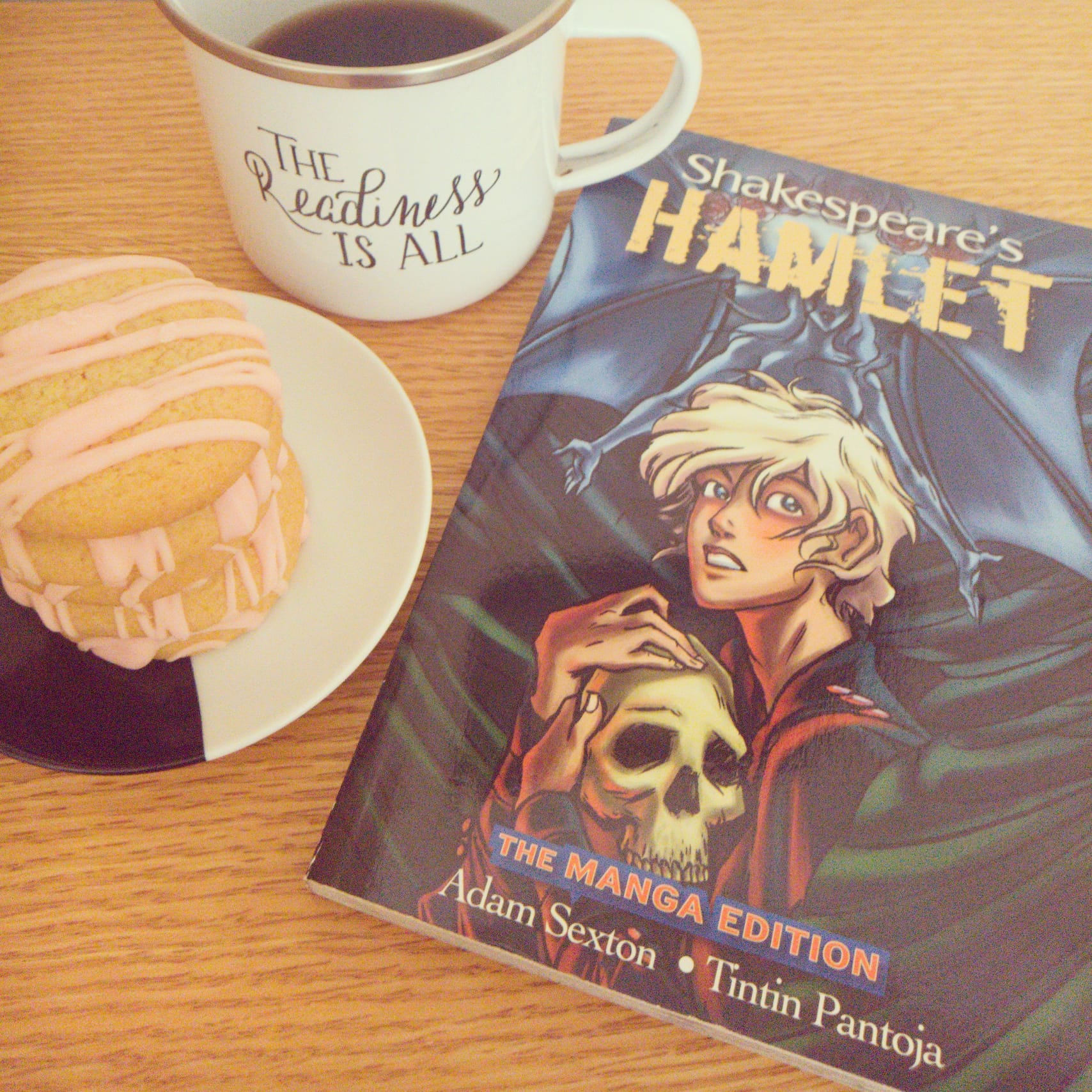
When the Protagonist Dies -- IN and OUT.  Ordinarily, I hate it.  I want my happy ending.  Buuuuuuut... Hamlet dies.  And I adore Hamlet.  I can be okay with protag death if that still results in a good ending.


Really Long Chapters -- IN, I guess?  I don't care, when I read.  I tend to write short chapters, though.

French Flaps -- OUT just because I don't really have any books with them and they seem annoying.  I had to look up what they are, though.

Deckled Edges -- IN.  I am a very sensory, tactile-oriented person, and how a book feels can matter a lot to me.  Like, I really can't stand cloth-bound books and avoid buying them.  I love the feel of deckled edges :-)

Signed Copies by the Author -- IN!  Why would anybody not want that?


Dog-Earing Pages -- IN!  Books are not sacred objects.  It's okay to bend the pages.  When I was just starting to read chapter books, I had a toddler brother who delighted in pulling bookmarks out of every book he found, so for several years, dog-earing was a necessity.  I usually use a bookmark, but if I don't have one, I don't feel guilty about dog-earing. 

Chapter Titles Instead of Numbers -- IN!  But be aware I will probably ignore them completely.


I was not tagged with this, so I'm not tagging anyone else, but if you think this looks fun, by all means fill it out yourself!

Friday, February 10, 2023

"Shane" by Jack Schaefer (yet again)

Some fictional characters take up residence inside your heart in a quiet, calm, yet confident way, and you can't imagine life without them there anymore.  Shane is one of those, for me.  But not only Shane -- Joe and Marian and Bobby Starrett too.  The whole family of four are so, so dear to me.

This book never ceases to fascinate me.  How Shane rides onto the Starrett family farm one day, just asking for water for himself and his horse, ready to move on through again once he's refreshed.  Accepting a simple offer of hospitality, then another, then another, then taking on a job he never would have dreamed of doing before, and never would have done if it hadn't been Joe Starrett who offered it to him.  The sophisticated gunman becomes a farmer.  The aloof loner joins a family in the most integral way possible without actually becoming physically intimate with any of the family members.  He simply... becomes one of them.  Belongs to them, as the narrator remembers thinking at the time.  He adopts them, they adopt him, and he's theirs as much as they're his.

At the end, it's Shane who has to sever those ties, cut himself loose from his family so he can become the lone gunman again.  Not because he no longer loves his family, but because he loves them so much, he can't possibly do anything else.  Because greater love hath no man than this: that he would lay down his life for his friend.  And Shane loves the Starretts, as surely as they love him.  Just as surely as I love all four of them.

On the surface, it's just another story of small farmers versus a big rancher.  The big ranges slowly gave way to small ranches and farms all across the West in real life, and that metamorphosis was often painful and brutal and violent.  Shane elevates this time-worn tale by giving us heroic men and women who are straight and true and upright and clean... but not perfect.  

Over the past seven years, this story has climbed higher and higher on my favorite books list -- going from somewhere down near fifty up to rest inside my top ten even as its characters nestle a little deeper into my heart with every reread.  It's a jewel-perfect book, pacing and characters and plot and description all polished and shining and brilliant.  The 1953 movie version starring Alan Ladd as Shane is equally wonderful, and it has climbed higher and higher on my favorite movies list over the years too.

I read the Critical Edition this time, but didn't read all the essays at the end.  Yet.  I read the introductory matter, and I'm saving the other material to enjoy now and again, adding one or two to each of my future rereads of the book so I can make them last a long time.

Particularly Good Bits:

Something in father, something not of words or of actions but of the essential substance of the human spirit, had reached out and spoken to him and he had replied to it and had unlocked a part of himself to us (p. 113-114).

If This was a Movie, I Would Rate It: PG for some old-fashioned cussing and western violence.

Wednesday, October 27, 2021

"The Glass Key" by Dashiell Hammett

The first time I read this book, fifteenish years ago, I had no real idea who Alan Ladd was.  I definitely had not seen the 1942 version of The Glass Key that starred him opposite Veronica Lake and Brian Donlevy.  Not even once.  Cut to 2021, when I've seen it probably five or six times, and that makes this reading experience totally different from that first one.

One of the best parts of this reread was how it cleared up a few things about Ladd's performance in the movie version for me!  I've always been a little bugged by certain expressions Ladd uses as Ned Beaumont because they don't seem natural to him.  In particular, he does these weird smiles where his lips are pulled tight against his teeth so he looks more like he's grimacing that smiling.  I had always chalked this up to Ladd being nervous because this was his first big hero role after he gained fame playing the sympathetic villain in This Gun for Hire (1942).  But now, I don't think that was it at all!


I think Alan Ladd read this book when he got cast in the movie version.  Because Hammett is very explicit about exactly what sort of smile Beaumont is doing at any given moment, whether it's a friendly smile, a genuine and boyish smile, or a controlled and fake smile... with his lips pulled tightly against his teeth.  I think Ladd was trying to draw on the source material and, if you have read the book, you'll realize that's what he's doing.  But, if you haven't, it just looks like he is really uncomfortable in a lot of scenes.  Which, actually, his character does tend to be, so it does kinda work.  But it works better now that I've read the book and then rewatched the movie right after.


ANYWAY, this book focuses on Ned Beaumont (renamed Ed for the movie because whyyyy?), right-hand-man of a political fixer who falls in love with a senator's daughter and decides to put all his political power behind this senator.  The senator's daughter can't stand him, but plays nice so he'll keep helping her dad.  And then her brother gets murdered.  Everyone assumes the fixer did it, but his power keeps him from getting arrested for it because he's in control of the District Attorney and so on.  Ned Beaumont tries to figure out who did kill the senator's son, if his boss didn't, and a lot of violence and excitement ensue.

If This was a Movie, I Would Rate It:  PG-13 for violence, including a pretty extreme beating, and contemplations of suicide.  Also some bad language, lots of alcohol use, smoking, etc.  I did mention this is hardboiled detective fiction, right?


This is the 30th book I've read and reviewed for my third Classics Club list and the second book I read for the #AMonthOfMystery challenge on Instagram.

Wednesday, June 12, 2019

"Shane" by Jack Schaefer (again)

I hadn't reread this since I led the read-along for it back in 2016, and I decided it was high time I revisited it.  I loved it even more this time through, if that's somehow possible.  Partly, of course, that's because I know how Alan Ladd residing so firmly in my head that I could envision him throughout the book, which was a delightful bonus.  

The story is deceptively simple.  At its core is a plot of comfortable familiarity:  a stranger rides in out of the unknown, and everything changes.  Which is basically my favorite plot, to be honest.  The Starrett family, Joe and Marian and their little boy Bob, live on a small, struggling farm in Wyoming.  They and their farmer neighbors have had difficulty with the big rancher across the river, but so far he and his cowboys have just been annoying, not overtly violent.

Into this uneasy situation rides a stranger, slim and lithe and obviously dangerous.  He says they can call him Shane, and although he is clearly not a farmer, he decides to stay on at the Starrett farm as their hired hand.  Together, he and Joe transform the farm into something to be proud of.  But his presence there tips the uneasy balance between the ranchers and the farmers, and his non-farmer skills make all the difference in the end.

What makes this story so rich and meaty is all the subtext, the emotions and fears and desires and hopes all simmering just under the dialog and actions of these four brave, bruised, stalwart people.  If Ernest Hemingway had ever written an actual western, it would have felt very similar to this.  This writing style feels to me so much like real life, when people hide their true thoughts and feelings behind masks, smile when they're sad, and keep their deepest wants and needs hidden.

The 1953 movie differs slightly here and there, but is the same in essence, and I adore it.  It plus one other movie are what made me an Alan Ladd superfan :-)


(Mine from Instagram)

Particularly Good Bits:

"What a man knows isn't important. It's what he is that counts" (p. 33).

If This was a Movie, I Would Rate It:  PG for some violence and low-level bad language.

Saturday, June 16, 2018

"Guns of the Timberlands" by Louis L'Amour

Man, oh man, is this a well-crafted story.  I am in awe.  This book is almost depressingly good.

I say that because I'm working on revisions of my latest western, Dancing and Doughnuts, and I'm feeling very critical about my own storytelling efforts right now.  And when I read something so tautly plotted, with superb characterizations and action scenes I can never dream of matching... I sometimes get depressed.  Not always.  Sometimes, I get inspired.  And, actually, this book did help me think through some stuff about antagonists that was really helpful for my current writing projects.  So that's good.

But mostly I read this as fast as I possibly could, muttering, "It's just not fair!  It's not fair!  Whyyyyyyyy is he such a good writer?  Noooooooo!" and other similarly whiny things.

This is kind of dumb review.  Sorry.  The truth is, this book blew my tiny little mind, and I'm still reassembling the pieces.

So there's this rancher named Clay Bell who is basically... imagine if Wolverine was not a mutant, but just a really great guy who is helpful and hard-working and nice.  Keeps to himself most of the time, minds his own business, but still helps others when they need helping.  But also goes a little berserk if you get him too angry.  Slicing and dicing, just not with the aid of adamantium claws, if that makes sense.  And then imagine there's a bad guy who wants to cut down all the trees on Clay Bell's land because he's got this contract to deliver rail ties to the railroad, and Bell's trees are perfect and really ideally situated, and does it actually matter that Clay Bell literally owns that land and those trees and has a perfect right to say, "Nope, can't cut down my trees, bub" if he wants?  

Well, yeah, obviously it matters.  The bad guy doesn't think so, but hahahaha, joke's on him, cuz he's basically just picked a fight with a declawed Wolverine AND all his not-quite-superpowered cowboy friends, and this is not going to end well for you, Bad Guy!  Mwahaha.  Good will triumph.  After a lot of shooting and punching and some stuff getting burned up.

Also, there's a girl.  She's almost engaged to marry the bad guy, but duh, she's simply powerless to resist falling in love with Clay Bell.  Who probably looks exactly like Hugh Jackman.  Or a young Alan Ladd.  Love is inevitable.

Also, there's this kinda old dude who sorta runs the town, and he was not evil.  When was the last time I encountered a guy who runs a town who is NOT evil?  I don't even know.  It was great.

This is still kind of a dumb review.  Just read the book.  It's awesome.  I might just go read it over again.  And then watch the Alan Ladd movie based on the book, because I haven't seen it yet, but I own it already, so I should just watch it, shouldn't I.

(From my Bookstagrammer adventures)

Particularly Good Bits:

He glanced over at Coffin, fine lines of remembered laughter showing at the corners of his eyes (p. 2).

A large -- rather forceful gentleman?"  Clay's expression was almost too innocent.  "With a mustache and an opinion?" (p. 14).

These men who stayed had not been wealthy men, but they had been steadfast men, confident men, strong with an inner strength that knows not defeat.  Such men had built this town, had kept it alive, and would make it grow (p. 18).

She had never been a girl who depended upon others for pleasure, excitement, or entertainment (p. 43).

It was midafternoon and the sun lay like a curse upon the town (p. 66).

Jud Devitt was a man with an eye for a well upholstered blonde (p. 135).

Randy Ashton was a girl who looked as if born to a dance hall, but she was a girl whose heart only beat in tune to cotton print and kitchens (p. 137).

Too long had these people lived by the gun.  These men and women had crossed the plains, they had fought Indians and outlaws, and they had built homes where it took strength to build and courage to fight -- and the willingness to fight was still a social virtue of the highest order.  The town was not yet tame (p. 165).

If This was a Movie, I Would Rate It:  PG for western violence, a big of vague innuendo, and possibly a few cuss words, though I don't recall any at the moment.

Monday, May 7, 2018

"The Broken Gun" by Louis L'Amour

Friends are awesome.  Eva S. from Coffee, Classics, and Craziness has a brother who loves Louis L'Amour books.  He knows, from her, that I'm a fan of Alan Ladd (if you understand "fan" to mean "fanatic"), so he told Eva to tell me about this book.  Because L'Amour dedicated it to Alan Ladd and Ladd's best friend William Bendix.  It was published a couple years after they both died, and I really felt while reading that I could see and hear Alan Ladd as the main character.  (Bendix was a little harder to pinpoint, mostly because I haven't studied him like I have Ladd.  He actually would have worked well in multiple roles here.)

I know that when Alan Ladd starred in Guns of the Timberland (1960), which was based on one of L'Amour's books, the two of them became friends.  Ladd owned a ranch, so I assume they found some common ground based on that, if nothing else.  The official Louis L'Amour website has a very nice autographed picture that Ladd gave L'Amour, which you can see here.  On it, he wrote: "To Louis -- Write another one --I am with you -- Alan."  I think that, in a way, L'Amour honored that request by writing this book dedicated to Ladd.

All that made reading this book a very poignant experience, but it's such a thrilling book that I didn't have a lot of time for pensively staring into the middle distance every few pages the way I might have otherwise.  The Broken Gun is unlike any other L'Amour book I've ever read in one major way:  it's set in the middle of the 20th century.  In fact, it takes place in the late '60s, when it was written and published.  And it almost feels like a hardboiled mystery, the kind that inspired the noir movies Alan Ladd rose to fame with.

Famous author Dan Sheridan visits a little town in Arizona, researching a couple of ranchers who drove a herd there almost a hundred years earlier and then disappeared.  When a man is murdered right outside his hotel room, Sheridan begins suspecting that the long-lost disappearance may have modern repercussions.  He gets invited out to a big ranch nearby for what he thinks is a friendly visit, but he quickly discovers that only his wits and an old Army friend stand between him and terrible danger.


(From my bookstagramming adventures.)

Particularly Good Bits:

The past was fresh in my mind because I had worked with it so much, and had been living it through all my books, and all the painstaking research that went into their writing (p. 17).

If This was a Movie, I Would Rate It:  PG for mild swearing, suspense, and some violence.


This is my 9th book read and reviewed for the Mount TBR Reading Challenge 2018.

Sunday, December 31, 2017

"The Brass Compass" by Ellen Butler

I got to hear Ellen Butler speak at my local library a couple of months ago on the topic of women in the OSS.  That's the Office of Strategic Services, if you don't know, the American intelligence service they created in the early days of WWII, which has since become the CIA.  I watched the Alan Ladd movie O.S.S. (1946) earlier this year and was curious as to how accurate that representation might have been, and I'm always interested by anything to do with WWII anyway.

Butler was knowledgeable and engaging, and I very much enjoyed her presentation.  I even raised my hand to ask if she'd seen Alan Ladd's movie and if it seemed accurate in light of her own research.  (She said she thought it was accurate overall, so yay.)  Butler has even managed to meet and interview some surviving female OSS agents, and her own grandfather served as a cryptographer during WWII.  I found her fascinating.

As for The Brass Compass, it was overall most enjoyable as well.  It follows Lily, a young American who speaks French and German flawlessly.  She joins the OSS because she's bored and purposeless and is soon behind enemy lines, posing as a nanny so she can spy on a high-ranking Nazi officer.  But her cover is eventually exposed, forcing her to flee across Germany in the dead of winter.  She's eventually reunited with the man she loves, an American airman, and goes on to have more spying adventures with and without him.  It's kind of an episodic story, with Lily having various spying escapades, and with the love story threading through all of it.  

If This was a Movie, I Would Rate It:  a soft R for violence and torture, mentions of rape, description of a Nazi death camp, bad language sprinkled throughout (including an f-bomb dropped by a soldier confronted with said death camp), and some non-explicit love scenes.  Really, it's the torture that pushes my rating up from a PG-13.

Monday, November 20, 2017

"Film Noir: Light and Shadow" edited by Alain Silver and James Ursini

This book is a delight.

It's absolutely crammed with pictures.  (Yes, as my Goodreads friends know, I got entirely stuck on page 132 because it was a full-page picture of a certain beloved actor, and I didn't want to turn the page on him.)  It's also crammed with details and observations and information and trivia and facts and theories and... yeah, it is completely wonderful.

But what do you expect from a book with a cover that boasts Dana Andrews and Gene Tierney from my fave film noir ever, Laura (1944)?

The only real problem with this book is that now I have dozens more noir films on my to-be-watched list.  Such a problem to have, huh?  

Basically, the whole book is essay after essay devoted to the visual aspects of film noir.  The essays have titles like "Rooms like Reveries: Interiors and Interiority in Film Noir" (Imogen Sara Smith), "The Gangster and Film Noir" (Alain Silver), "Fragments of the Mirror: Hitchcock's Noir Landscape" (Alain Silver), and "Women's Song and Dance Performances in Film Noir" (Christophe Gelly and Delphine Letort) -- you can see how enticing they are to someone who enjoys this film style!

By far, my favorite essay was "Nothingness and Purpose: Light and shadow in It's a Wonderful Life" by Todd Erickson.  I've always felt that Wonderful Life was a much darker movie that it gets credit for, and so much darker than most Christmas movies -- I heartily agree with Erickson that it has noir in its heart.  

If you're a fan of film noir and love learning about how movies are made, love delving into what's going on below the surface of a story, or just generally love reading about movies, you will probably enjoy this book.

If This Was a Movie, I Would Rate It: a hard PG-13 for some bad language (quoting movie lines, mainly) and non-explicit discussions of adult themes and sexual undercurrents in films.

Tuesday, September 26, 2017

Top Ten Tuesday: Second Fiddlers


This week's Top Ten Tuesday prompt from The Broke and the Bookish is "Top Ten Books with ___________ Characters."  I'm going to focus on "unforgettable secondary characters" which is kind of a vague way of saying this is my Top Ten Books With Secondary Characters I Care More About Than the Main Characters.


I have a habit with becoming extremely fond of side characters.  Who, in turn, have a habit of getting killed off and making me very sad.  But that doesn't happen to all of them, whew.  Here are ten books/series where my favorite character is actually not the main one.  If I've reviewed the book, I've linked its title to my review.

And Now Tomorrow by Rachel Field.  As much as I like Emily Blair, it's Dr. Merek Vance I read the book for.  This is probably a direct result of him being played by Alan Ladd in the movie version, I admit it.

Eragon (and entire series) by Christopher Paolini.  Eragon's okay, but his cousin Roran Stronghammer gets all my attention and allegiance in the series.

The Guernsey Literary and Potato Peel Pie Society by Mary Ann Schafer and Annie Barrows.  Not that I don't like Juliet Ashton, cuz I do.  But I LOVE so many of the minor characters, especially Dawsey Adams and Isola Pribby.

Harry Potter books by J. K. Rowling.  My favorite character is Sirius Black.  He's barely in most of the books, and gets talked about more often than he actually shows up, but I don't care. 

Inkheart by Cornelia Funke.  The only character in the book I liked much at all was Dustfinger.  I loved Dustfinger.  (I like the movie TONS better than the book.)

Ivanhoe by Sir Walter Scott.  Granted it's been over a decade since I read this, but as I remember it, Wilfred of Ivanhoe was an unrealistically good and flawless character.  Both Brian du Bois Guilbert and Rebecca were millions of times more interesting than he is.  So was Wamba.  And Robin Hood.

Kidnapped by Robert Louis Stevenson.  Here's another one where I do really love the main character.  But Alan Breck Stuart is just so many kinds of amazing and wonderful that David Balfour kind of pales in comparison.

The Lord of the Rings by J. R. R. Tolkien.  Boromir is only in about half of one of the three books.  And he is absolutely my favorite character.  Though Sam does run him a reasonably close second -- and he's not really the main character either.

Middlemarch by George Eliot.  Dorothea is a fascinating, nuanced, real-seeming character.  But every time Ladislaw shows up, I just pay attention to him instead.

Rilla of Ingleside by L. M. Montgomery.  I'm probably going to be stoned for this opinion, but I don't like Rilla Blythe much at all.  I make it through this book by paying attention to Susan, who is loads more interesting.

Okay, that's it for this week.  Did you do a TTT post this week?  If so, what sorts of characters did you focus on?

Friday, August 11, 2017

"Every Frenchman Has One" by Olivia de Havilland

I have been having such a delightful string of books lately!  Been a good summer for reading, I guess.  Maybe it's because I've been reading a lot off my TBR shelves, and I wouldn't have bought these books if I hadn't thought they sounded like something I'd enjoy?  I don't know.

Anyway, about Olivia de Havilland's memoir.  It's hilarious.  Like, Dave Barry hilarious.  I laughed aloud soooooooooo many times while I read this book!  I wish it was four times as long, because I was absolutely not ready for it to be finished.

Ms. de Havilland wrote this in 1962.  She had married a Frenchman and moved to France a few years earlier, though she still came back to the US to make movies now and then.  The only one she really mentioned was The Proud Rebel (1958), which pleased me no end, of course, because that co-stars my beloved Alan Ladd.  She never talked about him, but whatever.  The book is all about what it's like to adjust to living in France after living in the USA all your life.  And when I say she can make the story of repainting their new home into a laugh-inducing tale of woe, you know this must be good, right?

Oh, another thing that made me laugh was the title of the very first chapter:  "I'm not at all sure if you know that I'm alive..."  That cracked me up because fifty-five years after this book was written, she's still alive.  Ms. de Havilland turned 101 in July, and she still lives in Paris.  Astonishing woman.

More than anything, this book made me want to hang out with her and be her friend.  I am not more firmly a fan of hers than ever, and I wouldn't be surprised if she became one of my ten favorite actresses before long.  

Oh, and what does every Frenchman have?  Not a mistress or a drinking problem or a beret.  It's a liver.  Every Frenchman has a liver.  If you want to know what on earth she could find to write about that, read the book.

If This was a Movie, I Would Rate It: a gentle PG-13 for a few tastefully handled anecdotes about somewhat bawdy subjects.  


This is my fifth book read and reviewed for the Mount TBR Reading Challenge 2017.

Wednesday, June 14, 2017

Great Gatsby Read-Along: Chapter V

(Yup, this is the cover on the giant book
Alan Ladd is reading in my blog header.)
Anybody else tempted to just quit reading after this chapter?  I'm not going to, but I have to say... this chapter is like that breathless moment at the top of the roller coaster's first hill, where the train pauses for just an instant or two and hangs in between anticipation and the wild ride.  Sometimes I want to just stay right there, where the ride is ahead and the waiting is behind me.

But, like when I ride a roller coaster, I feel compelled to continue.  This IS my favorite chapter, though.

There's rather a lot of humor in this chapter.  Nick makes a lot of funny little observations, like that he suspected Gatsby meant it was Nick's lawn that needed mowing, not his own.  Or that "at two o'clock a greenhouse arrived from Gatsby's" (p.89) instead of that he sent over way too many flowers.  Or when he makes all the noise he can in the kitchen, "short of pushing over the stove" (p. 94).  I have "hee" written in the margins over and over.

At the same time, Nick... what are you doing?  You're reintroducing your married cousin to your basically unknown neighbor.  To the guy who assures you he's not nobody, but who has connections with people you find distasteful and is rumored to be involved in criminal activity.  You're grossed out by Tom's philandering, but you're going to facilitate Daisy getting her own boyfriend?  Sure, Gatsby hasn't actually propositioned her, not in so many words, but you know he's in love with her.  You know his big house and big parties, even his friendship with you -- they're all just so he can get close to Daisy.  He doesn't just want to play croquet or share shrimp cocktail recipes, he wants Daisy.  You know this, and you make it all possible.

I cannot and will not condone Nick's behavior.  But I think I can understand it.  Which makes me feel a lot like Nick, because he understands Gatsby's yearning for Daisy so intuitively, so empathetically.  I like to think I'd behave differently than Nick if I were in his place, but the truth is, when you're friends with someone and you see them going down the wrong path, it's very hard to stand up and say, "Stop."  And when they're someone you aren't actually quite friends with, but they're also not a stranger -- that can make it harder, somehow.  For me, anyway.  Like, "Who are you to tell me I shouldn't do this?"  And sometimes, you don't realize until later how serious things were getting, that you even needed to try stopping someone or something.

I'm rambling.  I'm sorry.  I have a lot of stuff tumbling around in my head about this chapter, and I'm having trouble getting it sorted out.  Doesn't help that I read it yesterday and then kept putting off writing about it because writing about it means I need to move on to the next chapter soon.

Okay, I'll try to focus.

Nick is a very empathetic person, isn't he?  Like when he has been waiting and waiting with Gatsby for Daisy to show up, and then he gets all jumpy and says he was feeling "a little harrowed myself" (p. 90), like he'd caught Gatsby's nerves.  He's not just understanding Gatsby's emotions, he's sharing them.  I think this is probably why people keep telling him their woes, as he complained of back in chapter one.  They can tell he will share their feelings, keep them company in their misery or their joy or their confusion, even if he doesn't fully understand or agree with them.

Mostly, I spend this chapter feeling alternately sorry and happy for Gatsby.  And then marveling at how Fitzgerald has gotten me to be so sympathetic with this guy who is making a play for another man's wife.  I mean, the poor guy, "pale as death, with his hands plunged like weights into his coat pockets, was standing in a puddle of water glaring tragically into my eyes" (p. 91).  If that doesn't bring a lump into your throat, what will?

It's so interesting that, once Nick's housekeeper/cook brings in the tea things, Nick says "a certain physical decency established itself" (p. 94).  That word "decency" is put there so deliberately.  "Look," it says, "we're all innocently drinking tea.  Nothing going on that shouldn't be."  Methinks the narrator doth protest too much.

Gatsby admits as much.  He calls it all "a terrible, terrible mistake" (p. 93).  How different the rest of the book would have been if Nick had just nodded and agreed.

So why on earth do I love this chapter?  Because of all the juicy, rich emotions, of course.  Everyone's opening up and pouring out the feelings and the hurt and the joy and the hope and the agony, and I want to scoop them all up and squeeze them and let them ooze out from between my fingers.  When emotions get tactile like this, I can't get enough.

And Gatsby goes from that tragic image of agony to the epitome of joy.  "He literally glowed; without a word or a gesture of exultation a new well-being radiated from him and filled the little room" (p. 95).  Oh, I just love it.  We get one of my favorite lines of the whole book next:  "When he realized what I was talking about, that there were twinkle-bells of sunshine in the room, he smiled like a weather man, like an ecstatic patron of recurrent light" (p. 95).  I'm not entirely sure why, but that line makes me happy.

As long as we stay at Nick's, all is light and joy.  But when they go to Gatsby's, already things begin to unravel a little.  Gatsby starts to realize that achieving the things you dream about is not always as wonderful as you expect.  Nick finds a lot of significance in the way Gatsby talks about the green light at the end of Daisy's dock -- and English Lit professors have spent a lot of years doing the same.  But I think that Nick's right, that Gatsby considered that light to be enchanted because of the promise it represented.  It meant being close to his dream... but not having it yet.  Now he has it.  Now he doesn't need the green light anymore.  It's hard to let go of things that we've bestowed a lot of meaning on.  I know, because I attach memories to physical objects, and then I have a terrible time getting rid of them because I feel like I'll be getting rid of my memories too.  Not quite the same thing Gatsby's going through here, but a little bit similar.

If I had to sum up this book in one word, it would be 'disillusionment.'  Gatsby's starting to taste that.  Soon others will too.

There's some odd stuff going on here too, though.  Like Nick's little aside when he's talking about the history of Gatsby's house.  He says that "Americans, while willing, even eager, to be serfs, have always been obstinate about being peasantry" (p. 94).  Innnnnnnnnnnteresting.  This book, like its titular character, is pretty obsessed with the disparity between rich and poor, and this might be the most blatant statement we get from Nick about that.

Klipspringer's song choices reinforce the whole rich-vs-poor thing too.  First he plays "The Love Nest."  I looked up the lyrics, and part of the song says "Better than a palace with a gilded dome/Is a love nest/You can call home."  His next selection, "Ain't We Got Fun" is even more direct, because Fitzgerald includes some specific lyrics, the ones about what the rich and the poor get.  Gatsby's got money, but he's not the same as Daisy and Nick and Tom and Jordan.  He's "new money," nouveau riche, and He Does Not Fit In.  No matter how much he wants to.  No matter how much he might deserve to.

By the way, if you're wondering what on earth "liver exercises" are, the things Klipspringer is doing when Gatsby takes Nick and Daisy on a tour of his home -- I have no idea.  If you Google it, you'll get a ton of references to this book, and a bunch of people's guesses that it has to do with either having a fatty liver or a liver damaged by alcohol, but what sort of exercises they are, no clue.  If you dig up some real info on it, please let me know!

Favorite Lines:

The exhilarating ripple of her voice was a wild tonic in the rain (p. 90).


It was the hour of a profound human change, and excitement was generating on the air (p. 101).

No amount of fire or freshness can challenge what a man can store up in his ghostly heart (p. 102).

Possible Discussion Questions:


Why does Daisy start crying when Gatsby shows off all his shirts?  It's clearly not because they're beautiful.  But then, why?