When I read Daddy-Long-Legs for the first time last year, someone told me that they liked the sequel, Dear Enemy, even better. I don't remember anymore who that was, but I thought to myself, "That's silly. How could anyone possibly like another book better than Daddy-Long-Legs?"
Well, turns out I was the silly one. Because I liked Dear Enemy better myself.
While Daddy-Long-Legs focuses on a girl growing up into a young woman, Dear Enemy focuses on a young woman growing from being shallow and frivolous into useful and capable. Judy from DLL asks her college friend Sallie to take over running the John Grier Home (orphanage) that Judy grew up in -- just for a year, until they find someone to manage it permanently. Sallie goes from finding this kind of a diverting exercise in chasing away boredom to being wholeheartedly devoted to caring for a hundred children and making their lives better.
And while a person's journey to adulthood tends to interest me, a person's journey from self-centered to devoted to caring for others fascinates and inspires me. No wonder I loved this book! Toss in a crusty Scottish doctor and lots of laugh-out-loud funny adventures and yup, I was hooked good.
Particularly Good Bits:
Has he committed some remorseful crime, or is his taciturnity due merely to his natural Scotchness? he's as companionable as a granite tombstone! (p. 141)
I can now sleep through the night without being afraid that my babies are being inefficiently murdered (p. 149).
The more I study men, the more I realize that they are nothing in the world but big boys grown too big to be spankable (p. 215).
You never know what is going on in a perfectly respectable-looking child's pocket (p. 241).
Isn't it funny how the nicest men often choose the worst wives, and the nicest women the worst husbands? Their very niceness, I suppose, makes them blind and unsuspicious (p. 265).
If This Was a Movie, I Would Rate It: G. Clean and sweet and fresh and fun.
This is my 25th book read and reviewed for The Classics Club. I'm halfway done!!!
Pages
- Home
- Who Am I?
- Books I've Written
- Book Reviews -- Fiction
- Book Reviews -- Nonfiction
- Book Reviews -- Manga/Graphic Novels
- Book Reviews -- Books By Series
- Book Reviews -- Christian Fiction
- Christmas Reads
- Clean Reads -- Adults
- Clean Reads -- Teens/YA
- Clean Reads -- Kids
- Classics Club List #5
- Top Ten Lists Year by Year
- My Favorite Novels
Thursday, September 10, 2015
Wednesday, September 9, 2015
Classics Club Monthly Meme: September, 2015
I haven't done the Classics Club's monthly meme in ages, so I thought I'd give it a whirl this month. They instruct me to "select a fellow classics clubber you’d like to feature on your blog... Tell readers why you value this club member. Highlight at least one post from his/her blog."I select Ruth of A Great Book Study because her book reviews are so insightful. She has a genuine hunger for learning and understanding, and she intrepidly dives into books that have daunted me for years. But she's also not afraid to say, "I didn't get this book," if she's read something puzzling, which is admirable.
Recently, she wrote about the Little House books in a great post called "Laura Ingalls Wilder, The Little House Series, and the Race to Adulthood." In it, she cited passage after passage from the "Little House" books about how growing up and maturing was praised and sought after in those days, unlike today's childishness-obsessed society. I love that series, and have read or listened to all the books in it over and over, and I heartily agreed with her conclusions.
If you enjoy reading blog posts about books that take a deep, thoughtful look into a wide variety of texts, I recommend you check out Ruth's blog!
Tuesday, September 8, 2015
Top Ten Tuesday: Series I Haven't Finished. Yet.
Today's topic from The Broke and the Bookish is "Top Ten Series I Haven't Finished Yet."
I am a big fan of series. A series lets me spend more and more and more time with my fictional friends. But I also love to savor a series I'm enjoying and not read it all at once. I'm not a binge-reader (or binge-watcher). So there are quite a few series that I have read some of, but not all, but that I'm fully intending to finish. Gradually.
The Jane Austen Mystery books by Stephanie Barron (I've read 3)
The Irene Kelly books by Jan Burke (I've read 4)
The Thursday Next books by Jasper Fforde (I've read 5)
The Mother-Daughter Book Club books by Heather Vogel Frederick (I've read 2)
The Mitford and Father Tim books by Jan Karon (I've read 6 or 7)
The Zorro books by Johnston McCulley (I've read 1)
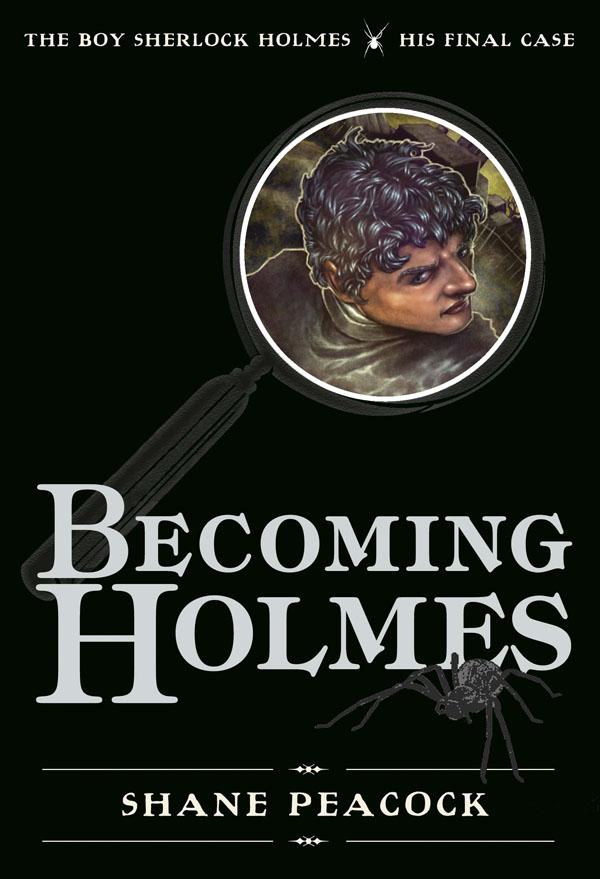
Boy Sherlock books by Shane Peacock (I've read 3)
The Lord Peter Wimsey books by Dorothy L. Sayers (I've read 1 novel and some short stories)
The Nero Wolfe books by Rex Stout (I've read more than 17)
The Jeeves books by PG Wodehouse (I've read 2 or 3)
Of course, there are quite a few series where I've read the first book and said, "Yeah, not interested in more, thanks anyway." But maybe that will be a Top Ten Tuesday subject some other time!
Wednesday, September 2, 2015
"In the Company of Sherlock Holmes" edited by Laurie R. King and Leslie S. Klinger
This is a follow-up volume to A Study in Sherlock. When King and Klinger sent word to writer friends and fellow Sherlockians that they wanted to publish a collection of Holmes-inspired stories, they got too many for one book, so they planned to publish two volumes not far apart. But then the A. Conan Doyle estate put up this huge court battle claiming that because they owned the copyright to the last few Holmes stories (most are in the public domain), they owned the rights to the characters therein and should get royalties any time Sherlock Holmes, Dr. Watson, or any others from the canon were used anywhere. The Doyle estate eventually lost, and so here we have the second volume at last.
Here are the five stories I liked especially well in this collection:
"Dr. Watson's Casebook" by Andrew Grant cleverly rewrites The Hound of the Baskervilles as if it was being posted about on a social media website like Facebook. You have to suspend a little disbelief over the idea that people would post to Facebook that they're about to be mauled by a gigantic hound, but whatevs. It's a funny concept and amused me a lot.
"The Adventure of the Laughing Fisherman" by Jeffery Deaver is set in modern times and involves a man who uses what he's learned by studying the Sherlock Holmes canon to create a new job for himself -- he assists the police in a murder investigation and makes some surprising new friends.
"Dunkirk" by John Lescroart is hands-down my favorite story in the whole book. It made me tear up several times, though partly that's because everything involved with the Dunkirk rescue makes me cry -- I once had to hold back tears while I read a picture book about it to my kids. In this story, an aging Sherlock Holmes (though he's never named) assists with the heroic rescue of Allied troops. Although it veers from quietly heroic to a little more action-movie than I was expecting, I still liked it oh-so-well by the end.
"Lost Boys" by Cornelia Funke has Watson gleaning some information about Holmes' childhood by observing his friend's interaction with a worried boy.
"By Any Other Name" by Michael Dirda made me laugh several times over the idea that A. Conan Doyle was a pseudonym used by lots and lots of authors, rather like F. W. Dixon or Carolyn Keene. It's imaginative and clever.
If This was a Movie, I Would Rate It: PG-13 for themes about murder, abused children, violence, etc. Some of the stories also contained bad language.
Tuesday, September 1, 2015
Top Ten Tuesday: No Clickage
The Broke and the Bookish have set kind of a hard list topic (for me) this week: Ten characters you just didn't click with.
The thing is, if I don't click with the characters, I don't generally like the book. And if I don't like the book, I tend to kind of shove it out of my mind. So I've had to do some real digging for this one, back through my reviews here and my memory. But here they are: ten characters that don't do it for me:
Alan Quatermain in King Solomon's Mines by H. Rider Haggard
Bilbo Baggins in The Hobbit by J.R.R. Tolkien (Movie Bilbo, on the other hand, I quite love.)
Edmund Bertram in Mansfield Park by Jane Austen
Emma Woodhouse in Emma by Jane Austen
Fanny Price in Mansfield Park by Jane Austen
Frodo Baggins in The Lord of the Rings by J.R.R. Tolkien
Jane Whitefield from Vanishing Act by by Thomas Perry
Meggie in Inkheart by Cornelia Funke (The movie is a different story altogether.)
Patrick Bowers from The Pawn by Steven James
Tertius Lydgate in Middlemarch by George Eliot
There are lots of different reasons why I didn't click with these people. This isn't about dislike, this is about characters I think I should like, but I just don't dig. Well, except for Meggie -- I tried liking her, but ended up disliking her by the end of the book. (Not so in the movie.)
Saturday, August 29, 2015
"The Guernsey Literary and Potato Peel Pie Society" by Mary Ann Shaffer and Annie Barrows (again)
I dearly love this book. Or, more like, I dearly love the characters within this book. Rereading this is like going to visit friends. Those tend to be my favorite kinds of books, so it's no wonder this is one of my top ten novels ever. In fact, this is one of those rare books that, whenever I see a used copy at the thrift store or library book sale, I buy it so that I have a spare to give away to some book-loving friend when the opportunity arises. I've done that three times, I think. So far!
This is the first time I've read this since 2012, when I read it twice back-to-back. This time through, I read it oh-so-slowly, savoring every morsel. All the historical details, the gentle humor, the slow-simmering romance, the character growth -- I drank it in small sips so it would last as long as possible.
This book is not Great Literature. It is, however, heartwarming, and sometimes thought-provoking. The characters love books the way I do. The details about life during WWII in England, especially Guernsey, fascinate me.
I suppose I should briefly tell you the plot. Miss Juliet Ashton, London author, gets a letter from Mr. Dawsey Adams, Guernsey farmer. Dawsey bought a used copy of essays by Charles Lamb that used to be Juliet's, and her name and address were inside, so he wrote to ask if she knew of Lamb ever wrote more essays, because he loved them. By exchanging letters with Dawsey, Juliet learns what life was like on the island of Guernsey during WWII, which has only just ended. The Germans occupied the island, and life was very hard there for years, but Dawsey and his friends kept up their spirits partly by forming a reading club. Juliet is soon corresponding with lots of people on the island, with the idea of writing a book about their experiences during the occupation. The book is told almost entirely through letters and telegrams between lots of different characters, though there's a bit at the end that's an entry into a notebook, which I wish was also written as a letter, just for consistency, but oh well.
When I posted a snippet of this earlier this month, I realized I was overdue for a reread and picked it up again. Also, several people asked about the book's content, as they'd heard various reports about it. So I'll report on that a bit more than I usually do. There is more bad language in it than I'd remembered, including a few instances of God's name being taken in vain. The language level is consistent with what you'd read it a book written in the '40s -- curse words, not scatological language, in other words. There's also a character who has a child out of wedlock, which is never addressed by the good characters as being wrong. There's a very minor negative character who disapproves of everything and everybody and considers it "her Christian duty" to reprimand people for things like making friends with Germans, which could be considered a negative portrayal of Christianity, though I consider it a negative portrayal of bad Christianity. And yes, there are two homosexual characters, one in London and one on Guernsey. The fact that they are gay is mentioned a few times, primarily to explain why one of them isn't marrying another character. There's a line about another character inquiring if he has "a touch of the old Oscar Wilde" (p. 19), too.
Particularly Good Bits:
That's what I love about reading: one tiny thing will interest you in a book, and that tiny thing will lead you onto another book, and another bit there will lead you onto a third book. It's geometrically progressive -- all with no end in sight, and for no other reason than sheer enjoyment (p. 11-12).
I don't believe he is aware of it, but Dawsey has a rare gift for persuasion -- he never asks for anything for himself, so everyone is eager to do what he asks for others (p. 37).
I don't believe that after reading such a fine writer as Emily Bronte, I will be happy to read again Miss Amanda Gillyflower's Ill-Used by Candlelight. Reading good books ruins you for enjoying bad books (p. 53).
Sorrow has rushed over the world like the waters of the Deluge, and it will take time to recede. But already, there are small islands of -- hope? Happiness? Something like them, at any rate (p. 104).
Not even the Germans could ruin the sea (p. 105).
I don't know what ails Adelaide Addison. Isola says she is a blight because she likes being a blight -- it gives her a sense of destiny (p. 113).
...I sometimes think I prefer suitors in books rather than right in front of me. How awful, backward, cowardly, and mentally warped that will be if it turns out to be true (p. 121).
Isola exaggerates, but only enough to enjoy herself (p. 129).
Sidney, in these past two or three years, I have become better at writing than living -- and think what you do to my writing. On the page, I'm perfectly charming, but that's just a trick I learned. It has nothing to do with me (p. 160).
Dawsey is dark and wiry, and his face has a quiet, watchful look about it -- until he smiles (p. 161).
This obsession with dignity can ruin your life if you let it (p. 274).
If This was a Movie, I would Rate it: PG-13 for profanity, description of life in a concentration camp, and other war-related themes of violence and loss.
Tuesday, August 25, 2015
Top Ten Tuesday: Hamlet 101
Today's Top Ten Tuesday topic, as set forth by The Broke and the Bookish, is "Top Ten Books That Would Be On Your Syllabus If You Taught _______ 101."
As I gear up for the Hamlet read-along I'm planning to host beginning Oct. 1, I've been thinking and reading extra much about my beloved play. I did get to help teach Hamlet for a college course I assisted with while I was doing an internship my senior year, and I wish I had known about some of these back then, because they would have been very helpful. However, with the exception of the play itself and selections from one book, I encountered all of these after college.
If I was going to actually teach Hamlet 101, here's what the reading list would look like:
1. Hamlet, Prince of Denmark by William Shakespeare. I don't exactly have a favorite edition, but this version from Barnes and Noble is probably the one I'm going to use during the read-along. Obviously, we would begin the semester by reading the play itself, and probably watching Kenneth Branagh's 1996 film version too.
2. John Gielgud Directs Richard Burton in Hamlet by Richard L. Sterne. This is a little-known masterpiece. Sir John Gielgud played Hamlet on stage more often than any other actor (I think he still holds the record), and then in the 1960s he directed Richard Burton in the role for Broadway. One of the minor actors smuggled a tape recorder (it filled a whole suitcase!) into rehearsals and recorded the amazing, invaluable insights that Gielgud passed along. He then revealed his actions to all involved, and got their blessing to transcribe the tapes and publish a book. Gielgud's knowledge of this play is staggering, and I cannot do without this book. For my fictitious class, we would then watch the recording of Burton as Hamlet from this production after reading this book. Really, we could spend the whole semester on just these two books and films.
3. Will in the World: How Shakespeare Became Shakespeare by Stephen Greenblatt. Really, this would be required reading for any class involving Shakespeare I would teach. It's a meticulously researched look at the world Shakespeare grew up in and how it influenced his growth as a person and as a playwright. The discussions of hidden Catholicism in a militantly Protestant England are especially enlightening when it comes to the treatment and use of religion in Hamlet.
4. Hamlet in Purgatory by Stephen Greenblatt. This explores in detail the beliefs about purgatory during Shakespeare's time and how he uses them in Hamlet as a plot device and a metaphor. It does get a trifle deep at times, so not one I'd recommend to someone not avidly studying Hamlet.
5. Hamlet: Poem Unlimited by Harold Bloom. This small volume helped me understand at last that I love the play, but not Hamlet himself. I do like Hamlet, I'm terribly fond of him, but I actually don't love him, and I'm at last okay with that.
6. Shakespeare's Restless World by Neil MacGregor. I would probably only have my students read selections from it, the parts pertaining to Hamlet, though they could read more if they so desired, of course. (But, being college students, they'd make me happy if they just read the required readings.)
As part of my class, I would require that my students read one retelling of Hamlet and write a report on what they liked about its differences and similarities between the retelling they read and the play itself. Here are four I would recommend, though of course there are many others:
7. An Antic Disposition by Alan Gordon. Based more on the original story of Denmark's Prince Amleth than on Shakespeare's play.
8. Rosencrantz and Guildenstern are Dead by Tom Stoppard. Looks at the play from behind the scenes, as it were. I'd let students either watch the movie version or read the play.
9. Shakespeare's Hamlet: The Manga Edition by Adam Sexton. A masterful use of anime-style artwork to bring the characters to life. A lot of it has a film noir feel to it, all stark angles and shadows.
10. Gertrude and Claudius by John Updike. This looks at the relationship between Hamlet's mother and uncle from several different angles, using different names from various eras for them as they go through different stages in life.
There you have it! If you're interested in learning more about my Hamlet read-along, read this post from last week for more info. I'm sure that during the read-along, I'll be referring to the first six books I listed here, but I promise they won't be required reading!

Subscribe to:
Posts (Atom)