Saturday, October 29, 2016

Jane Eyre Read-Along: Chapter 34

NOW I remember why I don't like St. John Rivers much.  It's this chapter.  It starts well enough, with all the Christmasyness, and did you catch that Jane's school had sixty girls now?  WOW!  (Also, I got this big kick out of the bit about how British peasants are better than other peasants.)  

But then St. John decided to skulk around being grim and gruff and positively unpleasant.  Here's the thing:  I hate being forced to do things, even if they're good things, or things I would otherwise want to do.  Tell me I must do them, and I won't.  Or I'll do them only under bitter protest.  Similarly, I detest it when people try to force others to do things.  No, and no, and no.  And when someone tries to change another person to suit their own needs or desires, I get angry.  So nope, turns out I do not like St. John better this time through.  I tried to like him, I started to like him a little, but nope, not gonna happen.  He's too much of what I dislike.

Besides, this chapter is creepy!  "By degrees, he acquired a certain influence over me that took away my liberty of mind... I fell under a freezing spell" (p. 461).  Oh my goodness.  Danger, Will Robinson!  That is creepy and controlling and awful.  St. John is forcing Jane to change because he wants her to change, and the fact that he shows no sexual interest in her does not make it better, it makes it weirder.  To me, anyway.  

We've brought up the idea of Jane being caged a few times.  It's here again, I think, when she says, "my mind is at this moment like a rayless dungeon" (p. 467).  And St. John refuses to accept that she is not what he wants her to be, and that he cannot force her to become what she is not.  Jane insists, "I have no vocation" (p. 466), and I believe her.  'Vocation' doesn't just mean 'occupation' in this sense, but 'calling.'  Properly understood, the idea of Christian Vocation is that anything we do that serves God and our neighbor is a good vocation.  Mothering, teaching, nursing, cooking, stocking shelves, fixing cars -- these are all worthy vocations for Christians.  Jane realizes that homemaking provides opportunities to serve God and others, just as mission work does.  St. John doesn't.  He's too focused on earning his way to heaven with sweeping acts of piety and sacrifice, and can't believe anything else is worth doing.  Hard, stubborn, wrong-headed man.  Blech.

Favorite Lines:

"I am disposed to be as content as a queen, and you try to stir me up to restlessness" (p. 453).

I would always rather be happy than dignified (p. 474) (Of late, this has been my favorite line in the whole book.)

Possible Discussion Questions:

Why do you think that understanding St. John gives Jane the power to refuse him?

Wednesday, October 26, 2016

Women's Classic Literature Event: Group Check-In 4


The question for the fourth group check-in is this:

Share the most memorable scene from one of your reads for this event.

There was one scene from Rilla of Ingleside by Lucy Maud Montgomery that I have remembered clearly for decades.  As a teen, it was my favorite moment in the book because it was the part I laughed hardest over.  While rereading it this fall for the first time in probably twenty years, I kept wondering when that scene would crop up.  As I neared the end of the book, I began to wonder if I'd confused some other book with this, because I still hadn't gotten to it!  But finally, on page 260, there it was:

     "Mother and I went into Charlottetown yesterday to see the moving picture, 'Hearts of the World.'  I made an awful goose of myself -- father will never stop teasing me about it for the rest of my life.  but it all seemed so horribly real -- and I was so intensely interested that I forgot everything but the scenes I saw enacted before my eyes.  And then, quite near the last came a terribly exciting one.  The heroine was struggling with a horrible German soldier who was trying to drag her away.  I knew she had a knife -- I had seen her hide it, to have it in readiness -- and I couldn't understand why she didn't produce it and finish the brute.  I thought she must have forgotten it, and just at the tensest moment of the scene I lost my head altogether.  I just stood right up on my feet in that crowded house and shrieked at the top of my voice -- 'The knife is in your stocking -- the knife is in your stocking!'
     "I created a sensation!  The funny part was, that just as I said it, the girl did snatch out the knife and stab the soldier with it!
     "Everybody in the house laughed.  I came to my senses and fell back in my seat, overcome with mortification.  Mother was shaking with laughter.  I could have shaken her.  Why hadn't she pulled me down and choked me before I had made such an idiot of myself.  She protests that there wasn't time.
     "Fortunately the house was dark, and I don't believe there was anybody there who knew me.  And I thought I was becoming sensible and self-controlled and womanly!  It is plain I have some distance to go yet before I attain that devoutly desired consummation."

Those few paragraphs are still among my favorite in the book, and I chuckled over them while typing them up just now.  Also, I like that she somewhat references Hamlet with that last line, echoing his "'tis a consummation devoutly to be wished."

So far, I have read 16 books for this event, all listed on this page.  I aim to read 4 more by the end of December, to make it a nice, round 20.  We'll see if I get there!

Tuesday, October 25, 2016

Top Ten Tuesday: Feels Like Fall


Today's topic from The Broke and the Bookish is a fall freebie, so I'm listing off my Top Ten Books That Remind Me of Fall.  Some of them take place partly or entirely in autumn, and some just feel like they ought to be read when leaves are turning colors and the air is crisp and invigorating.  Here they are, with titles linked to my reviews when possible:


1.  The Hound of the Baskervilles by A. Conan Doyle takes place in October, and every October for over a decade, I have felt the urge to either read the book or at least watch a film version of it.  I re-read it earlier this month (but didn't review it again because I just did a read-along of it two years ago, and I don't have any new thoughts on it yet).  It was the first non-abridged Sherlock Holmes book I read, when I was 13 or 14, and I've loved the characters of Holmes and Watson ever since.


2.  Anne of Windy Poplars by L. M. Montgomery covers several years, but I envision Anne walking through fallen leaves when I think of this book, so here it is.  Could be because the cover above is the one my copy has, and it has a somewhat autumnal feel, to me.


3.  The Fellowship of the Ring by J.R.R. Tolkien has a lot of scenes set in autumn, and much of the movie does as well.  Since I watched the movies before I read the books, that definitely swayed my feelings.


4.  The Outsiders by S. E. Hinton does take place in fall, doesn't it?  All that stuff up at the abandoned church, with piles of dead leaves and so on.  


5.  The Big Sleep by Raymond Chandler takes place in the fall and definitely feels like it -- the whole book is permeated with an atmosphere of decay, ending, dying.  I'm suddenly in the mood to reread this now.


6.  Bloodlines by Jan Burke might not take place in autumn -- it might be winter instead, I'm not sure.  But I have the impression of days getting colder, lots of dead leaves, but no snow, so there you go.  


7.  The Key to Extraordinary by Natalie Lloyd has lots of stuff about graveyards and ghosts in it, which makes me think of fall, though there's lots of stuff about flowers and growing plants that also gives it a springtime feel.  Kind of a mix, I guess.


8.  Middlemarch by George Eliot probably doesn't have much to do with fall, but I started reading it in September a couple of years ago, so it will always remind me of this season.


9.  Samantha Learns a Lesson by Susan S. Adler takes place during the fall, when Samantha goes back to school.  I read this series over and over and over as a kid -- back when Samantha, Kirsten, and Molly were the only American Girls!  I remember when the Felicity books were released -- I went to a release party at my library :-o  And got a free poster!  But anyway, yeah, this was one of my favorite Samantha books because I love how she learns to care for those less fortunate than herself.


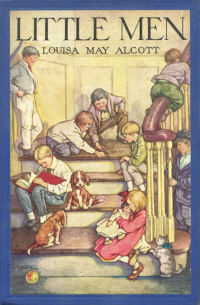
10.  Little Men by Louisa May Alcott reminds me of fall, just like Little Women reminds me of spring.  No clear idea why, it just does.  Especially Dan and Nat -- something about them just says "fall" to me.

So there's my list for this week.  What books remind you of fall?  Did you do TTT this week, and if so, what topic did you choose?

Monday, October 24, 2016

"The Enemy" by Lee Child

I have a book hangover.  The worst book hangover I have had in a looooooooong time.  The kind where my brain is still gallivanting around inside a fictional world, and the rest of me is trying to navigate real life without it.

In other words, wow.  Now this was a well-written book.

I'm not going to call it a "good" book because it was about bad stuff.  Murders and conspiracies and gay-bashing and all sorts of wrong -- and, of course, one wonderful, not-so-white knight wading into the mess to try his hand at cleaning it up.  It was a modern mystery-thriller, in other words, and probably part of the reason it sucked me in so thoroughly was that it is so different from the other things I've been reading lately that it was like eating your first potato chip after having nothing but marshmallows for months.

This is the first Jack Reacher book I've ever read.  Earlier this month, I watched the 2012 film Jack Reacher for the first time, and it wowed me so completely that I put a library hold on this book immediately.  And went to see the new film, Jack Reacher: Never Go Back this weekend.  So yeah... kind of becoming a fan, it seems.

The Enemy is not the first Jack Reacher book published, but it's the first in chronological order of the series.  In it, Major Reacher is an elite member of the US Army's Military Police, and he investigates a string of seemingly unrelated murders that turn out to be part of a larger conspiracy high up in the military.  One of the things I got a big kick out of was how many scenes took place around where I live -- they talked about driving up I-95 to Washington, DC a lot, and I don't live all that far from I-95, so I could picture sections of the countryside they passed very clearly :-)  Plus, I've been to Fort Belvoir and I know where a bunch of other military bases and such around here are, so... yeah, that was neat.

I'm guessing that, for people who were already fans of this series, reading this book about what Reacher was like when he was in the military was all kinds of super-exciting fan-happy goodness.  For me, since I'm just venturing into this series, it was a cool way to start, but I probably missed a jolt of joy I would have gotten if I'd read these in the order they were written.  However, I like to read about things in the order they happen, for the most part, which is why I decided to begin with this book.

Particularly Good Bits:

"I'm French," she said.  "You're American.  There's a world of difference.  An American gets sick, she's outraged.  How dare that happen to her?  She must have the fault corrected immediately, at once.  But French people understand that first you live, and then you die.  It's not an outrage" (p. 96).

If This was a Movie, I Would Rate It: R for violence, sexual content, and language.  This was not the most graphic murder mystery I've ever read, which I was thankful for.  I've read a couple of books that were so graphic I either stopped midway through, or decided after reading them that I would not be reading any more by that author.  This had a lot of violence in it, but not such that I got grossed out or worried about my emotional health.  It was a lot like the Robert Ludlum books I read a lot of for a while, content-wise.  Some cussing (mostly obscenities and not profanity) and adult content, including very glossed-over sexual activity, which is the kind I handle best.  None of this moment-by-moment description, just a vague paragraph that lets you know that, yup, these two people had sex.  However, there was a lot of discussion of homosexuality and other sinful behavior that will make many people uncomfortable.

Friday, October 21, 2016

Jane Eyre Read-Along: Chapter 33

A few chapters ago, I mentioned that the tendency for books of this era to rely on coincidence and convenience can be hard to accept.  We've come to the huge coincidence:  Jane just happened to land on the doorstep of her only living relatives in all of England.What're the odds?  Pretty slim, I would think.

However, I love this book anyway  You couldn't write it today without people calling you far-fetched, so I guess we can all be glad it was written when it was!

Don't you love how, when St. John tells Jane that she's being sought by a lawyer, she doesn't care a smidge why he's looking for her -- she only wants to know how Mr. Rochester is.  That is her single-minded inquiry, again and again until she is sure St. John can't tell her anything.  And, when St. John piously declares Rochester to be "a bad man" (p. 442), she insists on defending him.  Oh, steadfast Jane.

And I also love her generous nature.  She doesn't want to be an heiress anymore, with money to attract a Rochester.  She wants a family, and if she can buy one by sharing her fortune, she will consider the money well spent.


Favorite Lines:

"As you hope ever to be forgiven, Mr. Rivers, the high crime and misdemeanor of spoiling a sanded kitchen, tell me what I wish to know" (p. 445).

This was wealth indeed! -- wealth to the heart! -- a mine of pure, genial affections (p. 446).


Possible Discussion Questions:

Jane says "I don't want to marry, and never shall marry... I know I what I feel, and how averse are my inclinations to the bare thought of marriage" (p. 449).  If events had not transpired the way they do, do you think she would ever have married someone else?  Or would she have stuck to this and remained single?

Tuesday, October 18, 2016

Jane Eyre Read-Along: Chapter 32

You're not going to believe this, but I'm starting to change my opinion of St. John Rivers.  Just a bit.  I didn't remember this chapter much at all -- to be honest, several of the times I've read this, I skimmed through this whole part of the book.  I've always been irked with him for his seemingly high-handed rejection of Miss Oliver and insistence that being a missionary is holier than being a parish minister.  I still disagree with the latter, but his decision not to pursue Miss Oliver makes a lot more sense to me this time through.

And I've had a thought.  Do you think that St. John and Miss Oliver are foils for Jane and Mr. Rochester?  This thought occurred to me when I was reading the description Jane gives of Miss Oliver's character:  "she was coquettish, but not heartless -- exacting, but not worthlessly selfish.  She had been indulged from her birth, but was not absolutely spoiled" (p. 426).  That struck me as very similar to Rochester.  And Miss Oliver herself says Jane is like Mr. Rivers.

St. John is handsome, and Jane is not.  Miss Oliver is beautiful, and Mr. Rochester is not.    Both St. John and Jane are poor, while Miss Oliver and Mr. Rochester are rich.  Like all good foils, they have just enough similarities to illuminate their differences and show off the main characters' good and bad points.

St. John had an iron resolve, like Jane.  Miss Oliver wants him to stay and marry her, and he believes he should not, just like Jane believes she should not stay and marry Rochester.  But unlike Jane, who is morally right in her decision, St. John is merely stubborn.  And unlike Rochester, who is intelligent and a good match for Jane in the ways that matter to them, Miss Oliver is St. John's mental and emotional inferior.

So, anyway, I don't quite dislike St. John like I always did before.  I still agree with his self-assessment that he is "a cold, hard, ambitious man" (p. 434), and I don't think I will ever truly like him.  But I think I understand and pity him more now.

Favorite Lines:

To live amid general regard, though it be but the regard of working-people, is like "sitting in sunshine, calm and sweet;" serene inward feelings bud and bloom under the ray (p. 425).

Possible Discussion Questions:

Jane says, "Reserved people often really need the frank discussion of their sentiments and griefs more than the expansive" (p. 431).  Do you find that to be true?

Have you changed your opinion of any characters during this read-along so far?

Friday, October 14, 2016

Jane Eyre Read-Along: Chapter 31

And so Jane begins her newest adventure, teaching poor young girls.  I do like her attitude that "the germs of native excellence, refinement, intelligence, kind feeling, are as likely to exist in their hearts as in those of the best-born" (p. 415).  Yet, she feels as if she's sunk to a lower place in society than she previously possessed, which I'm sure she has -- schoolmarm to a bunch of commoners must be a lower station than private governess to a gentleman's ward.  What I love best here is that Jane points out that she should not hate or despise herself for feeling this because she knows it is wrong to feel herself degraded.  Recognizing herself as being petty and weak is a great step forward.  Way to go, Jane!

I also love how worried she still is about Mr. Rochester.  She worries that he will be driven to "desperate grief and fatal fury" (p. 417) by her disappearance.  

And then here's St. John, kindly inquiring as to whether Jane likes her cottage and job.  I do like him for that.  But then Miss Oliver turns up, and he gets all flower-crushing and distant.  St. John, St. John, you're such a stubborn fellow, but not in the good way, I fear.

Favorite Lines:

God directed me to a correct choice.  I thank His providence for the guidance! (p. 416)

Possible Discussion Questions:

Jane says of Miss Oliver possessing both beauty and fortune, "What happy combination of the planets presided over her birth, I wonder?" (p. 421)  Do you think she's being tongue-in-cheek here, or does Jane believe in astrology?