Monday, December 31, 2012

"Lady Susan, The Watsons, and Sanditon" by Jane Austen

I decided to round out my year of reading Jane Austen by reading her unfinished works too.  My mom gave me this collection for my birthday, and I managed to polish it off over the last couple of weeks.

I liked "Lady Susan" the least of these three -- it is finished, while the other two aren't, but I didn't like any of the characters, especially not Lady Susan herself, who is particularly disagreeable.  I enjoy the epistolary format as a whole, so that didn't bother me.  It concerns the selfish, wanton Lady Susan who spends the whole book trying to marry her daughter off to a rich, foolish man that her daughter despises. 

I liked "The Watsons" the best, for it had characters I genuinely cared about and wanted to get to know better.  It seemed to be following a plot line similar to Pride and Prejudice, with an unwealthy family's daughters catching the eye of men of more money and position.  We do at least know how that one would have turned out, thanks to Jane Austen telling her sister Cassandra her plans for the novel.

"Sanditon" reminded me more of Emma, with a whole host of hypochandriacal characters similar to Mr. Woodhouse.  It's not long enough for its heroine to really gain shape, and was the least satisfying read, since there's no record of how Jane Austen intended it to end.  Here's something funny:  for years, I thought the title was "Sandition" -- it wasn't until I started reading this book that I noticed it only has one 'i.'  Silly me. 

(Originally posted on Hamlette's Soliloquy on Dec.30, 2012.)

Friday, December 21, 2012

"Jane and the Wandering Eye" by Stephanie Barron

This is the third Jane Austen Mystery, and I think I liked it a teensy bit better than the previous book, Jane and the Man of the Cloth. It had more of Lord Harold Trowbridge, the Gentleman Rogue who keeps joining the fictional Miss Austen in her adventures, and I'm becoming very fond of him.  Here, his nephew is accused of murder, and Jane and Lord Harold sort out the tangle of deceit and intrigue that obscures the truth.  I don't have much else to say about it, other than that I look forward to reading the next book in the series.

(Originally posted on Hamlette's Soliloquy on Dec. 21, 2012.)

Sunday, December 16, 2012

"The Black Arrow" by Robert Louis Stevenson

I must confess that I have owned a copy of this book for nearly five years, but only now managed to read it. I'm not sure why, as I love the other three of Stevenson's books I've read (namely Treasure Island, Kidnapped, and the somewhat clunky sequel to the latter, David Balfour, also called Catriona just to be confusing).  I guess I just haven't been in the mood for this sort of adventure novel until now.  Now, however, I'm deep in the throes of writing my first YA western, and it seems I wanted to read something exciting that young adults might enjoy, to help me figure out pacing and such.

So anyway, The Black Arrow:  A Tale of the Two Roses runs in the vein of Robin Hood and Ivanhoe and things like that -- it's about a young man named Richard Shelton who learns that the man who became his guardian long ago when Richard's father died is actually the man who murdered said father.  This happens just when the Lancasters and Yorks are engaging in what's called the War of the Roses, battling with each other for England's throne, as was their wont.  Richard runs off and joins up with these guys known as the Fellowship of the Black Arrow who are sworn to kill off four evil men (Richard's ex-guardian included) and are headed up by none other than Richard's dead father's best friend.  But Richard doesn't care much for them, as they're involved in a bit too much thievery for his taste, so he runs off again and joins up with someone else, and falls in love, and has lots of adventures.  This was originally serialized, so it has that Dumas thing going on where we have a cliffhanger at the end of every chapter/installment, and lots of excitement throughout.  Anyway, Richard ends up fighting side-by-side with the future Richard III at one point. 

If you like rousing adventures where everyone says "ye" and "anon" and "by the Mass!" and "forsooth," this is quite fun.  I happen to like such things, so I quite liked this.  It's not of the same caliber as Kidnapped or Treasure Island (or Dr. Jekyll and Mr. Hyde, I expect, but I haven't read that yet), but it's quite enjoyable. I'm always trying to learn more about England's history, as it's all a bit fuzzy in my head, so this is helpful there too.

(Originally posted on Hamlette's Soliloquy on Dec 5, 2012.)

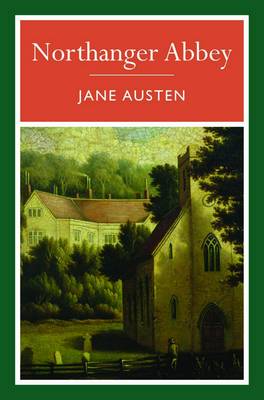
"Northanger Abbey" by Jane Austen

How is it that I'd never read this before?  Okay, it's because I really knew absolutely nothing about it before this year, whereas I knew the general gist of Austen's other major works, thanks to movies or articles I'd read or whatever.  But Northanger Abbey slipped through the cracks.  In my great quest to read all of Austen's novels in one year (which I have now completed, yay me!), I saved this for last because it's always nice to read something new by a beloved author.  And also, I was a little worried I wouldn't care much for it, since if people don't talk about it much, it must not be all that great, right?

Wrong.

Okay, it's obviously not as magnificent as Pride and Prejudice, as thought-provoking as Sense and Sensibility, etc.  Instead, it is fun.  The whole novel revolves around one long joke about how the heroine, Miss Catherine Morland, can't possibly be the heroine of a novel.  Nothing exciting happens to her, she's not beautiful, her parents and family are all alive and healthy, she's not unhappy, no one kidnaps her, no royalty fall in love with her, she never meets up with a ghost... you get the idea.  What she does do is lead a sweet, ordinary life, fall in love with a nice man, get involved in a misunderstanding or two, and wind up happy. 

I laughed aloud over and over during this book, and I'm inclined to reread it already.  I love books that make me laugh aloud; they almost invariably become favorites of mine.  On that merit alone, Northanger Abbey would join Pride and Prejudice and Persuasion as my most favoritest Austen novels.  But this book also has very believable characters, the sorts that you could meet up with in real life.  No archetypes, no mysterious and wealthy strangers, no near-fatal illnesses.  Just people being people :-)  I found that especially endearing.  In fact, I believe Henry Tilney has supplanted Mr. Knightley as my second-favorite Austen hero.

In case you're not up on your Austen, this is the one where Catherine Morland visits Bath with some family friends and falls in love with Henry Tilney, a young minister with a lively sense of humor.

Particularly Good Bits:

"Friendship is certainly the finest balm for the pangs of disappointed love."

"...for I will not adopt the ungenerous and impolitic custom so common with novel-writers, of degrading by their contemptuous censure the very performances, to the number of which they are themselves adding -- joining with their greatest enemies in bestowing the harshest epithets on such works, and scarcely ever permitting them to be read by their own heroine, who, if she accidentally take up a novel, is sure to turn over its insipid pages with disgust.  Alas!  If the heroine of one novel be not patronized by the heroine of another, from whom can she expect protection and regard?"

"The anxiety, which in this state of their attachment must be the portion of Henry and Catherine, and of all who loved either, as to its final event, can hardly extend, I fear, to the bosom of my readers, who will see in the tell-tale compression of the pages before them, that we are all hastening together to perfect felicity."

(Originally posted on Hamlette's Soliloquy on Nov. 24, 2012.)

"Mansfield Park" by Jane Austen

The first time I read Mansfield Park, I didn't like it much at all.  This time around, I liked it a good bit better, though it's still my least-favorite Jane Austen novel so far.  (I haven't read Northanger Abbey yet -- that's up next!)  This time, it helped that I'd just read a long discussion of this book, a conversation between A. S. Byatt and Ignes Sodre in the book Imagining Characters:  Six Conversations About Women Writers.  It helped me get a bit of perspective on the interplay between Fanny and the other characters, pointing out that while Fanny is extremely passive (which irritated me so much the first time through), she's also very observant, and much better at discerning a person's qualities and character than anyone else in the book.  I kept an eye out for instances of that when I read it this time, and found it much more interesting.

While I'm still frustrated with Fanny's overwhelming reticence, and have little sympathy with her "habits of ready submission," (p. 298) I've come to appreciate what I think Jane Austen was trying to say with this book.  It's a kind of morality play, really, full of archetypes more than realistic characters.  This book, to me, is a warning against excess -- each character pursues or possesses one character quality or flaw to such a degree that it unbalances them and makes them unable to be happy.  Henry Crawford is too proud of his own abilities to interest women, too attached to his own flirtatiousness.  Fanny Price has such low self-esteem that she believes herself to be unworthy of anyone's notice, affection, or interest except that of her elder brother, William.  Edmund Bertram is too fond of the idea of romantic love to listen to reason when applied to the object of his affections, Mary Crawford.  Mrs. Norris is so fond of being in charge that she not only runs her own life in the strictest manner possible, she alienates everyone around her by trying to run their lives too.  And so on, and so forth, et cetera, et cetera, et cetera.  The warning here, that if you lack what Edmund calls "the most valuable knowledge we could any of us acquire -- the knowledge of ourselves and our duty," (p384) you're going to wind up unhappy or annoying or both.

If you're not up on your Austen, this is the one where poor Fanny Price goes to live with her rich cousins, the Bertrams, and while growing up with them, falls in love with her cousin Edmund, possibly the most oblivious man ever written.

(Note:  It wasn't until about halfway through this reading that I realized that Filch's cat Mrs. Norris in the Harry Potter books is named after the Mrs. Norris in this book.  Also, both times I read this, I could clearly imagine Agnes Moorehead playing Mrs. Norris.  She would have been perfect -- too bad she never played the character.)

(Originally posted on Hamlette's Soliloquy on Nov. 2, 2012.)

"From the Dust Returned" by Ray Bradbury

Ever since Ray Bradbury’s death earlier this year, I’ve been meaning to read one of his books that I’d never read before. Since I’d only read four of his books before this, I had a lot to choose from. But I never got around to getting one from the library until last week, when I spotted From the Dust Returned on a display of Halloween books. I’d been in the mood for something gently spooky to celebrate the holiday, and I thought Bradbury might fit my tastes well, since I’d enjoyed the other books of his I’d read. I was right.

When I say ‘gently spooky,’ I do mean gently — I can’t really handle anything scarier than Buffy the Vampire Slayer. I have a strong imagination, and horrific images can haunt my brain for years, so I take care what I read and watch. So you can believe me when I say that this is not a scary book. It’s not even particularly creepy, though all but one of the main characters are ghosts or vampires or other supernatural creatures. Instead, it is poignant and pensive, more concerned with raising your eyebrows than your hair.

The book revolves around a giant house that is home to The Family, a collection of not-dead-anymore persons. It is also home to one human boy, Timothy, adopted by the Family as a baby when they found him on their doorstep. As he grows older, it becomes Timothy’s task to write down the history and wisdom of The Family’s members. This book is really a collection of short stories held loosely together by the framework of Timothy learning his family’s background. Bradbury wrote the stories over a period of fifty years, and quite a few of them had been previously published in various magazines.

As usual, what I like best about Bradbury is the way he uses unusual characters and fantastical events to speak about very real and concrete themes. Among other things, this book explores the nature of family, the various ways two beings can relate to each other, and the many different types of love that exist in this world. But I would say it mostly deals with the way the modern world of gadgets and speed has replaced the old ways of life that had more room for thought and imagination.

If you’re looking for a short story to read aloud on Halloween — to a group of kids around a camp fire, for instance — you’ll find plenty of possibilities here.


Particularly Good Bits

"I have no name," he whispered.  "A thousand fogs have visited my family plot.  A thousand rains have drenched my tombstone.  The chisel marks were erased by mist and water and sun.  My name has vanished with the flowers and the grass and the marble dust." (page 96)

(Originally posted on Novel Book Ratings on Oct. 29, 2012.)

"Steal Like an Artist" by Austin Kleon

This is a quirky, fun, inspiring little book.  I'm going to try to remember to read it whenever my muses are absent, my creative well has run dry, and I'm convinced I'll never write another coherent sentence -- much less an interesting one -- ever again.  It's a very quick read, with more than half of the 150ish pages containing very little text.  You could read it in one sitting, unless you have three small children.  Then it will probably take you a couple days, like it did me.

The subtitle of the book is "10 Things Nobody Told You About Being Creative," though I have to admit I'd read some of his tips elsewhere.  The main idea is that, like the writer of Ecclesiastes told us so long ago, there is nothing new under the sun.  Everyone is just reworking the same ideas in their own way.  And so Kleon suggests that you do things like make lists of who inspires you, then find ways to combine the ideas they give you into some new projects of your own. 

My favorite section is Chapter 3:  Write the Book You Want to Read.  It's very short, but it made me go, "Okay, yeah, I'm going to pay no attention to what's cool in fiction right now, I'm going to write the book I want to read."  Which is a western, because I love westerns, and who cares if they're what people are into right now, they're what I'm into, and I'm the one putting in all the work.  So there :-)

Anyway, you can buy this book for under $10.  If you want to know a bit more about it, go to the author's site here.  I totally recommend this book not just for writers, but for anyone doing creative work who needs a little boost now and then.

(Originally posted on Hamlette's Soliloquy on Oct. 28, 2012.)