Showing posts with label War. Show all posts

Sunday, June 21, 2026

"Strange and Obscure Stories of the Revolutionary War" by Tim Rowland

This book was so much fun!  I absolutely loved Tim Rowland's writing -- he had such a slyly funny writing style, and I laughed aloud multiple times while reading this.  I made my family listen to me reading selections aloud because they tickled me so much.  When I finished reading this, I ordered his similar book about the Civil War because I am sure I will enjoy it too.

Was every one of these Strange and Obscure Stories of the Revolutionary War new to me?  No.  Were they all super strange?  No.  But they were a great way to explore some of the less-touted events and aspects of the American Revolution.  It's kind of hard to explain really -- this isn't exactly revisionist history or trying to ruin your view of the Founding Fathers, but it does point out some foibles here and there.  But not in a mean way.  It's funny and... almost a British humor flavor, if you know what I mean? 

If you like to learn trivial and little-known facts and stories, you would probably dig this book.  I'll share a couple of my favorite passages below so you can get a taste of this book's specific flavor.

Particularly Good Bits:

The idea that Americans might one day make a break for it was as old as America itself, and a veritable cottage industry arose in Britain out of speculating on the American future.  The British were well aware of a couple of points.  One, there were certainly people who sailed overseas for adventure and to seek fortune, but in the main, few people cam e to the New World because they were tickled with the way things were working out for them in the old.  This wasn't shaping up to be a territory that longed for leadership from across the pond.  Two, from the British perspective, the colonies were becoming a collection of every screwball sect and religious mutation on the face of the planet, and good luck governing that (p. 18).

When the British first arrived on the Carolina coastline in the spring of 1776, the patriots were in the process of throwing up a log and sand fort at the entrance to the Charleston harbor.  Washington's man, General Charles Lee, didn't like the looks of the forward position and ordered Colonel Moultrie to abandon the fort and regroup closer to town.  Moultrie thanked the colonial commander for his suggestion, which he summarily ignored.  This caused the predictable cries by lee of insubordination, and the intervention of Rutledge, who sternly told Moultrie he was to obey the commands of General Lee unless he didn't want to (p. 132).

If This was a Movie, I would Rate It: PG-10 for discussions of wartime wounds and violence, and a little bit of rough language.  Kids probably wouldn't get the humor anyway.


This is my fifth book read for my #RevolutionaryWarReads challenge that I set myself as part of my celebration of our country's 250th birthday this year.

Saturday, May 23, 2026

"The Swamp Fox, Francis Marion" by Noel Gerson

I am pretty sure that The Swamp Fox, Francis Marion was on my to-be-read shelves longer than any other book I currently own.  I believe I bought it back when we lived in Wisconsin.  We left Wisconsin in December of 2007.  That means I have packed up and moved this book three times.  

Well, I'm glad I hung onto it for nearly twenty years, rather than getting rid of it along the way, because I quite enjoyed this book!  Even though it was not quite what I was expecting.

I thought this book was going to be a non-fiction account of Francis Marion's guerrilla warfare against the British soldiers during the American Revolution.  Instead, it's written like fiction, and starts off in 1752, when Marion is a very young man!  It traces his on-again, off-again romance with the beautiful Esther Videau over several decades, while also showing how a young South Carolina plantation owner could become the kind of man who would basically invent guerilla warfare.

I did a scanty bit of research after finishing the book and found that a lot of what this book includes was true -- particularly that he really didn't get married until he was in his 50s, after the war had ended.  Since it's written in a fictionalized style, I didn't expect it to adhere strictly to facts, but it looks like the biggest thing they invented was saying that Marion only employed freedmen on his plantation.  In reality, he was a slaveowner like the vast majority of South Carolina plantation owners; this was published in 1967, during the tail end of the Civil Rights Era, so I'm guessing that may have played some part in that particular aspect.

Overall, this was a fun book, but I was disappointed that only a few chapters dealt with his Revolutionary War exploits, since I was expecting the whole book to be about that.  I'm glad I've finally read it, though!  And this marks my fourth book read for my #RevolutionaryWarReads challenge!


If This was a Movie, I Would Rate It: PG for descriptions of warfare and death.  It's pretty tame and generalized.  There's a bit of mild cussing here and there, too.  No smut or overt gore.

Friday, May 20, 2022

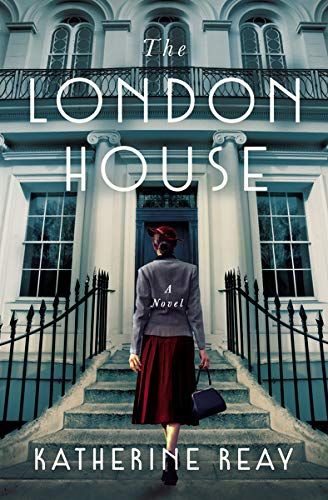
"The London House" by Katherine Reay

This was a difficult book, in some ways.  It contains two unhappy stories intertwined with each other, and I worried for a long time that at least one of them would not be resolved happily.  But I trusted Reay to at least deliver a satisfying ending, even if it was not exactly "happy," and I did not trust in vain.

In the present day, Caroline Payne is contacted by an old college friend, Mat Hammond, who has written an article about her grandmother and great-aunt and their family history during World War II.  Caroline is hurt and angered by the article, and convinced it's not entirely accurate.  Her relationship with her parents is distant, bordering on estranged, but her brother convinces her to go to their home in London and learn more from her mother there.

Caroline convinces Mat to postpone publishing the article until she can learn the truth, and off she goes to learn the real story about her grandmother and her twin sister, who may or may not have run away with a Nazi during the early days of WWII.  

Through diaries and letters, Caroline learns a startling truth about her family history -- a truth that even her grandmother and grandfather didn't really understand.  Along the way, she helps her family heal and begin to grow closer again.  Also, she and Mat tentatively consider resuming the relationship they'd let dissolve back during college.

By the end, everyone is in a much healthier and happier place, but boy, was most of this book rough!  

I'm sorry to see that Katherine Reay has continued to move away from writing explicitly Christian fiction, though.  You can't even call The London House faith-based fiction -- it's simply clean and wholesome, and that's all.  Which is not bad, but not as awesome as I think it could have been.  She talks about absolute truth existing, outside of people's perceptions and decisions and whims, but she never leads the discussion to where that absolute truth comes from.  The closest she gets is quoting C. S. Lewis a bit.  What a missed opportunity.

Particularly Good Bits:

I realized Jason and I shared something in common--we needed people in our lives with vibrancy and color, perhaps because we had somehow and somewhere lost our own (p. 44).

"When something bad happens," she continued, "it's easy to blame someone else, and in some cases maybe it is their fault, but that doesn't matter.  Not in the end.  What does matter is how long we hold on to that hurt or that anger.  We can magnify the pain, making it worse and worse until it devours us, or we can forgive it and get on with life" (p. 137).

I wondered how much my dad had missed, how much I had missed, by focusing on what was absent rather than what was in front of us (p. 152).

I need to forgive Mother and Father for not being who I needed them to be.  That sounds self-absorbed and patronizing as well, but I don't mean it that way.  I simply mean they strive to be the best parents they can--I see that now--and simply because it's not what I wanted does not mean their efforts aren't right and true (p. 236).

It is wrong to believe my perception is the only reality, and a true one at that.  There are absolute truths in this world, Margo, and I am slowly learning I do not determine them (p. 236).

If This was a Movie, I Would Rate It: PG-13 for wartime violence and discussion of an unmarried couple spending the night together (not shown, only discussed).

This has been my 20th book read off my TBR shelves for #TheUnreadShelfProject2022.

Tuesday, August 25, 2020

"Rook di Goo" by Jenni Sauer


Do you like stories that revolve around "found families" at all?  That's one of my favorite storytelling devices, or themes, or what have you.  And Rook di Goo has one.  A delightful found family that the main character stumbles into and is embraced by.  Eventually.

Cadet Elisandra Elis has deserted.  She's run from her military duties, overwhelmed by things she's done under orders.  Haunted by them, even.  She winds up on a rustbucket of a ship captained by someone more important than he seems, and together with her new friends/family, she ends up saving a lot of lives.

And, it's a Cinderella retelling, too.  Plus, one of the best explorations of anxiety and PTSD I've read.  No easy fixes or platitudes or "just think happy thoughts" nonsense here, but instead the sensitive and realistic treatment of what it's like to live with a mind broken around the edges.  Astonishingly good, really.

You probably have gathered that I don't read a lot of sci-fi. I like to watch sci-fi, you understand.  But I don't read it much.  And that's for the same reason that I generally prefer to watch fantasy rather than read it.  I don't like description-heavy writing.  I don't like long passages about what worlds look like or how magic or tech words, or explanations of political and monetary systems.  Worldbuilding doesn't interest me greatly, so when I can just see things on a screen instead of having to read about them, I'm happier.

BUT.  I do like some sci-fi, just like I enjoy some fantasy.  And I enjoy them for the same reason I enjoy other books -- if they have characters I care about.  And if a sci-fi or fantasy book can give me characters I love and show me their world through the eyes of those characters instead of just telling me about them, then I will very likely dig that book.

And Rook di Goo does exactly that.  It first gives me a handful of characters to care about, then slowly unfolds the world they live in by showing it to me through their eyes and as they interact with it.  I dug it so much.


(Mine from Instagram)

Particularly Good Bits:

She wasn't sure if she should be flattered or annoyed that he seemed to think she always had some sort of master plan in her head.  She usually did, if she was being honest, but they took work to come up with, and the assumption made her feel a little taken for granted (p. 99).

"Surrender is not the same as compliance," the man said, crossing his arms and looking sullen (p. 118).

If you couldn't feel at home where you always had, then were was home supposed to be? (p. 216)

If This was a Movie, I Would Rate It: a soft PG-13 for violence.  No cussing, no racy scenes, and no gore, but quite a lot of remembered violence and some in-story too, including violence that results in the death of children.

This is my 31st book read for #TheUnreadShelfProject2020.

Wednesday, April 29, 2020

"Wade McClusky and the Battle of Midway" by David Rigby

This was a very cool book, especially since I love the new Midway (2019) movie so much.  This book really helped round out Wade McClusky as portrayed by Luke Evans in the movie and let me understand even better the pivotal part he played in winning the Battle of Midway during WWII.

Although the book title would suggest that this focuses solely on his role in that particular battle, it's actually a full biography of McClusky, going from his boyhood through his early naval career, and continuing on past the war into his retirement and eventual death.  But the bulk of the book does involve that particular battle and all the factors that went into how it played out.

My one quibble with this book is that it got a little repetitive with its insistence that McClusky has been misrepresented and even somewhat slandered in other accounts of the Battle of Midway.  I understand that Rigby was trying to set the record straight and show how heroic and pivotal McClusky's role in that battle was, and I agree it's important that it be understood aright.  But I feel like he belabored the wrongness of other historians and authors more than was necessary, rather than letting the truth speak for him.  There came a point when I would skim any paragraphs that dealt with pointing out the flaws in other accounts of the battle or reports of McClusky's behavior in it because it was kind of the same thing again and again after a while.  It started to feel more like a defense attorney was writing this, or a religious apologetics professor, rather than a historian and biographer.  

But I enjoyed this book overall, and I learned a great deal about Midway and the US Navy's aviation program and presence in WWII as a whole, which was really cool.

If This was a Movie, I Would Rate It: PG for some war-related accounts of violence and danger.  No cussing that I can recall.


Luke Evans really doesn't look anything like the real Wade McClusky, but he did such a marvelous job of portraying his quiet, calm, detail-oriented, attentive, steady leadership.  Though I suppose I might be biased, being an Evans fan already.  If it hadn't been for him talking about this movie on his social media accounts, though, I might never have gone to see the movie at all, which would have been a tragedy!  Because it has become one of my absolute favorite movies ever!

This is my 13th book read for #TheUnreadshelfProject2020.

Saturday, December 28, 2019

"The Cross and the Lynching Tree" by James H. Cone

This is a heavy book.  Not physically, but emotionally and mentally.  I'll be honest with you -- it unsettled me.  For the better, actually.

Cone looks at parallels between the cross that Jesus died on and the trees that so many African-Americans died hanging from, particularly between 1880-1940, when lynchings were commonplace.  He points out that really, Jesus's crucifixion was a lynching -- mob rule having a man tortured and executed without a proper sentence.  And that faith in God to bring good out of evil, to save them even if they died a horrible death, was what sustained many black people during those terrifying years.

Parts of this book were very hard to read.  I skimmed some of his descriptions of torture that black people suffered at the hands of their enemies.  Maybe that was cowardly of me, but my imagination is so strong, yet sensitive, that even the ones I did read fully were hurtful to read.  One of them, I wish I'd skimmed, because it was so atrocious, so truly inhumane, I don't want to believe it's true, that human beings to do such a thing.  But I know they can -- history shows us over and over that sin can cause people to hit nauseating levels of depravity.

I came away with a new understanding of injustices and wrongs done by Americans to Americans.  By human beings to human beings.  We don't talk about this reign of terror much anymore, and Cone points out that by forgetting and ignoring and burying our nation's memory of what happened during slavery, Reconstruction, and pre-Civil Rights America, we dishonor the victims of those hate crimes.  I think we also risk setting ourselves up to repeat our past sins.

Anyway, this was a tough, sobering read, but I'm glad I made time for it in my end-of-the-year schedule.  It's given me a lot to contemplate.

If This was a Movie, I Would Rate It: a very hard R.  Lots of torture, murder, rape, and other atrocities discussed.

Monday, November 18, 2019

"South by Java Head" by Alistair MacLean

While this won't ever be a favorite MacLean book for me, it was definitely a thrilling ride!  It's got spies (more than you realize), daring rescues, extreme escapes, a cute little kid, several nurses, some treachery, several heroes, and various exotic locations.  Also, terrible storms at sea.  Also, submarines.  Also, various explosions.

Basically, the Japanese are overrunning Singapore during WWII, and a bunch of British soldiers (many of them wounded) need to quick get out of there before they get captured and tortured and killed.  Also, there's a spy who has Very Important Information he needs to get to the Allies.  Also, there are nurses and an orphaned little boy.  They leave, they have many brushes with the enemy, people get captured, people escape, and then the whole thing ends VERY abruptly, with basically no denouement at all.

As always, the make-or-break thing for me with this book is the characters.  While I got fond of several, I never really wanted to be friends with any of them, which is why it's not going on my list of favorite Alistair MacLean books.  But it was still worth reading, and I had fun with it.

Particularly Good Bits:

The wind had dropped away now, the rain fined to a gentle drizzle and a brooding hush lay over the darkened city as it faded swiftly into the gloom of the night (p. 34).

Beyond anger lies fury, the heedless, ungovernable rage of the berserker, and beyond that again, a long, long step beyond the boundary of madness, lies the region of cold and utterly uncaring indifference (p. 266).

If This was a Movie, I Would Rate It:  PG-13 for wartime violence, some bad language, hints at what might happen to the nurses if their enemies captured them, and a few discussions of torture (but none depicted).


This is my thirteenth book read and reviewed for the 2019 Mount TBR Reading Challenge!

Friday, January 25, 2019

"Grateful American" by Gary Sinise

I'm fumbling around for words to describe or explain or praise this book.  I want to do all three, but it's such a thoroughly good book -- and I enjoyed it so much -- that it's hard for me to write about it without descending into what will sound like sentimental hyperbole.

But I'll try.

I became a fan of Gary Sinise in 1995, when my parents took my brother and I to see Apollo 13 in the theater.  He played astronaut Ken Mattingly, and my brother and I glommed onto him as someone we just wanted to protect and defend, of that makes any sense at all.  Mattingly doesn't get to go on the mission to the moon like he was supposed to, which was a huge disappointment at first, but turned out to be a godsend, as he was on the ground to help figure out ways to get his crewmates back.  Sinise plays Mattingly with a beautifully grounded, sensible, can-do attitude that endeared the character to us from our very first viewing (an emotional event I detailed here in my review of the film).

Later on, I saw Forrest Gump (1994) and The Quick and the Dead (1995) on VHS, and they cemented Sinise in my mind as a Good Guy.  Something about him came across as genuinely upright, more than just a role or behavior he was playing at.  As if he was a nice guy in real life, the sort who would be kind and helpful and, well... an all-around Good Guy.  I've seen him in other roles over the years, and he's long been one of those actors whose presence I can count on to elevate whatever material he's working with.  I can count on him to be interesting and watchable, you might say.

I learned a few years ago of Sinise's work with the Lt. Dan Band, entertaining American troops at home and abroad, working with the USO, and raising money to benefit wounded veterans.  All of which added to my idea of him being a Good Guy.  So I joined the launch team for his memoir and waited with a fair measure of anticipation to receive my advance copy, and I expected to enjoy the book. 

What I didn't expect from this book was liking it so much that I carried it around with me for several days so I could read it while my kids were at swimming lessons and various other appointments.  I didn't expect it to make me laugh AND cry, sometimes within the same page.  I didn't expect it to touch my heart.

In simple, direct, honest words, Gary Sinise lays out his life story.  How he grew up in Chicago, a wild, rudderless teen who found direction and purpose in high school theater classes.  How he and a bunch of friends started the Steppenwolf Theatre Company, now one of the most-respected theatre groups in the country, but originally a bunch of actor pals practicing their craft in a basement.  How he dabbled in alcohol and drugs in the '70s, and drifted through his personal life even while his professional life gained momentum.  And how he eventually found meaning by coming to faith in God and joining the Catholic church, and by finding ways to aid and support military personnel, first-responders, and their families.

Intertwined throughout the book is Sinise's lifelong respect for those who put their lives on the line to defend others.  The military, police, firefighters, and other emergency personnel are often taken for granted in the United States, and Sinise insists we need to change that.  He's made it his mission to let them hear his gratitude loud and clear, to know that they are not forgotten or taken for granted.

I'm not in the military, nor is my husband.  But I have an uncle who served in Vietnam, two cousins who were/are in the Air Force, and some great uncles who served in WWII (one even hit Omaha Beach during the D-DAY invasion).  I also have friends in the military, and many members of our congregation are active duty or retired military.  And I've realized that I almost never thank them for their courage and sacrifices and willingness to preserve our freedom.  I'm not sure yet how I can do that, but thanks to this book, I'm starting to look for ways.  I used to send care packages to some friends and relatives when they were deployed overseas, but no one I know personally is deployed right now.  Still, even if it's sending an encouraging note to a friend whose husband is deployed, or inviting another friend and her kids over for a meal when her husband is away at training, I'm sure that I, like Gary Sinise, can "do a little more" (p. 260).


(From my Instagram account)

Particularly Good Bits:

...when joy connects to mission, a life's purpose begins to take shape (p. 187).

Freedom is not something all human beings simply get to have and enjoy.  A price must be paid, and I am grateful to those who are willing to pay that price, sometimes the ultimate price.  Because of these special Americans, I have been able to live out my dreams, succeed at my chosen career, and turn that success into something positive for others (p. 273).

If This was a Movie, I Would Rate It:  PG.  This is one of the cleanest memoirs I've ever read.  Drugs and alcohol make appearances, and dealing with an alcoholic in the family takes center stage for a time.  There is one curse word. 

Thursday, September 27, 2018

"A Hobbit, a Wardrobe, and a Great War" by Joseph Laconte

Oh. My. Goodness.

You know how sometimes, lots of people tell you to read a book because they're sure you would love it, and so you find the book, and then you put off reading it for like a year because you're afraid you might not like it as much as they expect you to like it?

Or is that just me?

Anyway, that happened for me with this book, and it just goes to show you how foolish I can be sometimes.  Because this is a great book.

I've been gravitating toward books about WWI lately, I think.  Not intentionally, they just... keep cropping up.  I'm happy about this because I feel like I don't know enough about WWI, and this is all filling in a gap in my knowledge of world history.

ANYWAY!  I'm rambling today.  Sorry.  THIS book is fantastic.  It focuses chiefly on J.R.R. Tolkien and C.S. Lewis, as you may have guessed, especially their experiences as soldiers on the front lines during WWI and how those affected the rest of their lives.  Especially their literary lives, of course, since that's what most of us know Tolkien and Lewis for.  

But it doesn't stop with those two.  It shows, gently and persuasively, how the catastrophic destruction of that war caused millions of people to turn away from God and look to science and technology for their salvation here on earth.  And how that change in the world around them informed the things Tolkien and Lewis wrote about.

I learned so much from this book!  In fact, I told my husband he needs to read it too.  I'm confident he'll also find it fascinating.


(From my Instagram account.)

Particularly Good Bits:

Tolkien and Lewis were attracted to the genres of myth and romance not because they sought to escape the world, but because for them, the real world had a mythic and heroic quality (p. xvi).

If This was a Movie, I Would Rate It:  PG-13 for discussions of war-related violence, suicide, and so on.  No cursing or anything like that, just a lot about the realities and horrors of war.


This is my 13th book read and reviewed for the Mount TBR Reading Challenge 2018.


And this review is also part of my Tolkien Blog Party.  Tomorrow is the last day to enter the giveaway and the games, so if you haven't done so already, have at it!  I'll choose giveaway winners on Saturday, and post the game answers and scores too.

Finally, this is part of my continuing quest to read a goodly number of the books I've collected that have to do with Middle-earth and J.R.R. Tolkien, which I've dubbed My Years in Middle-earth.

Monday, May 1, 2017

"The Man in the Box" by Marylois Dunn

Ohhhhhhhhhhh, this book.

I read this book many times when I was a teen.  I got it from the library over and over.  I remember writing a poem about how much I loved it, and putting a copy of that poem inside the front cover of the book before returning it, and then being really pleased every time I would check the book out again and find the poem still there.

But I haven't read this book since leaving home to go to college.  It's been almost twenty years.  I've kept putting it on my list of favorite books, but I'd started to wonder... would I still love it?  Was it as good as I'd thought as a teen?

Yeah, totally still love it.  But it's not as good as I'd thought as a teen.  It's a much simpler story than I'd remembered, and told fairly simply... but at the same time, that suits the story.  It has no need to be fancy and elaborate.

During the Vietnam War, a Vietnamese boy named Chau Li feels intense compassion for an American soldier who has been captured by the Viet Cong and is being publically tortured by them in Chau Li's village.  They imprison the soldier in a box suspended from a tree, a box so small his butt and feet are on the box's bottom, his head between his knees, his arms tied by his ankles.  No room to move, no way to change position.  Chau Li's father was the village leader, and he died in that same box, tortured and killed by the Viet Cong for not helping them.  Although it means he will never see his mother or sisters again, Chau Li decides to try to rescue the American.  The bulk of the book takes place after the rescue attempt.  I remembered, when I got to the end, that once upon a time, I wrote another chapter for this book that took place after the book ends because I wanted it tied up more neatly.  I would still like to know what happens next, but I'm okay with just vaguely imagining it now.  I think.

Note:  the edition with the cover above is the edition I read now, but not the one I read as a kid.  This edition is a nice trade paperback, except it has a lot of typos, especially places where words with an 'r' and an 'n' next to each other have an 'm' instead -- like the word 'bum' instead of the word 'burn.'  I'm assuming whoever put this out scanned the text from the original, and the computer mixed things up a bit.  It wasn't irksome enough to keep me from enjoying this story all over again, but if it would bother you, try to find a used copy of the original.

Particularly Good Bits:

The boy lay listening to the steady fall of the rain, listening to the slow drip of water from the thatch to the floor.  The rain outside was happy.  It was with its companions, striking, running, tumbling, laughing as it fell.  It was like a school yard full of children who have eaten large bowls of hot rice and pork for lunch.  The rain that dripped inside was sad.  it was separated from its friends, hungry, lonely.  It was like the mother's tears (p. 12).

...in daylight, all demons wear kindly masks (p. 53).

Chau Li shrugged.  "One survives.  Tomorrow will come with the sun" (p. 63).

If This was a Movie, I Would Rate It:  PG for violence, danger to a child, and suspense.  I will let my 9-year-old read this if he wants to.


This is my third book read and reviewed for the Adventure of Reading Challenge 2017.

Friday, December 30, 2016

"Where Treetops Glisten" by Tricia Goyer, Cara Putman, and Sarah Sundin

This is a trio of novellas telling intertwined stories.  The three Turner siblings each find love at Christmastime during World War Two, on three successive Christmases.  

In "White Christmas" by Cara Putman, it's 1942 when college student Abigail Turner meets factory worker Jackson Lucas accidentally.  She offers her father's lawyering services to help save the Lucas farm, and as she and Jackson meet up over and over, they become friends, then fall in love.

In "I'll be Home for Christmas" by Sarah Sundin, it's 1943, and Air Force ace Pete Turner is home on furlough in time for Christmas.  He gets reacquainted with widow Grace Kessler when her little daughter Linnie decides he's the answer to her prayer asking God for a new daddy.  

In "Have Yourself a Merry Little Christmas" by Tricia Goyer, it's 1944, and Meredith "Merry" Turner is working as a nurse in a field hospital in the newly liberated Netherlands when she encounters the man she had loved years previously, but had suspected of being a Nazi spy.

All three stories are sweet and fun, and they were the perfect sort of light reading I like during the busy end of December.  Each one had a nice message of trusting God, with characters growing and learning in believable ways.  If you're a fan of Christian fiction, holiday stories, clean romance stories, or simply the WWII setting, you'll probably get a kick out of these.  I read it as an e-book with my Kindle app, but I wouldn't mind owning a paperback copy.

Particularly Good Bits:

"I guarantee no woman has ever fallen in love with me after one kiss.  It takes at least twenty.  I happen to be quite resistible."  (from "I'll be Home for Christmas")

"The thing about love," Nancy said, more serious now, "is that it's slow to fade.  It's not a bad thing.  Love is meant to last."  (from "Have Yourself a Merry Little Christmas")

If This was a Movie, I Would Rate It:  PG for war-related things like talk about concentration camps, hiding Jewish people to protect them, people being killed, and some surgical and medical situations in the final story especially.  The romances do involve kissing, but nothing more.


This is my third book read and reviewed for the Literary Christmas Challenge hosted by In the Bookcase.

Monday, October 3, 2016

"Rilla of Ingleside" by L. M. Montgomery

When I was a teen, this was one of my less-favorite Anne books.  I liked it better than Rainbow Valley and Anne of Ingleside, and I still do.  But overall, I don't like it nearly as much as the first five Anne books.

However, I actually think this might be one of the best-written books in the series.  It has a well-developed character arc for Rilla, it doesn't wander around on a lot of tangents, and the whole story is quite cohesive.

But I still only like it okay.  And it's totally because I don't care much for the characters.  Rilla is nice, and she does improve over the course of the book, but nothing about her really interests me.  I don't know that we would be friends, if we met -- aside from the fact we don't like babies much, we don't have a ton in common.  And I really don't like her teacher friend, Gertrude Oliver, at all.  She's gloomy and morbid and deliberately unpleasant sometimes.  She's like a warmed-over redo of Katherine Brooke from Anne of Windy Poplars, only without Katherine's salty charm and mostly concealed niceness.

I would have loved to read a book focusing on Jem instead, because he's my favorite of Anne and Gilbert's children, but he's not around much and only gets bits of page time here and there.  The whole saga of Dog Monday waiting for Jem to return is my favorite part of this book, and made me cry several times.

Random silly thing:  I first heard this book read aloud by my mom when I was like 9 years old, and I didn't know what a soup tureen was, so I decided it was a big bowl made out of an empty turtle shell.  And to this day, that's what I imagine first when I hear or read the word "tureen," and then I have to remind myself it's a big bowl thing on a stand with a lid.

Particularly Good Bits:

It does not do to laugh at the pangs of youth.  They are very terrible because youth has not yet learned that "this, too, will pass away" (p. 34).


If This Was a Movie, I Would Rate It:  G.  Good, but not something I love.  There's a bit of mysticism in this that some people might object to.


This is my 47th book read and reviewed for the Classics Club, and my 16th for the Women's Classic Literature Event.


And now it's time for Elyssa's questions for this book:

Q:  What do you think of Rilla? Is she like her parents? How is she different?

A:  As I said above, I don't relate to Rilla much, or even like her very well.  She starts out vain and flighty, and although she becomes solid and dependable eventually, she is still much more interested in fashions and people's opinions of herself than I am.  She's not as imaginative or enthusiastic as her mother, or as impetuously caring as her father.  But she does have her mother's stubbornness and her father's ability to love steadfastly.

Q:  After returning to Ingleside, Jem tells Rilla that Walter wasn’t scared at the front. Even though Walter was sickened by the thought of war, Jem said that he turned out to be a courageous hero. Why do you think that was? Anticipating a situation and actually being in the moment can be totally different experiences and sometimes bring out surprising reactions. Can you remember a time when this has happened to you?

A:  Just because you don't like something, or find it distasteful, that doesn't mean you can't or won't do it.  I don't enjoy cleaning up vomit, but I do it quite a bit now that I have three kids.

And yeah, a lot of times something I think is going to be hard or unpleasant ends up being less horrid than I'd anticipated.  Imaginations are pesky that way.  Childbirth, for instance, was not nearly as awful as I was expecting it to be.  Not something I'd want to do every day, but I've gone through natural childbirth three times and would gladly do so again.  But so many people talk about it as the worst pain possible, when for me, breaking both bones in my arm was far worse.

Q:  There wasn’t much to Rilla’s relationship with Kenneth Ford in terms of time spent together. How do we know that their relationship is going to last?

A:  I think they did get to know each other through the letters they exchanged during the war, and that's one of the best ways to truly come to understand another person, at least in my experience.  I fell in love with my husband while emailing him over the course of a summer.  I think that, plus the fact that they both remained constant over all that time and distance gives them a good chance of remaining together and happy.

Thank you for hosting this event, Elyssa!  I am planning to read at least one more Montgomery book this year -- in fact, I've already started it!  I might manage another as well, we'll see.  But with Elyssa's encouragement, I've completed my original quest, to read all 8 Anne books in 2016.  Hooray!

Thursday, March 7, 2013

"The Cove" by Ron Rash

Isn’t it interesting what will get someone to read a book? We all have things that automatically interest us in a book. One of mine is the state of North Carolina. My parents moved there when I was 12, to the foothills of the Blue Ridge Mountains. I did my real growing up there, and it still feels like home to me. When I read the description of Ron Rash’s The Cove, I was drawn to it by the fact that it is set in those mountains.
The Cove begins with a man in the 1950s walking into a shadowy, creepy cove, which in this book is a dark valley, not a place where you keep boats. He stops at an abandoned homestead to draw a bucket of water from the well and finds something in that well that tells readers that this will not be a happy book, that it will not end well, that something very bad indeed has happened here.
Then the book flashes back to that same cove, but in early 1919, when the cove is the home of a sister and brother, Laurel and Hank. Laurel has a large, purple birthmark on her shoulder that has led the superstitious mountain folk to believe she is either cursed or a witch. As a result, most people shun her, and she is very lonely. Hank lost an arm in the early part of WWI, and is having a hard time patching up their farm as a result. A stranger arrives in the cove, a speechless man bearing a flute, sixty dollars, and a note explaining that his name is Walter. Hank hires him to help fix up the farm, Laurel falls in love with him, but an ominous shadow looms over all the happiness springing up in the cove. As I read this, I always had that opening scene in the back of my mind, the well’s contents and what they could mean.
I can’t say much more, as I’d be spoiling the story for anyone who would like to read it. If you like beautiful writing and learning about the impact our decisions have on the lives of others, The Cove could delight you. However, the characters do engage in activities that some readers may not appreciate. And it is dark and sometimes bleak, I will warn you of that, though it deals with joy and happiness as well. I found it a good book for the end of winter, when I am weary of grey skies and bare trees, but know spring will brighten the world again soon.

If This was a Movie, I Would Rate it:  PG-13 for non-explicit sexual situations and alcohol use.  Also contains a few swear words.

(Originally published on Novel Book Ratings on March 7, 2013.)

Thursday, October 18, 2012

"For Whom the Bell Tolls" by Ernest Hemingway

I've been a fan of Ernest Hemingway's writing for a decade now -- I actually first decided to read something by him because I went through a phase where I loved the movie City of Angels (1998).  Nicolas Cage's character recommends Hemingway to Meg Ryan's character because of how well he writes about food, and leaves A Moveable Feast on her nightstand.  The library didn't have that book, but they had The Sun Also Rises, and I picked that one because of the quote from Ecclesiastes at the beginning.  Ecclesiastes just happens to be one of my favorite books of the Bible, you see.  Anyway, I liked Hemingway's economical writing, and over the years, I've read all his short stories and several of his other novels.  But I'd never read For Whom the Bell Tolls, which is my brother's favorite Hemingway book (mine so far is A Moveable Feast).  So I decided it was high time to read it.

So I read it.  But I didn't like it much.  (Sorry, bro!)  In fact, I'd have to say it is my second-least-favorite Hemingway work.  (My least favorite is the unfinished Garden of Eden.)

It was just so bleak!  Unmitigatedly bleak.  There's an old joke I read in a Reader's Digest years ago about how different famous authors would answer the question of "Why did the chicken cross the road?"  I don't remember any of them anymore except the one for Hemingway, which was:  "To die.  In the rain.  Alone."  And I always kind of laughed about that, because for me, most of Hemingway isn't all that depressing.  Sure, a lot of his stories end sadly, in a sort of inevitable way, but none of the other things I've read by him have pounded Sadness!  Despair!  Pointless Death!  into the ground like this does.

If you have no idea what it's about, here's a quick recap:  An American volunteer named Robert Jordan, a volunteer in the Spanish republican army during the Spanish Civil War, gets sent to join this guerrilla band and blow up a bridge with their help.  He falls in love with a young girl named Maria, who was orphaned and raped by the opposing forces earlier in the war.  All the characters spend the whole time talking about how doomed the mission is and how they're all going to die.  And then most of them do die.  And not in a glorious, cathartic, serves-some-greater-purpose way like all the characters in Hamlet dying at the end.  Just in a bleak, pointless, inevitable-yet-preventable way.

Obviously, the point is that war is pointless and bleak and horrid.  I get that.  I just don't like the book.  Like I said the other day, I have to want to be friends with at least one character in a book (or movie, or TV show) to like it, and I didn't really want to be friends with anyone in this book.  I liked Pilar okay, the other female character, but not that much either.  So I spend the last half of the book thinking, "Oh, man, will this ever end?  I'm so tired of reading this!"  Because it was Hemingway, I did at least enjoy the writing, but not enough to make me like the book.


(Originally posted on Hamlette's Soliloquy on Apr. 13, 2012.)

Monday, October 1, 2012

"A Farewell to Arms" by Ernest Hemingway


"Papa" Hemingway writing
 I didn't start reading Hemingway until I was in college, which was probably good, as I don't think I was ready for him any earlier than that. I really liked the movie City of Angels (1998), in which Hemingway's memoir A Moveable Feast played a crucial role, so one summer I looked for the book at the local library. They didn't have it, so I got The Sun Also Rises instead. I remember I chose that one because the title comes from the book of Ecclesiastes, my favorite book in the Old Testament.


Ever since, I've been a Hemingway fan. Over the last decade, I've been slowly working my way through his works. It's been a while since I've read any of his novels, so when the book I was hoping to read wasn't in at the library a couple weeks ago, I picked up A Farewell to Arms. I started reading it a couple days after we came home from the birth center, and like most Hemingway, it was a quick read. (I only get a few minutes a day to read right now, so anything I finish in less than a month feels quick these days.)


Hemingway in uniform
A Farewell to Arms, as you may know, was inspired by Hemingway's own experiences during WWI. If you've ever seen the movie In Love and War (1996), you know something about them. Like Hemingway, the protagonist in Farewell is an American driving an ambulance in Italy. Like Hemingway, he gets wounded and falls in love with a nurse while recuperating. Unlike Hemingway, he deserts from the Italian army and runs away with the nurse.

Much has been written, said, and argued about Hemingway's "iceberg theory" of writing -- he tried to record the outward motions of his characters and let most of the emotions ride below the surface, unwritten yet tangible. It's a style that I dig, but not everyone does. Still, if you've never read him and would like to, Farewell is a good place to start, as it's more accessible than The Old Man and the Sea, more engaging than The Sun Also Rises, but not as long as For Whom the Bell Tolls.


(Originally posted on The Huggermugger Blog on Mar. 11, 2010.)

Thursday, September 6, 2012

"Hollywood Buzz (Starring Pucci Lewis)" by Margit Liesche

I love classic Hollywood and the WWII era, so it's no surprise I enjoyed this book. Hollywood Buzz (Starring Pucci Lewis) by Margit Liesche is a fast-paced mix of mystery, excitement, Hollywood glamour, and a little romance thrown in just for fun.

The lively heroine, Pucci Lewis, is a WASP -- as in Women Airforce Service Pilot -- who also happens to be good at undercover work. She gets assigned to Hollywood to see to it that a film about the WASPs is portraying them accurately, and also to try to find out if a fellow pilot's recent accident was the result of sabotage or not. Pucci tackles both parts of her assignment with a determination and bouncy charm that kept making me try to decide whether they should cast Claudette Colbert or Ginger Rogers in the role. The supporting cast includes an attentive screenwriter, a mysterious Gypsy housekeeper, a handsome former pilot, and none other than screen legend Bela Lugosi.

Hollywood Buzz is a fun, fast read, perfect for the beach blanket or hammock this summer. It's actually a sequel to Liesche's debut novel, Lipstick and Lies, which also stars Pucci Lewis, and which I intend to get from the library myself this summer.

(Originally posted on Inscriptions on May 11, 2009.)