Pages
- Home
- Who Am I?
- Books I've Written
- Book Reviews -- Fiction
- Book Reviews -- Nonfiction
- Book Reviews -- Manga/Graphic Novels
- Book Reviews -- Books By Series
- Book Reviews -- Christian Fiction
- Christmas Reads
- Clean Reads -- Adults
- Clean Reads -- Teens/YA
- Clean Reads -- Kids
- Classics Club List #5
- Top Ten Lists Year by Year
- My Favorite Novels
Friday, October 17, 2025
"The Adventures of Elizabeth in Ruegen" by Elizabeth von Arnim
Tuesday, January 28, 2025
"Cleopatra VII: Daughter of the Nile" by Kristiana Gregory
Wednesday, October 2, 2024
"The Solitary Summer" by Elizabeth von Arnim
Tuesday, November 22, 2022
"Gilead" by Marilynn Robinson
The most interesting part was when the narrator was talking about the Spanish Influenza during World War One. He says, "People came to church wearing masks, if they came at all. They'd sit as far from each other as they could" (p. 47). Boy, does that sound familiar! And, lest you think Robinson wrote that with Covid-19 in mind, this book was published in 2004, when it won the Pulitzer Prize for fiction.
Friday, May 20, 2022
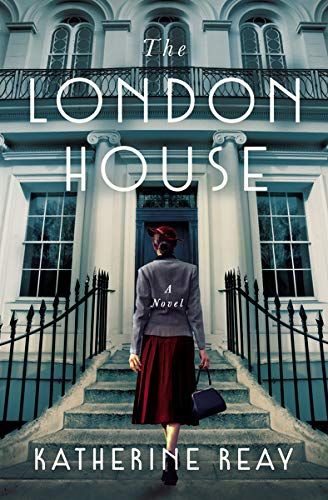
"The London House" by Katherine Reay
Tuesday, May 11, 2021
"Elizabeth and her German Garden" by Elizabeth von Arnim
This is really a journal in which she talks about her efforts to create the perfect garden in the home she shares with her German husband and their children. Her garden is her retreat, her pet project, and her creative oasis for several years. She has grand plans for it, but her series of German gardeners never quite seem to either approve of or understand those plans. Still, she loves her garden. I love to garden myself, and even though I don't have to deal with intractable gardeners, my little flower garden never quite does what I want it to either. Gardens foster patience, I think.
But don't think that this book is boring because it's about an Australian who likes flowers and is married to a German. It is hilarious. Witty, wry, friendly, salty -- just altogether marvelous. It reads like a series of letters from a sarcastic and yet kind friend, and I loved getting to read it in the springtime when my own flower gardening is underway.
Particularly Good Bits:
Sometimes I feel as if were blest above all my fellows in being able to find my happiness so easily (p. 15).
A woman's tongue is a deadly weapon and the most difficult thing in the world to keep in order, and things slip off it with a facility nothing short of appalling at the very moment when it ought to be most quiet (p. 25).
Well, trials are the portion of mankind, and gardeners have their share, and in any case it is better to be tried by plants than persons, seeing that with plants you know that it is you who are in the wrong, and with persons it is always the other way about (p. 57).
If This was a Movie, I Would Rate It: PG for some very pointed wit indeed.
This was my 20th book read and reviewed for my third Classics Club list, and my 23rd book read off my TBR shelves for #TheUnreadShelfProject2021
Saturday, March 13, 2021
"Dearest Josephine" by Caroline George
Well.
Yeah.
Hmm.
Let's begin with the things I liked a lot. Oliver! I liked Oliver so much. He is everything I like in a guy -- helpful, kind, thoughtful, never pushy, respectful, relaxed, funny, playful, and great at chopping wood. He was definitely my favorite, and I basically liked him from the get-go.
Josie was also an interesting bundle of conflictedness. She's mourning her dad, she's trying to figure out what she wants to do with her life, she's convinced she's falling in love with a guy who lived two hundred years ago... Josie has a lot going on. She struggles, she flails, she rises, she sinks, she rises again. Half the time I wanted to hug her, and half the time I wanted to give her a stern talking-to. So I'd say she was a very realistic character in a lot of ways. But she tried my patience at times. Still, in the end, I liked her.
Elias, I just... was frustrated by. It bothered me how he convinces himself he's in love with a girl he's met once and can't stop obsessing over her, to the point that he pushes away everyone trying to help him and be kind to him. I get that he's had a really hard life, and I get that he's been emotionally abused in the past. But I found him clingy and obsessive. I was happy for him by the end, though.
Josie's best friend Faith was nice, and I liked how supportive she was of Josie, but I never felt like I really got to know her very well. Mostly, she was just a sounding board for Josie's thoughts.
SPOILERS: I was also frustrated by the lack of closure on the possible time-travel? It was talked about and played with, and I just wish there had been a definite "yeah, he totally met someone else" or something. This is a ME thing, though -- I demand closure and don't handle ambiguous endings and unresolved plot strings well. That's part of why I love specific mystery writers so much -- I know I can trust them to deliver definitive answers. Usually. END SPOILERS.
I do have a nit to pick with the author and editors, though, and that regards their sloppy historical inaccuracies. Coasters for drinks were a thing in the early 1900s, not the early 1800s. I'm quite confident no one writing in the 1820s would have used the phrase "had messed with his mind" (p. 133). 'Okay' comes from American slang of the late 1830s and was spelled as "OK" until well into the twentieth century, when 'okay' became the new spelling. Those were all used by someone writing in the 1820s, and I'm not cool with it. When I write and edit my books, I spend hours and hours and hours checking words, phrases, and names for things to see if they would have been in use in the year the particular book I'm writing is set. My editor does the same. I'm sure we miss a few things, but there are only two of us. This is a book published by a major publishing house and presumably passing the scrutiny of multiple editors and proofreaders. Tsk tsk. (There's also an anachronistic use of the term 'turducken,' which wasn't coined until the 1970s, but that gets a pass because of plot points later on, and because the concept of cooking animals inside other animals has been a thing since Medieval times, at least.)
Yes, that's nit-picky. Yes, those were minor things. Yes, it did bug me enough to write that whole paragraph up about it, though.
So, in the end, this was a fun, fast read. I liked how it wove emails and texts and letters and a novel-within-the-novel together, and it was never hard to follow who was saying what, so that's pretty impressive. It had a lot of great lines and some wonderful themes about grieving, support, loss, friendship, kindness, and real love versus imagined love. I especially liked how it showcased the dangers of wrapping all your emotions around a person you don't know, be they a person you met once or a fictional character (and it could extend to obsessions with celebrities too), while not caring for those real people in your real life. So I do recommend it, overall. Also, it's nominally Christian fiction, the kind where characters sometimes talk about praying.
Particularly Good Bits:
"I blame literature for her behavior. A lady who reads too many words eventually feels the need to voice some of her own" (p. 49).
Nobody knows what they're doing. We just put our best foot forward and give life a go (p. 58).
People who laugh at themselves make superb company (p. 115).
"I do believe literature holds the best of us... or perhaps it reflects the better versions of who we are" (p. 138).
...grief can't be hurried or pummelled with self-help. It's just there (p. 195).
We are moulded by our circumstances, but we are not our parents' mistakes. We are not the errors inflicted upon us (p. 269).
Lots of girls believe they'll be happier once they find Prince Charming, but marriage isn't a fairy godmother waving a wand to change a pumpkin into a carriage. It doesn't instantly transform people into better versions of themselves. Instead, it brings couples together and asks them to use love as a reason to become better (p. 296).
If This was a Movie, I Would Rate It: PG for the use of the repeated use of the word 'bastard' in its literal meaning of 'an illegitimate child.' No actual bad language, no racy scenes, no violence. Some kissing.
This is the 11th book read off my TBR shelves for #TheUnreadShelfProject2021
Monday, October 26, 2020
"Dracula" by Bram Stoker
An appropriate read for October, don't you think?
I first read Dracula in May of 2000 while on tour in Canada with my college's choir. I was freshly in love with the TV show Angel and its titular vampire hero, and I decided I ought to read the greatest vampire novel of all time.
Maybe this is not a good book to read while riding on a bus for hour after hour. Or while missing your first real boyfriend, whom you've been dating for like a month. Or when you're twenty. I don't know. I just remember thinking this book was boring and being mad because my favorite character died.
Reading it again at age 40, after spending half my life intrigued by vampires, but also after having read a whole lot more Victorian fiction? I reeeeeally dug it. Boring? Not at all! I found it tense and fast-paced, with a excellent suspense that mounted page after page.
And this time, my favorite character didn't die. Because this time, my favorite character was Abram Van Helsing. (Sorry, Texan.) My goodness, what a fount of courage, knowledge, and resourcefulness! I've never been prouder to be half Dutch.
I really liked the epistolary format that Stoker uses, because it made this feel like everything was happening right now. Very immediate, and great for building suspense toward the end as different characters told what they were doing, and you know what was happening to others, but they didn't.
| (My photo from my Instagram account.) |
Particularly Good Bits:
The real God taketh heed lest a sparrow fall; but the god created from human vanity sees no difference between an eagle and a sparrow (p. 142).
What a fine fellow is Quincey! I believe in my heart of hearts that he suffered as much about Lucy's death as any of us; but he bore himself through it like a moral Viking (p. 238).
We are all drifting reefwards now, and faith is our only anchor (p. 424).
How can women help loving men when they are so earnest, and so true, and so brave! (p. 486)
If This was a Movie, I Would Rate It: PG-13 for scary situations, suspense, and some icky stuff about eating bugs and spiders, plus quite a lot of blood. It's not gory or graphic like a modern horror novel or thriller, but it's intense sometimes.
This was my seventh book read and reviewed for my third Classics Club list.
Sunday, August 9, 2020
New Femnista Post about "The Guernsey Literary and Potato Peel Pie Society"
I have not yet seen the Netflix movie based on this book, so my article concerns the book ONLY, not the film. I do hope to see that this fall, though.
Friday, March 13, 2020
"Daddy-Long-Legs" by Jean Webster (again)
Judy Abbott is an orphan with few hopes for the future, but endowed with a sparkling wit and fierce intelligence. One of the trustees of the orphanage where she grew up offers to anonymously send her to college, with the stipulation that she must write him regularly about her progress. This book is almost entirely composed of her letters to him -- she calls him Daddy-Long-Legs because all she's seen of him, as far as she knows, is his shadow on the wall, elongated and stretched by the setting sun. The letters are sprinkled throughout with funny little drawings, one of which got used for the cover of this edition. (It also contains the sequel, Dear Enemy.)
The drawings are funny, but the letters are even funnier -- this is one of those books where I chuckle out loud while reading it. (And then my family demands to know what's so funny and interrupt my reading, but oh well.) Judy Abbott's fish-out-of-water perspective on college, the lives of the rich girls around her, and knowledge are purely delightful. There's also a bit of a love story, not a sappy or sugary one, that I quite like.
Also, all of these letters really feel like actual letters! I never have to suspend disbelief over this book because none of them get that "nobody would write this scene out in detail like this in a letter" thing going on that some epistolary novels do. So if you tend to dislike books composed of letters for that reason, don't avoid this one, because it neatly avoids that issue!
Particularly Good Bits:
Speaking of classics, have you ever read "Hamlet"? If you haven't, do it right off. It's perfectly corking. I've been hearing about Shakespeare all my life, but I had no idea he really wrote so well; I always suspected him of going largely on his reputation (p. 62).
You know, Daddy, I think that the most necessary quality for any person to have is imagination. It makes people able to put themselves in other people's places. It makes them kind and sympathetic and understanding. It ought to be cultivated in children (p. 70).
The world is full of happiness, and plenty to go round, if you are only willing to take the kind that comes your way (p. 85).
If This was a Movie, I Would Rate It: G. Clean, light, fun, and pure.
Sunday, January 13, 2019
"Letters of a Woman Homesteader" by Elinore Pruitt Stewart (again)
I first read this just a little over three years ago, and I loved it immediately. I'm happy to report that I love it still. How absolutely delightful it is! I smiled and chuckled and cheered throughout it.Elinore Pruitt Rupert, a widow with a young daughter, took a job keeping house for a man named Clyde Stewart out on the plains of Wyoming in 1909. She wanted to try homesteading for herself, but knew she'd need some way of keeping herself and her daughter until she had her homestead up and running, so hit upon the idea of keeping house for some established rancher or farmer to begin with. She ended up marrying Mr. Stewart quite soon after moving there, but insisted on homesteading on her own to see if a determined woman could make a go of it. And make a go of it, she certainly did.
For me, the chief delight of this book is how intrepidly and joyfully this woman faces life. She goes about having adventures, helping people, making the very best of life in every situation. Even though her life certainly isn't easy, and she faces heartache, she does not lose her hope or her joy or her faith. Amazing woman.
![]() |
| (My Bookstagram pic from today) |
Particularly Good Parts:
...although I married in haste, I have no cause to repent. That is very fortunate because I have never had one bit of leisure to repent in (p. 86).
It is true, I want a great many things I haven't got, but I don't want them enough to be discontented and not enjoy the many blessings that are mine (p. 89).
If This was a Movie, I Would Rate It: PG for frontier hardships, a few bits of mild bad language in transcribed dialog, and a discussion of Mormons practicing polygamy.
Saturday, November 25, 2017
"The Screwtape Letters" by C. S. Lewis
And it's taken me seventeen years to finally read it. Partly because I didn't have a copy for a long time, and kept forgetting to get it from the library, and partly because I was pretty worried it was not going to live up to the hype she bestowed on it. I even bought a copy last year, and then just... didn't read it.
Sometimes, I'm so lame.
But now, I've read it! And wowwowwow. Witty? Yes. Brilliant? Yes. Funny? Not so much.
I mean, I can see how it could be funny, but it wasn't funny to me.
In fact, it was downright terrifying in spots.
Why? Because I saw so much of myself in this book. Complacent, distracted, and not very invested in my faith? Yeah, that is me just FAR too often. This was a very convicting book for me, and made me take a long look at how habitual my faith can become. Which is great, because it made me examine my prayer life, my Bible-reading habits, and my investment in my vocations and see so many places where I am not doing what I should to thank and praise, serve and obey my Savior.
Which is not to say that it didn't make me laugh, because it did make me laugh a couple of times. But it made me think much more than laugh, which I was not expecting, but which I appreciate so much.
In other words... this was way better than I had hoped.
If you've never read it, the whole book is letters from a demon named Screwtape to his nephew, a demon named Wormwood who is trying to prevent a human from remaining a Christian, but instead to win his soul for Satan. Fascinating concept that's executed so masterfully.
Particularly Good Bits:
It is funny how mortals always picture us as putting things into their minds: in reality our best work is done by keeping things out (p. 16).
The duty of planning the morrow's work is today's duty; though its material is borrowed from the future, the duty, like all duties, is in the Present (p. 77).
If we neglect our duty, men will be not only contented but transported by the mixed novelty and familiarity of snowdrops this January, sunrise this morning, plum pudding this Christmas (p. 136).
A woman means by Unselfishness chiefly taking trouble for others; a man means not giving trouble to others (p. 142).
It is not fatigue simply as such that produces... anger, but unexpected demands on a man already tired (p. 166).
(I underlined a LOT more than these, but they give you a taste, anyway. Fantastic book!)
If This was a Movie, I Would Rate It: PG-13 for non-explicit discussions of human sexuality.
This is my 12th book read and reviewed for my second stint at The Classics Club, and my 11th for the Mount TBR Reading Challenge 2017.
Friday, February 10, 2017
"That Part was True" by Deborah McKinlay
I expected it to be a sort of cheery story of people becoming friends by exchanging letters about food and books, based on the cover blurbs and the inside of the dust jacket. And that was basically true -- it was about a novelist named Jack and a reader named Eve who strike up a friendship by writing letters and emails to each other about food, books, and bits of their lives.
But it was not cheery.
In fact, most of the book was downright depressing. It perfectly suited the sort of grey and deflated mood I had the day I read it, which is probably why I read it so quickly. On a sunny, warm, joyful day like today, I would probably have groaned and tossed it aside. Funny how mood dictates my reading sometimes.
Anyway! Jack is recently divorced and having a mid-life crisis. Eve is long-ago divorced, and her daughter is getting married, and she's coming to grips with the fact that she has been suffering from panic attacks for years. And I think what depressed me the most about this book was how hopeless these characters were. Sure, it ends "happily," but at the same time... what makes us think that these two characters will be any more successful at finding happiness with each other as they were at finding happiness with the other people they were with at earlier times? There's a sense of aimlessness to their lives that reminded me of how Ecclesiastes tells us that the things of this life are meaningless, just "grasping for the wind." There is no mention of God in this book, no saving faith in the lives of these characters, and without that, they are hollow, searching, and ultimately empty. What saddens me is that there are so many real people in this world who are living exactly this way. Hopeless, confused, empty... and damned. Not just lacking purpose in this life, but facing an eternity without God, whether they realize it or not.
In the end, this book makes me want to go evangelize. Spread the good news that God knows exactly what you're going through, he knows that sin is the root of all your problems, and he has a solution for you: the suffering and death of his son, Jesus, which gives life and hope to all who believe. Without that faith, everything in this life really is meaningless.
If This was a Movie, I Would Rate It: R for sexual content and some language.
Tuesday, January 17, 2017
Top Ten Tuesday: Hidden Gems
I'm listing them alphabetically by title, and all but one of the titles is linked to my review of that book, if you want to know more about them. And I've included my movie-style rating in parentheses for those who are interested.
Ain't We Got Fun by Emily Chapman and Emily Ann Putzke -- a fun, light-hearted collection of letters between two sisters during the Great Depression. (G)
Greenwillow by B. J. Chute -- a quiet, gentle story of people living in the idyllic English countryside about a hundred years ago. (PG-13)
I, Claudia by Charity Bishop -- a fictionalized account of how Pontious Pilate and his wife Claudia married, went to Jerusalem, and were involved in Jesus Christ's trial and death. (PG-13)
Letters on an Elk Hunt by a Woman Homesteader by Eleanor Pruitt Stewart -- an enthralling collection of real-life letters from an intrepid woman in the last days of the Old West. (PG)
And Now Tomorrow by Rachel Field -- a rich, engrossing story about a deaf woman and the doctor who brings her hope of hearing once again. (PG)
Once by Elisabeth Grace Foley, Rachel Heffington, J. Grace Pennington, Emily Ann Putzke, Suzannah Rowntree, and Hayden Wand -- six fairy tale retellings with settings ranging from the Old West to steampunk to WWII to fairy tale kingdoms. (PG-13)
A Portrait of Emily Price by Katherine Reay -- a beautiful look at how love can both repair and damage people. (PG-13)
Sixguns and Society: A Structural Study of the Western by Will Wright -- an in-depth look at how western films changed as America's society changed during the 20th century. (PG-13)
Song of the Ëan by Emily Nordberg -- a high-fantasy story about a pampered young noble who becomes mixed up with guerrilla fighters and sets about righting some grievous wrongs. I'm not done reading this yet, but so far I'd rate it PG.
The World of Raymond Chandler (In His Own Words) edited by Barry Day -- Chandler is my favorite author, and this collection of his letters gave me lots of insight into his life and writing. (PG-13)
That's all for this week, friends! Have you read any of these? Did you participate in TTT this week too? Do you have some "hidden gems" you'd like to recommend to me? Please share!
Sunday, November 6, 2016
"Letters on an Elk Hunt by a Woman Homesteader" by Elinore Pruitt Stewart
Yeah, there's a sequel. And I'm ga-ga again.
I was a little worried, going in, that this wouldn't be as good as the first book, for several reasons. One was that reviews I'd read of them both had been much less enthusiastic about this book than the first. The other is that I knew that, while the letters in the first book weren't intended for publication when Pruitt wrote them, these were. She wrote them to the same friend who collected up the first bunch and insisted Pruitt let her publish them. They were so popular that Pruitt wrote these letters with the idea that they could make a second book. And one of the things I loved so much about the first book was how natural and unaffected Pruitt's writing was. Her letters in it are chummy and relaxed. I worried these wouldn't be.
And the first couple did feel to me like she was writing with the idea, "These will be published" kind of restraining her writing. They aren't exactly stiff, but they're not delightful either. Happily, after the first couple of letters, Pruitt settled back into the same convivial style as before, and I found myself chortling with glee. I also simply could not put this book down, and finished it in about a day.
While the first book discussed Pruitt's adventures homesteading, this one is all about an elk hunt she and her husband go on with some of their friends. They encounter all kinds of interesting people, help some folks out, get helped out by others, and generally enjoy being out in the wide world. I found it enthralling. Not quite as wonderful as Letters from a Woman Homesteader, but nearly so.
Particularly Good Bits:
We saw many deserted homes. Hope's skeletons they are, with their yawning doors and windows like eyeless sockets (p. 25).
The trunks of the quaking aspens shone silvery in the early sunlight, and their leaves were shimmering gold. And the stately pines kept whispering and murmuring; it almost seemed as if they were chiding the quaking aspens for being frivolous (p. 82).
This is why cowboys are such well-loved figures of romance is fact. "Greater love hath no man than this: that he lay down his life for his brother." They knew nothing about us only that we were defenseless. They rode boldly on their stanch little horses flanking the frenzied steers (p. 148, about being rescued from a stampede).
I had not expected to encounter so many people or to get the little inside glimpses that I've had, but wherever there are human beings there are little histories (p. 161).
If This was a Movie, I Would Rate It: PG for descriptions of people facing hardships and danger that might overwhelm young readers.
This is my 49th book read and reviewed for The Classics Club!!! One more, and I'll have completed my goal of 50 books! Pretty sure I'll finish at least one by the end of the year, so I'm looking at finishing the challenge in three years instead of five. Wow.
This is also my 17th book for the Women's Classic Literature Event.
Friday, April 29, 2016
"Anne of Windy Poplars" by L. M. Montgomery
When I was a teen, this was my favorite Anne book. I think Anne of Green Gables may have edged it out for me now, but it's almost too close to call. I do know this book is the main reason why I have such a fondness for epistolary novels. However, I was surprised to discover that it's not entirely written in long, chatty letters from Anne to Gilbert -- there are several chapters sprinkled throughout that are entirely written in the third person by a narrator like the first three books in the series.In this one, Anne and Gilbert are engaged to be married, but Gilbert needs to finish medical school before they can be married, so Anne takes a job being the principal at a high school in a town called Summerside that is ruled by a clannish family by the name of Pringle. At first, the Pringles resent her, but eventually, she wins them over, along with every other crank, coot, and misanthrope in the town.
I think what I like best about this book is how kindness and compassion play such a big role. Really, the tagline for it could be "Have courage, and be kind." Does Anne surmount basically every obstacle anyone can throw in her way? Yes, she does. How? By being kind and compassionate toward everyone, whether they are nice to her or not. Over and over, she makes a kind gesture, or shows some extra patience, or tries to befriend someone friendless, and the end result is that an antagonist thaws out, unbends, or turns out not to be as curmudgeonly as previously rumors had painted them. How can I help but be charmed by such stories?
As a teen, I know I appreciated how Montgomery "edited" Anne's letters to leave out the mushy, romantical parts. This amuses be greatly still.
Particularly Good Bits:
In passing, isn't 'dusk' a lovely word? I like it better than twilight. It sounds so velvety and shadowy and... and... dusky (p. 3).
"Nobody is ever too old to dream. And dreams never grow old" (p. 89).
"A cold in the head in June is an immoral thing" (p. 184).
If This was a Movie, I Would Rate It: G. Sweet and clean and gentle.
This is my 38th book read and reviewed for the Classics Club, and my 7th for the Women's Classic Literature Event.
Elyssa hasn't posted any discussion questions at Purple Ink Studios for this book yet, so at such time as she does, I'll probably do a separate post about them.
Thursday, February 25, 2016
"Dear Mr. Knightley" by Katherine Reay
This is a more interior, personal book than Reay's two other novels, more about a person's struggles within themselves and less about their interpersonal problems, if that makes sense. Not saying I don't like books about interpersonal problems, cuz I do, but I liked this even better.
A couple of my blogging friends have said they think it was unrealistic that a guarded person like Sam would have written such intimate thoughts to an unknown person, but I think Reay did a good job setting that up from the beginning with Sam writing passages like, "Honesty is easier when you have no face and no real name. And honesty, for me, is very easy on paper" (p. 5). Later, Sam writes, "And now I trust our one-sided, soul-purging relationship. I depend on it" (p. 130). Like any epistolary novel, you have to suspend some disbelief because most of us don't write letters that detail full conversations, but my credulity was never stretched beyond comfort.
Favorite Lines:
He showed me the real Kyle, and I crushed him. Is this the adult I've become? (p. 26).
I've heard all sorts of things about a kiss (melting, fireworks, music), but no one ever told me it's a conversation: asking, accepting, deciding, inviting, giving... Questions posed and answered (p. 93).
"Talking through stuff before I get it into the manuscript depletes the tension and magic. I have to keep it compressed or it flops" (p. 218)
If This was a Movie, I Would Rate It: PG-13. Sam has a boyfriend who pressures her to spend the night, and they make out several times, though those are not described any more in-depth than the passage above.