Gatsby may be "the man who gives his name to this book" (p. 2), but he's nowhere to be found in this chapter. Oh, he does get name-checked, but we spend this chapter learning about the very broken people living near Gatsby, and near Nick. And we learn some interesting stuff about Nick too.
So what is up with this Tom Buchanan guy, huh? He's met Nick a couple of times over the years, and today he invites Nick to go hang out with him and his mistress, Myrtle, in their little love nest in the city. Just like he brings Myrtle to restaurants to force his friends and acquaintances to acknowledge that he has a mistress, he has to flaunt her in front of Nick too. I get the feeling that Tom is somehow trying to show everyone how powerful he is -- he has the power and right to have a mistress, and no one can stop him. Which makes me suspect he's trying to convince himself of his power, more than anyone else.
And what's up with Nick, come to think of it? He's Daisy's cousin, for Pete's sake, but he gets invited to hang out with her husband's twinkie-in-the-city? I mean, he gives us readers the distinct impression that he finds this whole Tom-has-a-mistress thing distasteful, even icky, but he totally goes along with Tom and Myrtle to their place. He says he wants to leave, but when he gets sent out to buy cigarettes, thus being given the perfect exit -- he could just take the train home -- he comes back. And he doesn't just come back, he hangs out in the living room alone while Tom and Myrtle get it on elsewhere in the apartment. Later, he insists, "I wanted to get out" (p. 37), but every time he tries to leave, people get in an argument and he ends up staying, so I'm not all that convinced that he actually wants to leave.
I see Nick as an observer. He's happier watching life than participating in it, I think. He finds Tom and Myrtle yucky, but he wants to watch them. He'd rather watch people having an affair than have one himself -- remember in the last chapter, he said he'd recently abandoned a relationship with a woman people thought he was going to marry. It's like he finds life and relationships messy and weird, and doesn't want to touch them, but he also finds them fascinating and wants to look at them.
And I think Nick also hates being alone. He's almost always hanging out with someone else in this book. He was supposed to be sharing his rented house with someone, but that person decided at the last minute not to live there, so now he's lonely. So he gravitates toward people. He's got nobody else to be with that day, so he stays with Tom and Myrtle and their increasingly drunken bunch of pals rather than go home alone.
As for Myrtle, I feel very sorry for her. She doesn't respect her husband, she clearly only likes Tom because he gives her a good time and has lots of money, and nobody takes her seriously. And then to top it off, her "sweetie" (as Myrtle's sister Catherine calls him) is an abusive drunk who breaks her nose. Why? Because she wouldn't do as he said and stop saying his wife's name. Tom wants to control everyone and everything -- remember how he moved Nick around like a checker on a checkerboard in chapter one? At the beginning of this chapter, Nick says, "his determination to have my company bordered on violence" (p. 25). If people don't willingly do as Tom says, he will make them do it. Swell guy Daisy married.
So anyway, one theme in this book that intrigues me is the idea that appearances are deceiving. Nick appears to want to leave, but really he wants to stay. Myrtle married Mr. Wilson because she "thought he was a gentleman" (p. 37), but when it turned out that he married her wearing a rented tuxedo, she realizes he wasn't what she thought. His appearance deceived her. Myrtle appears to want to own a dog, but really she just wants to show off to Nick that she can get Tom to buy her anything she wants. We'll see this theme crop up again.
Have you been paying attention to the colors used in this book? Blue and yellow get mentioned a lot, often together. So do red and white -- Tom and Daisy live in a red-and-white house, and here Myrtle's sister has red hair and a white complexion. And we get two instances of blue and yellow being paired up. First is that freaky billboard with the giant eyes. Giant blue eyes behind giant yellow spectacles, peering out at the world in silent omniscience. Second is Mr. Wilson, Myrtle's husband, who has blond hair and light blue eyes. Not entirely sure why these colors get paired up a lot, unless it's pointing to a certain blue car and a certain yellow car that will be important later on? Any ideas?
Favorite Lines:
At 158th Street the cab stopped at one slice in a long white cake of apartment-houses (p. 30).
I was within and without, simultaneously enchanted and repelled by the inexhaustible variety of life" (p. 38).
Possible Discussion Questions:
Myrtle tells Nick that her sister Catherine is "said to be beautiful by people who ought to know" (p. 30). Similarly, Jay Gatsby is said to be "great" by Nick Carraway, a person we assume ought to know. We spend this whole book being told about people by Nick, rather than seeing them for ourselves. Why do you think Fitzgerald chose to filter his characters through a narrator this way? How would the story be different if it were told in third person?
 |
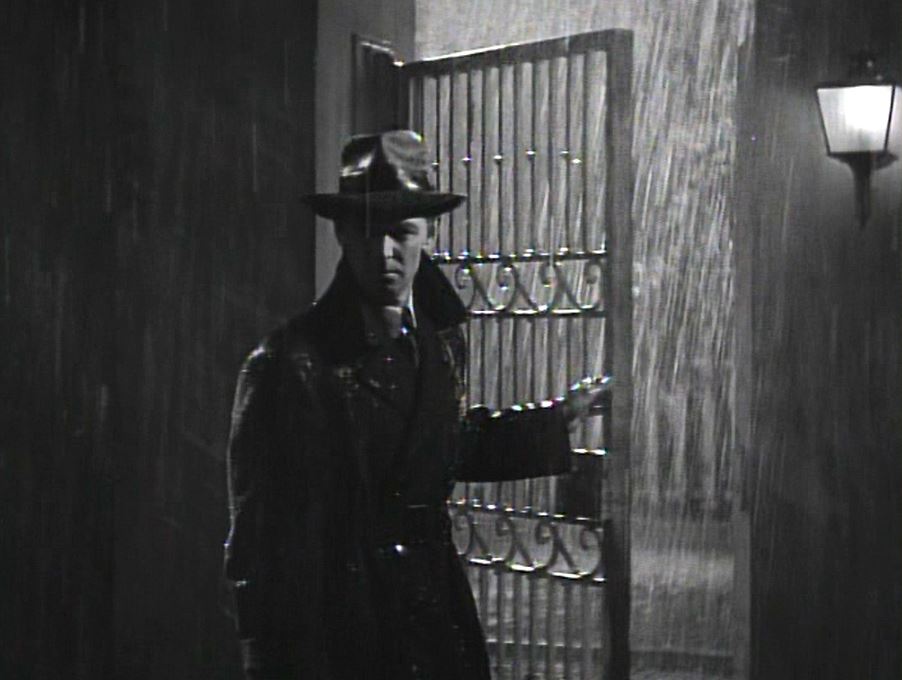
| From the 1949 film version starring Alan Ladd as Jay Gatsby |